

28 million Nigerian students lack access to digital skills – UNICEF
The United Children Education Fund has raised the alarm over Nigeria’s widening education and digital skills gap, warning that the country risks long-term social and economic setbacks if urgent action is not taken.
The Chief of UNICEF Lagos Field Office, Celine Lafoucriere, disclosed that more than 10 million primary school children and another 18 million junior and senior secondary school students are currently out of school.
The combined figure, Lafoucriere noted, shows that over 28 million children and youths are without or have no access to formal education or digital learning opportunities.
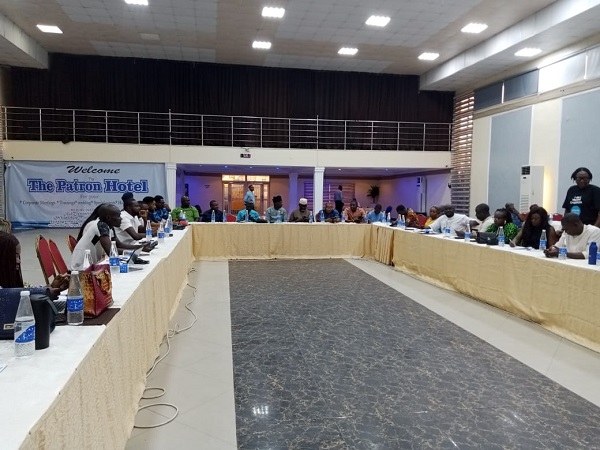
She spoke at a two-day media dialogue to support advocacy for accelerated digital learning for Nigerian students organised by the Oyo State Ministry of Information in collaboration with UNICEF.
The Unicef boss described the situation as even more troubling for girl-children, disclosing that 15 out of every 100 Nigerian girls are neither in school, nor learning a trade, nor employed.
This, she said, reflect deepening gender divide in education as well as technology access, which threatens to limit digital opportunities for millions of girls across the country.
Lafoucriere said Nigeria’s demographic projections demand urgent action, noting that by 2030, Nigeria is expected to have 126 million children and adolescent, the largest youth population in Africa.
She emphasized that this demographic boom could be a national strength or a major crisis depending on how well the country equips the young people with relevant skills.
Despite the challenges, she highlighted the ongoing progress, including over 2 million children and youths across 21 states 300,000 of them in Southwest already using the the Nigerian Learning Passport, and more than 62,000 girls having completed digital skills courses.
The Unicef boss commended the Federal Government’s adoption of the National Policy on Skills Development but noted that policy alone is insufficient to close the digital divide.
Lafoucriere said the media have a crucial role in shaping national conversations, spotlighting success stories of young people whose lives are transformed by digital education, and challenging the perception that technology is only for the privileged.
Lafoucriere urged journalists to intensify advocacy for accelerated digital learning and push for increased investment, close the gender gap in technology, as well as amplify issues affecting marginalized communities.
In his presentation, UNICEF Education Specialist, Babagana Aminu, urged the federal government and stakeholders to accelerate digital learning for Nigerian youth.
Aminu warned that the country’s young population could be either a national asset or a liability depending on their skill readiness.
He stressed the importance of equipping young people with digital and Artificial Intelligence skills to compete in the 21st-century workplace, citing the “passport to earning” model that links learning with future employment opportunities.
Citing World Bank and NEET data, Aminu explained that by 2030, 60 percent of Nigerians will be under 35, yet nearly 50 percent of young people are unemployed or underemployed, and millions lack digital and financial literacy.
He dismissed fears that AI will replace jobs, explaining that those skilled in AI and technology will thrive while others risk being left behind, saying “it is not AI that is going to replace people. It is other people that know how to use AI that are going to replace people”.
Babagana said parents must encourage digital literacy for all children, warning that by 2030, about 230 million jobs in Sub-Saharan Africa will require digital competence.
He further advocated the introduction of cybersecurity studies in the secondary school curriculum, noting that the rise of the digital economy, a major contributor to Nigeria’s GDP, makes it imperative for young people to be fully equipped with 21st century digital skills.
The Permanent Secretary, Oyo State Ministry of Information, Rotimi Babalola reiterated the commitment of Governor Seyi makinde’s administration to improve access to quality and technology-driven education.
He noted that the programme organised by Oyo State Government in conjunction with UNICEF aligns strongly with global priorities and reflect the administration’s determination to strengthen learning outcomes for all children.
He also expressed deep appreciation to UNICEF for its consistent support to the state government,stating that the agency has played a crucial role in implementing child-focused programmes across Oyo State.
The Director of Policy, Planning,Research and Statistics, Lagos State Ministry of Basic Education, Mr. Martins Opeyemi, stated that the integration of Artificial Intelligence into the state’s education system aligns fully with the THEMES agenda of Governor Babajide Sanwo-Olu’s administration.
He noted that the state government has intensified efforts and made significant investments to ensuring that schools across the state are fully digitalised in line with global best practices.
Opeyemi explained that Lagos State has prioritised the training of teachers in the use of AI to enhance classroom delivery and improve the students’ exposure to digital literacy, saying that with the level of digitalisation achieved, teaching and learning can now take place seamlessly even in hard-to-reach areas of the state.