

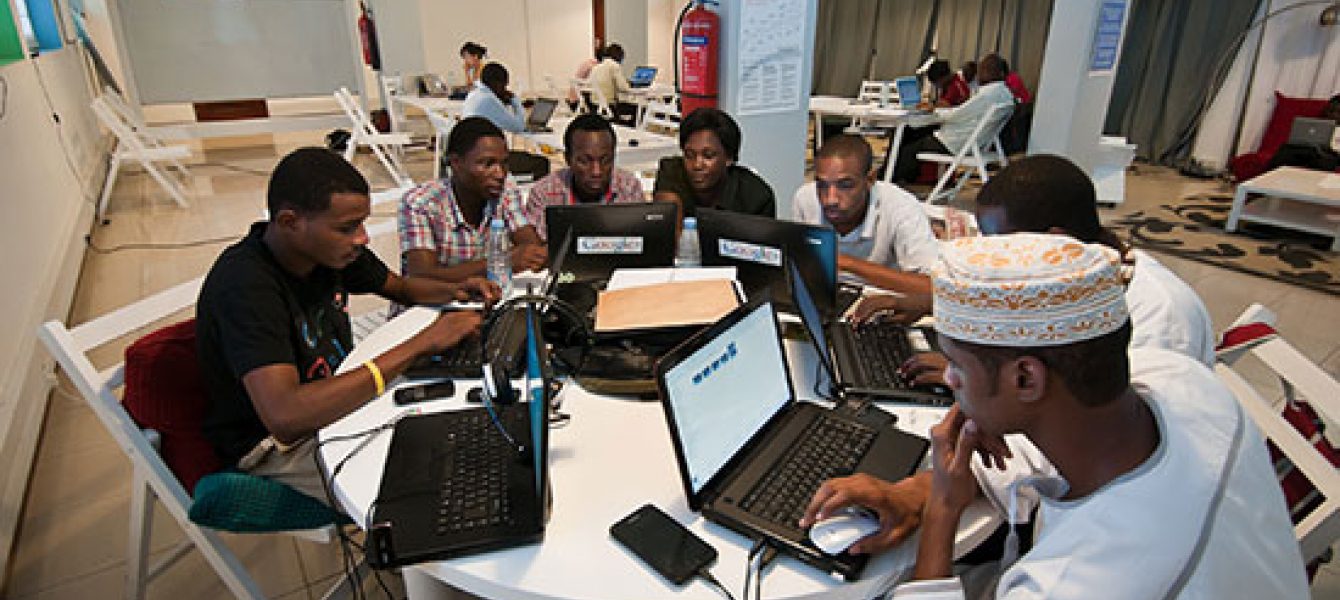
empowering Africa’s youth through tech and cloud skills
Africa is home to the youngest population in the world. With over 60% of its people under the age of 25, the continent holds immense untapped potential. But while this youth population is growing rapidly, many are still left behind in the race toward a digital future.
Across cities and villages, thousands of young Africans dream of better opportunities to learn, to work, to lead. Yet, too many lack access to the skills, tools, and technology that power the global economy. In today’s data-driven world, digital illiteracy is fast becoming a new kind of poverty.
Education systems in many African countries are still catching up with the demands of the 21st century. Even university graduates often lack hands-on experience with data, cloud computing, or real-world problem-solving. And in rural areas, the gaps are even wider.
According to a 2024 report by UNESCO, over 75% of youth in Sub-Saharan Africa graduate without foundational digital skills. Meanwhile, a 2023 LinkedIn Global Talent Trends report revealed that data analysis, cloud computing, and AI are among the top five most in-demand global skills, underscoring the urgency to close this gap.
This isn’t just a skills gap; it’s an opportunity gap, a barrier that keeps millions from fully participating in today’s economy.

Read also: Barefoot brilliance: How strategist, Nnenna Onyewuchi, walked her way into the heart of African innovation
The Power of Data & Cloud Skills
Data is everywhere, from agriculture to finance, health, education, and business. Every decision made by modern organisations today relies on data: to predict trends, understand customers, improve operations, or create innovative products.
Cloud technology makes this power accessible. With cloud tools, individuals and small businesses no longer need huge infrastructure to store, analyse, or collaborate. Anyone with a smartphone and internet access can join the digital economy.
For Africa’s youth, learning data and cloud skills is not just about career paths in tech, it’s about becoming problem solvers in their communities. A young person trained in data analytics can help local farmers optimise crop yields. A cloud-literate student can build apps that improve health or education delivery in underserved areas.
As of 2025, Google’s Africa Developer Training Program has trained over 100,000 African developers in cloud and data technologies, while Microsoft’s Skills for Jobs initiative has reached more than 1 million people across the continent with free digital skilling resources. Programs like these are showing that scalable, affordable learning is possible if access is prioritised.
Cloud platforms like Microsoft Azure, AWS, and Google Cloud now offer free learning resources, certifications, and sandbox environments. The AWS re/Start program, for instance, helps learners with no tech background build job-ready cloud skills in 12 weeks.
But more is still needed to scale these efforts to reach those in hard-to-reach areas.

Why This Matters Now
The future of work is digital. Countries that prepare their youth for this future will thrive; those that don’t may struggle for decades. From Lagos to Kigali, Nairobi to Accra, a new generation of tech-savvy youth is emerging, building startups, learning online, and solving real problems with digital tools.
Africa’s digital economy is projected to add $180 billion to the continent’s GDP by 2025, according to the International Finance Corporation (IFC). But only if the workforce is ready. Currently, McKinsey estimates that up to 230 million jobs in Sub-Saharan Africa will require some level of digital skills by 2030.
But while urban centres are moving ahead, millions in rural or underserved communities remain on the margins. The danger is that a new kind of digital divide will emerge one not just between Africa and the world, but within Africa itself.
Equipping young Africans with cloud and data skills is one of the most effective ways to ensure inclusive growth. It creates jobs, inspires entrepreneurship, improves public services, and drives innovation. More importantly, it gives young people the confidence and power to shape their futures.

The Barriers That Must Be Broken
Despite the promise, several barriers stand in the way. Access to reliable internet, affordable devices, and electricity is still a major challenge in many parts of Africa.
According to the 2024 GSMA Mobile Economy report, only 28% of the Sub-Saharan population has access to mobile internet, and that number drops even further in rural areas. Without these basic enablers, digital tools and platforms remain out of reach.
There’s also the issue of awareness. Many young people don’t know that careers in cloud computing or data science are even possible. Schools often don’t teach these topics, and where they do, the content is outdated or not practical.
Moreover, there’s a lack of mentors and role models, people who can guide, inspire, and show others the path. Many talented young people give up simply because they don’t see anyone who looks like them succeeding in the tech space.
A Way Forward: Tech for Everyone, Everywhere
To unlock the full potential of Africa’s youth, we need a collective effort from governments, the private sector, educators, and community leaders.
Governments must integrate digital skills into national education policies, not as side courses, but as core competencies. In Rwanda, for example, the government has already launched the “Smart Rwanda Master Plan”, which aims to provide coding, cloud computing, and digital literacy training across all levels of education by 2030.
Tech companies should localise learning content, provide cloud credits, and support innovation hubs that give youth access to tools and mentorship. NGOs and educators must focus on digital inclusion for girls, rural youth, and other marginalised groups.
More importantly, we must change the narrative: from “tech is for a few” to “tech is for everyone.” Data and cloud skills should not be reserved for elites; they should be tools of empowerment in every school, village, and city across the continent.

Conclusion: The Future is Already Here
Africa’s youth don’t need to wait to be empowered. They are already building, coding, analysing, and leading change, often with very limited resources. What they need now is support, access, and belief.
The time to invest is now. If we equip this young generation with the right digital skills today, we don’t just prepare them for the future; we allow them to help build it. In the end, the future will not be given. It will be created by those who are bold enough to learn, adapt, and lead.
And when equipped with the right tools, Africa’s youth won’t just participate in the data-driven future; they will define it.