

Online education: A lifeline for California’s adults

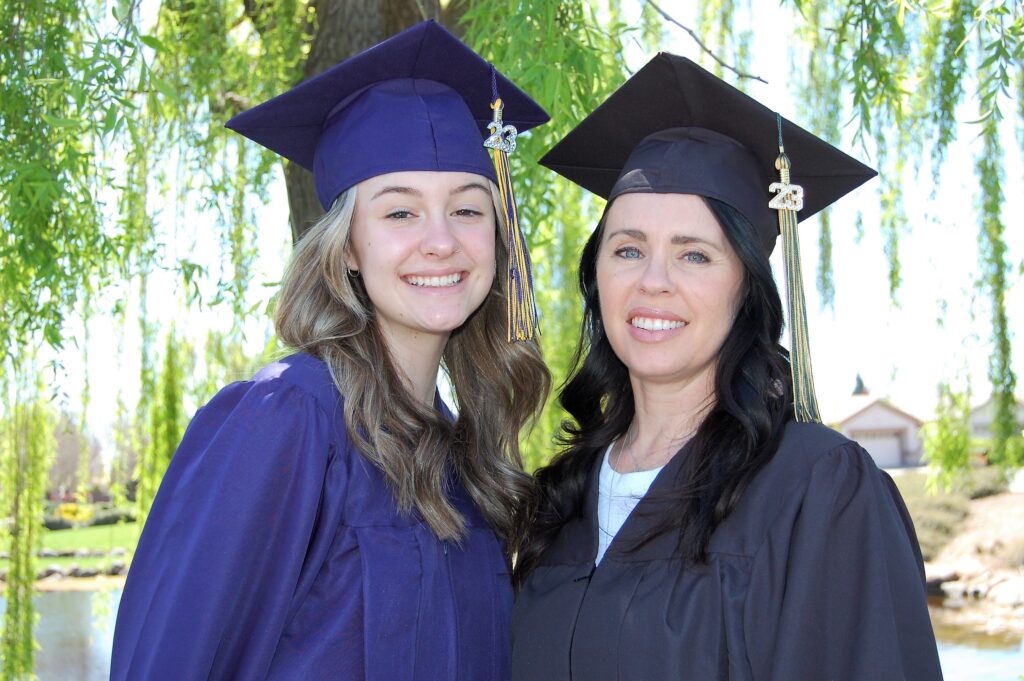
After a 26-year journey, Jennifer Liberty graduated from college, just as her daughter was graduating high school.
Photo courtesy of Jennifer Liberty
In California, over 6 million adults have completed some college but haven’t yet earned a degree. For many years, I was one of them.
Even with this reserve of untapped potential, California faces widespread shortages of skilled workers, which have left key employers, such as schools and hospitals, understaffed. Supporting these adults to become “comebackers” — to reenroll, persist and graduate — is a critical yet overlooked strategy to bridge these gaps and promote shared prosperity statewide.
My journey as a comebacker began over 25 years ago when I stopped out before the end of my first semester at Sierra College. It took me 17 years to reenroll there and another nine to earn my bachelor’s degree at Sacramento State. Now, with a master’s under my belt and plans to pursue my doctorate, I have the perspective to see what would have helped me persist — and what ultimately made it possible for me to earn my degree: high-quality, flexible online course options.
As a first-generation college student, the first time I enrolled, I didn’t know which classes to take for transfer, how much time school would take me, or even what the difference was between an associate degree and a bachelor’s degree. What I did know was that I needed to make money to survive. When my off-campus job offered me more hours, I took them and stopped out of college.
A decade and a half later, I was a mom of three, with a lot of work experience but not quite a career. I realized I wanted more out of my life and reenrolled at Sierra College, starting with just one night class a semester. I was now twice the age of most of my classmates and working toward my degree half as fast.
Seven years later, I finally earned my associate degree and transferred to Sacramento State’s online bachelor’s program. Flexible, virtual courses enabled me to work and raise my family while making steady progress toward my degree. In between those commitments, I nurtured relationships and discussed my long-term career goals with professors during Zoom office hours. As I neared graduation, my program coordinator invited me to speak on a panel about my experience as an adult learner.
In the audience was a researcher with CaliforniaAttain!, a coalition that works to support adult students to graduation through research, advocacy and policy implementation. She invited me to join the group’s new project, and I started interviewing students about their experiences stopping out and then restarting school. I knew exactly how they felt. As a researcher, I was in a position to pay it forward, analyzing common issues and using the insights to spark positive change for students like us.
Today, I’ve come full circle. I am proud to be a faculty member at Sierra College in the same tutoring department where I worked while I was in school. I have the privilege of teaching and mentoring students on journeys similar to my own.
If there’s one change that would make it easier for comebackers, it’s developing more widespread, accessible online options that offer high-quality learning and support for students. I hear often from comebackers that they couldn’t have finished their degrees without online classes. Neither could I. Nearly 4 million California adults want exclusively online classes to balance work, family and distance constraints. Some people may point to lower completion rates as evidence that online classes don’t work, but those struggles often reflect a lack of support for either the students or the faculty delivering the courses, not online learning itself.
California can close those gaps. By investing in thoughtfully designed courses, professional development for faculty, robust student supports and smart use of technology, online education can be both accessible and high-quality.
Awareness is another critical piece. I had never heard of Sacramento State’s online degrees until I stumbled upon them. I was lucky; most students don’t know these options are out there. Comebacker students need institutions to ensure students know about their online courses, especially parents and working adults who benefit from that flexibility.
For comebackers like me, online programs are essential to college completion. If colleges get this right, they can unlock opportunity for the millions of Californians who have had to pause their college journeys.
I want all Californians to know that it’s never too late to finish their educations and pursue the careers they want. And to higher education leaders and decision-makers: Until the state’s higher education system is designed to meet the needs of both current and potential students, too many of us will struggle to achieve our dreams, build brighter futures for our families, and fill critical workforce gaps in our communities. It’s time to fix that.
•••
Jennifer Liberty is a mother of three, a faculty member at Sierra College and a former student researcher with CaliforniaAttain!, a coalition guided by California Competes, a nonpartisan research and policy organization focused on identifying higher education solutions to the state’s most critical challenges at the intersection of higher education, equity, and the economy.
The opinions expressed in this commentary represent those of the author. EdSource welcomes commentaries representing diverse points of view. If you would like to submit a commentary, please review our guidelines and contact us.