

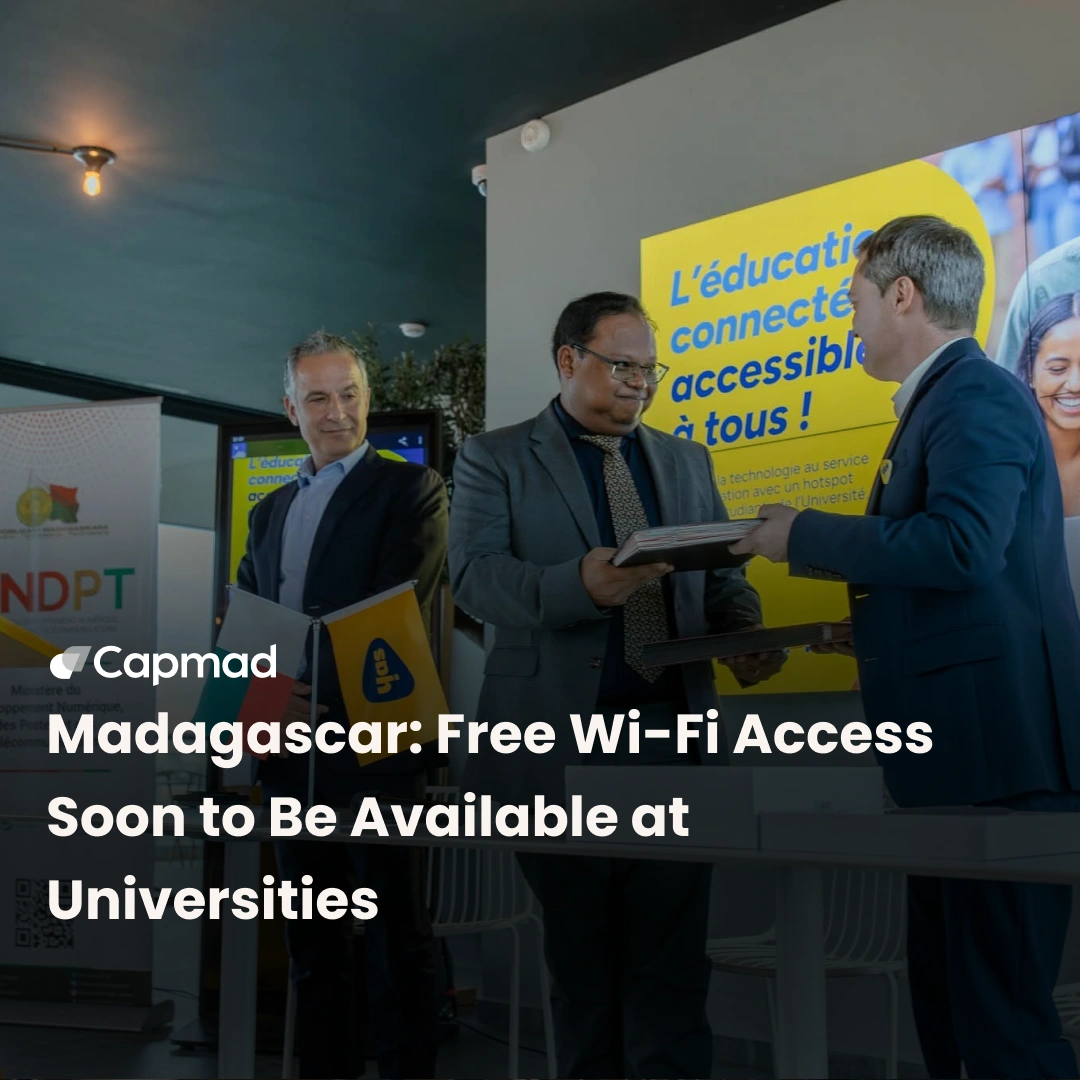
Free Wi-Fi Access Soon to Be Available at Universities
Madagascar is embarking on a large-scale program to deploy free Wi-Fi in public universities, in partnership with the operator YAS, to promote digital inclusion for students and modernize higher education.
A Government-YAS Partnership for Free Wi-Fi
The Malagasy government has signed an agreement with the telecommunications operator YAS to install Wi-Fi hotspots on the country’s public university campuses. This partnership is part of the national digital transformation strategy, which prioritizes internet access for education and youth.
According to initial announcements, the connection will be free for students at the participating campuses, with dedicated access for academic work, online course platforms, and digital learning resources. The initiative aims to support distance learning, research, and student participation in the knowledge economy.
A Gradual Deployment Across Campuses
The program is starting at several major public universities, including Antananarivo and Toliara, before being extended to Fianarantsoa, Diego Suarez, and Mahajanga, and then to other campuses across the country. Hotspots will be installed in the heart of the campuses to cover key student living areas and teaching zones.
Authorities are planning a phased rollout, with pilot sites serving as technical and organizational benchmarks for subsequent nationwide implementation. Ultimately, more than twenty strategic public sites – including universities – will benefit from free, high-speed internet access.
Access Methods and Service Capacity
The system includes Wi-Fi access points capable of simultaneously connecting several hundred users at each site. A monitoring system will be implemented to guarantee connection quality, particularly in terms of speed and stability, using fiber optics where 4G coverage is insufficient.
The practical arrangements involve time-limited free sessions for each student, supplemented, if needed, by the purchase of additional packages at a preferential rate. The goal is to maintain basic free access for all, while ensuring the technical and financial sustainability of the service.
A major challenge for digital inclusion
For the Ministry of Digital Development, this program addresses the need to reduce the digital divide that disadvantages Malagasy students, particularly those from disadvantaged backgrounds. Regular internet access is presented as an essential condition for following online courses, consulting digital libraries, and participating in international training programs.
The measure is also part of the 2023-2028 Digital Strategic Plan, which promises the integration of ICT throughout the education system, from the digitization of educational content to the modernization of university administrative services. The authorities hope that this will better prepare students for the job market, where digital skills have become indispensable.
Challenges and Prospects
Despite the project’s ambition, several challenges have been identified, including the reliability of the power supply, the security of infrastructure, and the maintenance of equipment throughout the country. Added to this are the challenges of training teachers and administrative staff to fully utilize the new digital tools.
The government emphasizes cooperation with the private sector and development partners as a prerequisite for success, while promising close monitoring of service quality and the impact on student achievement. If the program achieves its objectives, Madagascar could position itself as a regional example of digital inclusion in higher education.