


Cambodia’s youth population directed to video game development as digital economy opportunity
- UNICEF and Bitget reported over 600 participants in their tech outreach in Cambodia.
- The organizers plans to bridge sociodemographic gaps in access to opportunities to successful tech careers.
- UNICEF and its partners plan to reach a dozen countries by 2027.
UNICEF’s partnership with Bitget and the global tech industry has been expanded to programs providing access to 21st-century skills for youth across eight countries.
As global demand for tech talent rises, adolescent girls in Cambodia are being prepared to thrive in a digital economy through an unexpected entry point: video game development.
The program by the UNICEF Office of Innovation, the Game Changers Coalition, is an initiative designed with and for girls. Cambodia’s youth demographic is being directed toward hands-on experience in coding, storytelling, design and financial literacy concepts — skills critical for success in Southeast Asia’s rapidly evolving tech landscape.
UNICEF and Bitget plan outreach for underserved youth
Despite rising demand for digital talent, girls and women remain underrepresented in technology fields. Structural barriers restrict access to gaining digital skills, professional networks, and emerging technology tools.
With support from Bitget, UNICEF and its partners, including the Global Video Games Coalition and Micron Foundation, are working to address this social imbalance.
The program is expected to scale inclusive, youth-centred digital learning programs designed to build confidence, capability and long-term economic resilience.
Bitget Chief Marketing Officer Ignacio Aguirre visited Cambodia as part of a shared experience with teachers and students participating in the program.
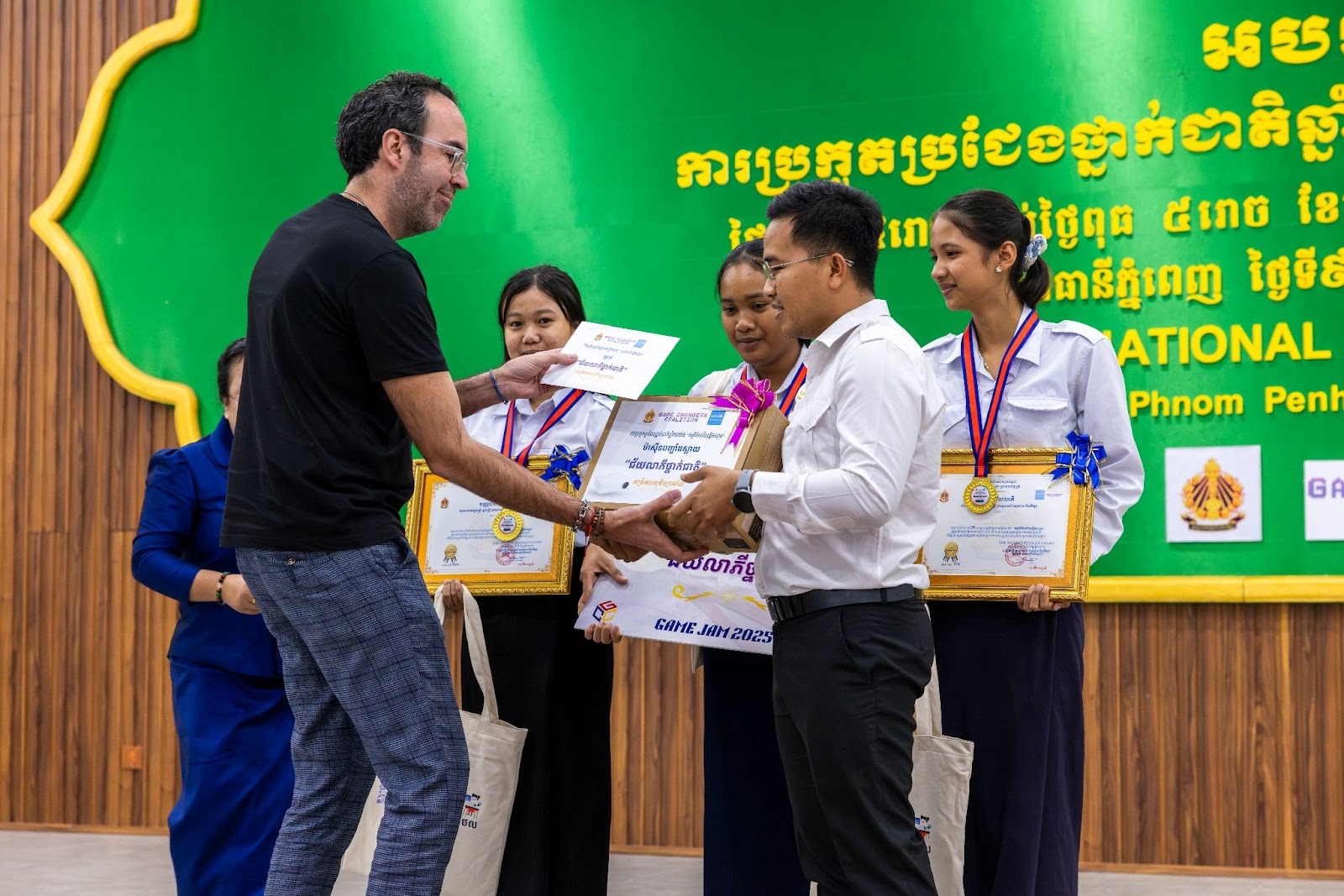
Bitget CMO, Ignacio Aguirre presenting awards.
During Aguirre’s visit, he met one of Cambodia’s winning teams from the first global UNICEF Game Jam — a virtual hackathon that connected young creators from the eight participating countries of the Coalition.
Cambodia emerged as one of the strongest participants, securing four of the seven global award categories.
“I am inspired by the determination and talent I have seen from the young people in Cambodia. At Bitget, we believe that everyone should be equipped to take part in the digital world, from coding and design to emerging fields like blockchain. I am excited to see this generation of young digital creatives sharpening their skills to help shape an inclusive, equitable and prosperous digital future,” said Ignacio Aguirre.
During an interactive session set up for the exchange of insights and experiences, participants shared their creative process, the stories steeped in culture and community that inspired their games, and the skills they are proud to be mastering.
“Aside from learning how to write code, we learned how to draw, how to develop storylines, find solutions when we encounter problems, and study to understand those problems step by step. We also learned how to work in teams and understand each other much better. Before taking part in Game Changers, I thought games were only for entertainment. Now I see they can solve real problems. I want to keep building things that make life better for my community,” said Rachna, a 16-year-old video young creator from Takeo province and a member of Green Ever, a winning team in the global UNICEF Game Jam.
During the National Game Jam in Phnom Penh, co-hosted by UNICEF and the Cambodian Ministry of Education, Youth and Sport (MoEYS), more than 600 students (over 65% of them girls) aged 10 to 18 from 14 schools across 11 provinces showcased and pitched their original video games to a jury of experts, following a six-week tailored learning journey.
Their projects drew on personal experiences and issues affecting their communities.
“Every year, millions of girls around the world miss out on opportunities in the digital economy because they lack access to the skills and networks needed to thrive. In Cambodia, innovative learning approaches like video game development are breaking barriers and driving digital inclusion and confidence in our students, regardless of their gender. Young people, including those from hard-to-reach areas, are discovering that they belong in these spaces and that their ideas matter,” said Dr. Will Parks, UNICEF Representative in Cambodia.
“This initiative places girls at the centre of Cambodia’s digital transformation. It empowers them to become creators, innovators, and leaders in the digital age by eliminating gender gaps in digital education and ensuring equitable access to modern learning opportunities. Through coding, problem solving, and teamwork, girls build critical thinking, leadership, and digital literacy skills that prepare them to contribute meaningfully to national development. The girls who design games today are the future software engineers, digital entrepreneurs, and technology leaders who will drive Cambodia’s social and economic progress,” said H.E. Dr. Kim Sethany, Permanent Secretary of State of the MoEYS.
Globally, the Coalition aims to reach 1.1 million people across twelve countries by 2027, contributing to UNICEF’s global ambition to expand learning and skills-building opportunities for girls.