

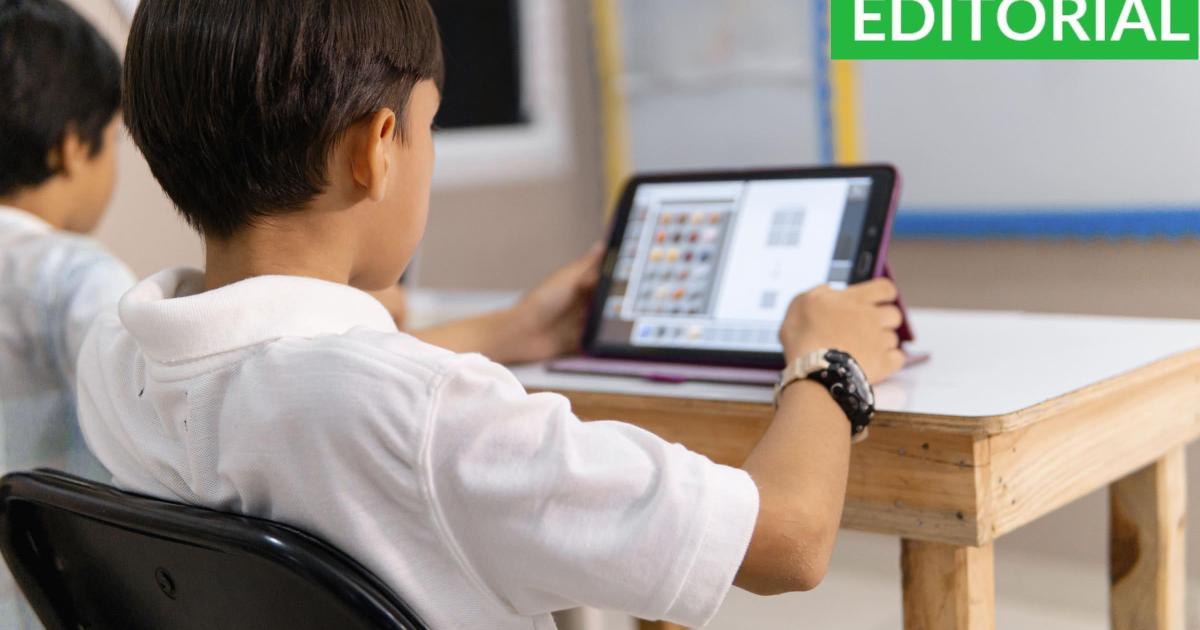
Time to rethink digital education
As we approach the sixth anniversary of the dramatic COVID-19 shutdowns,
UNESCO’s publication ‘An EdTech Tragedy?’ – originally released as a study in 2023 – prompts us to ask whether the solutions for children may have been as disastrous as the problems.
Lest we forget, the pandemic created a crisis that gave little time for measured responses. The stakes were high: over 1.6 billion learners were affected by school closures.
Technology was already finding its way into every corner of our lives. Adults were already aware of how the extra tools made our lives easier – but not necessarily better – whether we consider social media pressure or the power of AI to take over jobs.
The outcome for children is even more dramatic. Admittedly, education theory is hampered by glacially slow legislation and evolution of teaching methods and curriculums.
But UNESCO has now warned in no uncertain terms – its experts were ‘horrified’ – about the impact of technology, and that while it opens important new horizons, it is all too easy for children to be left behind, emarginated and isolated. It called Ed-Tech “the disaster of digital learning”.
The digital divide across the world meant nearly 500 million learners were left without access to remote learning.
But this is not only about the lack of access to technology: indeed, it is about the impact in areas where phones, laptops and tablets were ubiquitous.
Childhood is complex, and while no one would question the role of technology when the pandemic forced us into the unknown, we should not forget that school is not only about learning facts. Children have already lost so many elements of childhood over the past few decades: busy streets, extracurricular activities and health and safety considerations – not to mention well-meaning parents – have meant less and less unstructured time.
And that time leads to imagination, socialising, problem-solving, building resilience and shaping growth into adults.
Teachers are trained to be able to guide our children through emotional and personal development, learning to live together, understanding the environment, honing critical thinking and prompting imagination and creativity.
Malta’s educational policymakers could learn much from the UNESCO document. While other countries are looking at the impact of social media and ways to restrict it, Malta is still handing out tablets to schoolkids, but we need to ask whether these have helped with cognitive skills, literacy or maths. There are already a number of studies which show that they have no positive impacts.
And having all these tools at their disposal did not necessarily help teachers to improve their own digital skills.
How does Malta fare internationally? The National Audit Office had already done a study to assess the impact of offering tablets to schoolchildren, but this was in 2019, and things have changed dramatically since then.
Malta’s scores in the 2022 Programme For International Student Assessment – known as PISA – were below average for the subjects surveyed, maths, reading and science, in spite of the provision of tablets, so they are certainly not helping with learning outcomes.
The trends, even globally, are worrying. A recent study on Gen Z showed drops in several scores, after decades of steady improvement.
And the blame was placed by experts on the proliferation of screens with children’s exposure to things like short video formats – yes, unfortunately also on school devices! – and the impact of such passive viewing replacing more active scanning and involvement.
All this works against the benefits of socialising, concentration, reading and discussion.
UNESCO’s report highlights the concern that many millions were being spent on digital aids, generating profits for providers – direct or indirect – without asking whether these devices are helping or hindering.
How often do we hear that our children are the future? Surely we have a duty to ensure that they are as prepared for it as possible?