

How a Computer Centre in Agra Is Boosting Digital Skills
In the Agra district, Bipin Kumar is among those who have used the scheme to formalise their experience into a community-focused enterprise.
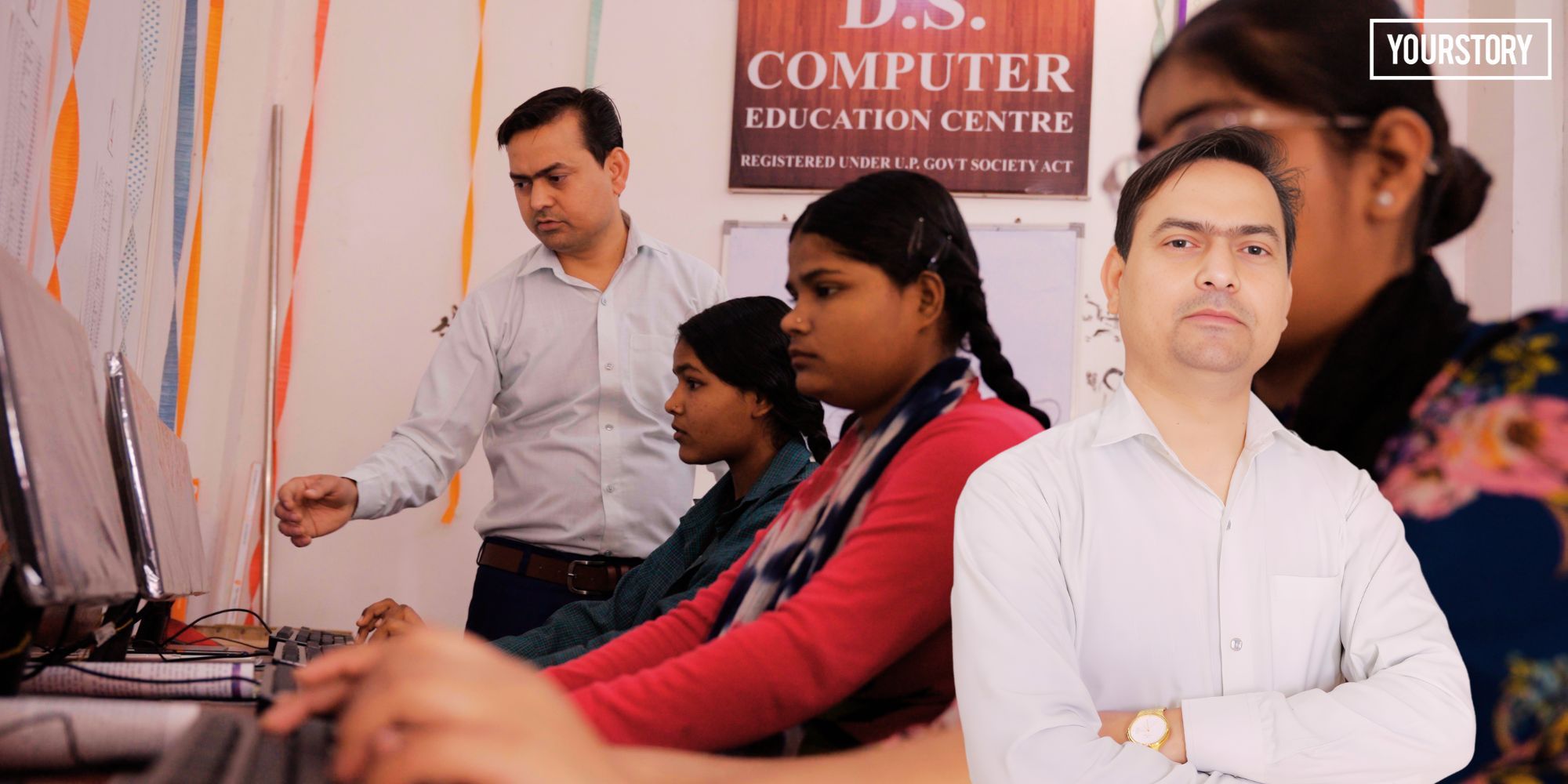
Kumar, a graduate with a BA and ITI qualification, runs the D.S. Computer Education Centre in Agra. The institute offers computer education to students from basic to advanced levels, aiming to strengthen technical literacy in the local area.
From private teaching to entrepreneurship
Before starting his own centre, Kumar worked as a computer teacher in private institutions. He had been teaching since 2010 and had spent years in the classroom. Over time, he began to feel that continuing in private employment would not offer long-term growth or stability.
“I realised that this journey might not lead to the success I was hoping for,” he recalls.
The turning point came when he learned about the CM YUVA Yojana scheme , through a Jan Seva Kendra. Curious about the opportunity, he visited the District Industries Centre (DIC) office in Agra to gather detailed information. He also approached his bank to understand the loan process and repayment structure before submitting his application.
According to Kumar, one of the most significant advantages of the scheme is the provision of loans without interest. For aspiring entrepreneurs who already possess skills and experience, this reduces the financial burden at the early stage of business.
He believes that individuals with domain knowledge should not hesitate to use such schemes. “If you have skills and experience, you should develop them further and make proper use of the opportunities available,” he says.
Building skills for employability
D.S. Computer Education Centre offers a range of courses designed to meet varied student needs. For beginners with no prior knowledge, the institute starts with a three-month basic fundamentals course that introduces essential computer skills.
Students interested in accounting can enrol in Tally courses. The centre also offers CCC (Course on Computer Concepts), six-month diploma programmes such as DCA, and one-year diploma courses like ADCA. These programmes are structured to provide practical knowledge and technical competence.
Kumar emphasises that the goal is not just certification, but meaningful learning. Students who complete diploma courses gain confidence and technical understanding that can help them pursue employment or further education in the technology field.
By setting up the D.S. Computer Education Centre, Kumar has transitioned from being a private employee to a local entrepreneur contributing to skill development in Agra. His journey reflects how structured government support, combined with prior teaching experience, can help individuals establish independent ventures.
For Kumar, the motivation remains simple: to provide accessible computer education and ensure that students in his district are better prepared for a technology-driven future.