

How Digital Inclusion is Transforming the Lives of Rural Women and Girls in Chile
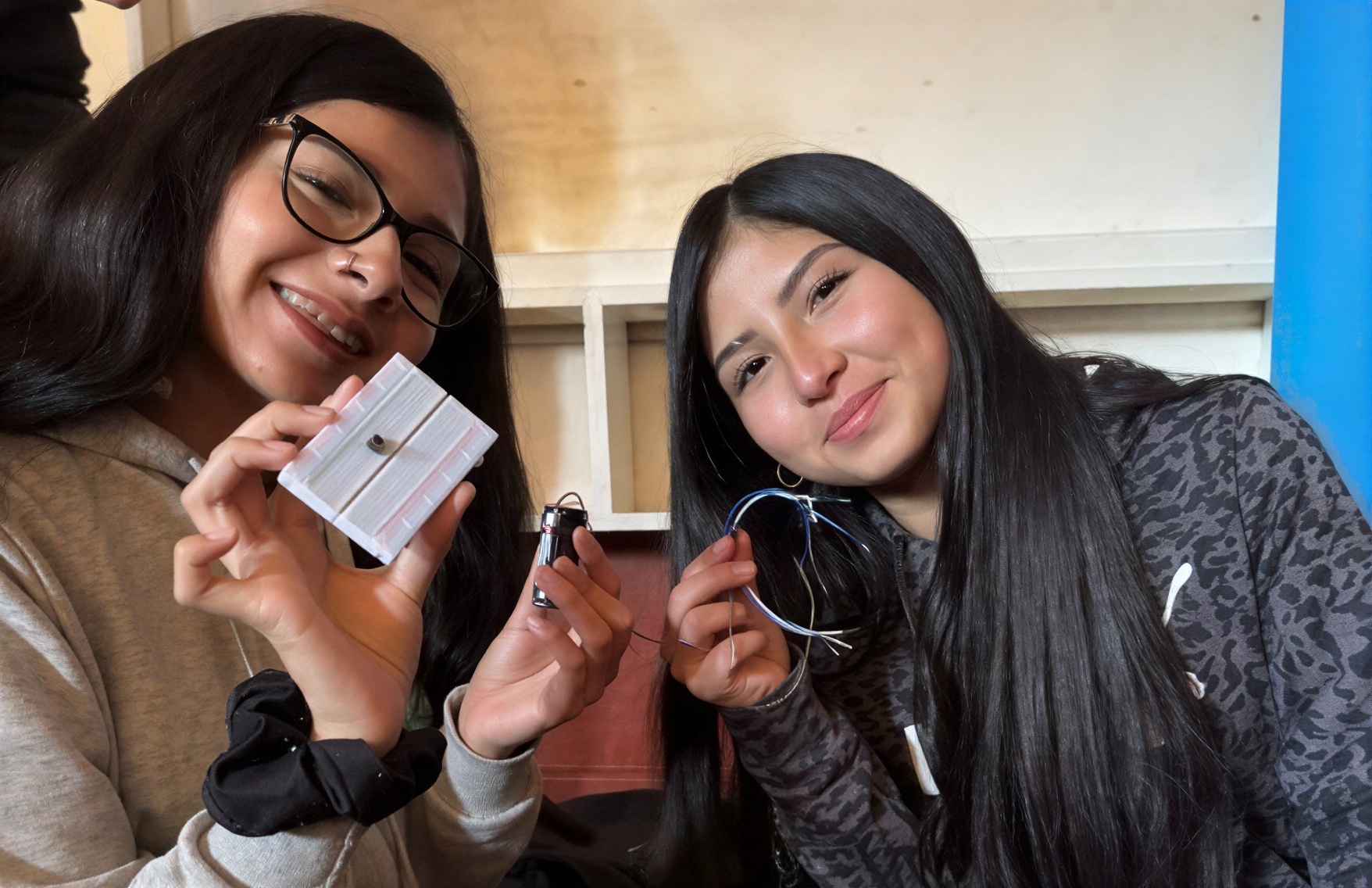
In the rural Ñuble region of Chile, where connectivity and access to digital tools are often limited, 15-year-old Jessika Hurtado is a budding technology whiz. Learning how circuits function and how communication technologies operate gave her the confidence to take her curiosity further.
Today, Jessika leads a biotechnology project that uses naturally occurring bacteria to help cilantro crops withstand extreme frosts and droughts linked to climate change. Her project connects scientific knowledge with agricultural realities in her community.
“There should be a field of equality where one gender does not stand out more than another,” Jessika says. She believes girls need more opportunities to explore science without fear of judgment or limitation. Her work demonstrates how early exposure to technology can evolve into climate innovation and local problem solving.
In the same region, Amanda Ledesma is using code to tell new stories. Engaging with the UN in Chile is helping Amanda combine her interest in coding with geophysics. She is now developing a georadar prototype to detect underground water tables and geological faults.
For Amanda, digital inclusion is about perspective. Her message to other girls is simple: “Be bold, nothing is as difficult as it seems. If you have an idea, you can do whatever it takes to achieve it.”
The stories of Amanda and Jessika are not isolated. They were among nearly 100 girls trained in using electric circuits by UN Women together with the International Telecommunication Union, as part of the “Connected Communities (Comunidades Conectadas)” initiative.
Bridging Gender Gaps in Chile’s Digital Landscape
Chile has one of the highest levels of internet use in Latin America, with 94.5 per cent of the population online. However, this does not mean that everyone benefits equally. In many rural and remote communities, such as the Ñuble and La Araucanía regions, reliable connectivity and access to digital tools remain limited, shaping who can study, start a business or pursue new opportunities.
Caption: In Chile, 94.5 per cent of the population uses the internet, yet digital opportunities and benefits remain unevenly distributed.
Photo: © ITU
For women and girls, the barriers are even higher. Out of every 100 people working in STEM fields in Chile, 77.6 are men, while only 22.4 are women. Women often have less access to the available devices, fewer chances to develop technical skills and face persistent stereotypes about who “belongs” in science and technology.
Today, this reality is beginning to change.
Led by the Resident Coordinator’s Office of the United Nations System in Chile and financed by the Joint SDG Fund, the “Connected Communities” initiative brings together the public and private sectors, civil society and other stakeholders to build resilience within communities that risk being left behind.
Its goals include the installation of over 50 connection points in the Ñuble and La Araucanía regions of Chile, providing more than 8,500 people with access to broadband. This connectivity has a snowball effect. It unlocks access to education, public services, health care through telemedicine, social protection platforms and new economic opportunities, reaching and improving the lives of over 440,000 people. These investments go hand in hand with digital skills trainings for more than 2,000 people, including women, small farmers, young people and indigenous communities.
For women and girls in particular, these opportunities are making a meaningful difference, giving them confidence and the means to be resilient in the face of economic shocks and harness their leadership for the prosperity of their communities.
Caption: The launch of the “Connected Communities” initiative in Coelemu, Chile featured demonstration modules on telehealth, digital agriculture and local entrepreneurship.
Photo: © UN Chile
Learning and Growing with Technology
Beyond the “Electric Circuit for Communicating” workshops, “Connected Communities” promotes educational, technological and leadership opportunities that let girls and women across the country develop their talents, build their confidence and become leaders in a fairer, more inclusive and sustainable future.
Other examples include the “Mujeres Conectadas (Connected Women)” Business School, where rural women strengthened their digital marketing, financial literacy and business management skills. Improved digital capacity supports greater autonomy, resilience and economic participation. Notably, 83 per cent of the participants were women from the Indigenous Mapuche community.
Lucy Catrileo Neculqueo, one of the participants, remains inspired by all that she has learned, noting that “daring to learn is the first step in moving our projects forward.”
Furthermore, the “Ciudadanía Digital y Género (Digital Citizenship and Gender)” course has trained older rural women in cybersecurity and the safe use of state digital services, fostering their independence and protection in online environments.
By integrating gender equality across all efforts, “Connected Communities” ensures that digital transformation expands opportunity rather than deepens divides.
Caption: A course entitled “Digital Citizenship and Gender” was held in collaboration with the Las Familias Foundation, aimed at strengthening basic digital skills, promoting the use of government services and empowering women in the communities of Temuco, Chillan and Coelemu.
Photo: © UN Women Chile
United Efforts for Lasting Change
This impact would not be possible without coordinated action across the United Nations system in Chile.
“Connected Communities” brings together the Food and Agriculture Organization (FAO), the Pan American Health Organization/World Health Organization (PAHO/WHO), the United Nations Entity for Gender Equality and the Empowerment of Women (UN Women), the International Telecommunication Union (ITU) and the Economic Commission for Latin America and the Caribbean (ECLAC).
The Resident Coordinator’s Office plays a central role in convening agencies, aligning expertise and ensuring that efforts contribute coherently to national priorities and the Sustainable Development Goals.
Each agency contributes its comparative advantage, from digital connectivity and policy expertise to gender equality and rural development. Working together, they demonstrate how integrated United Nations collaboration can accelerate inclusive digital transformation at the local level.
María José Torres, UN Resident Coordinator in Chile recognises how this approach can be a catalyst for long-term growth.
“Digital transformation must be inclusive and recognise rural women as agents of change,” she notes. “Their participation strengthens both their autonomy and the resilience of their communities in the face of social and economic challenges.”
When women and girls are well equipped to shape the digital future, entire communities move forward with them.
And that is a story worth celebrating.
This piece is published in recognition of International Women’s Day 2026 under the theme “Rights. Justice. Action. For All Women and Girls!” The stories from rural Chile show how inclusive digital transformation can expand opportunities for women and girls. From young innovators exploring science and technology to rural entrepreneurs strengthening their businesses, initiatives like “Connected Communities” are helping turn commitments to gender equality into tangible progress.
Please visit the UN team’s website for more information about the UN’s work in Chile.