

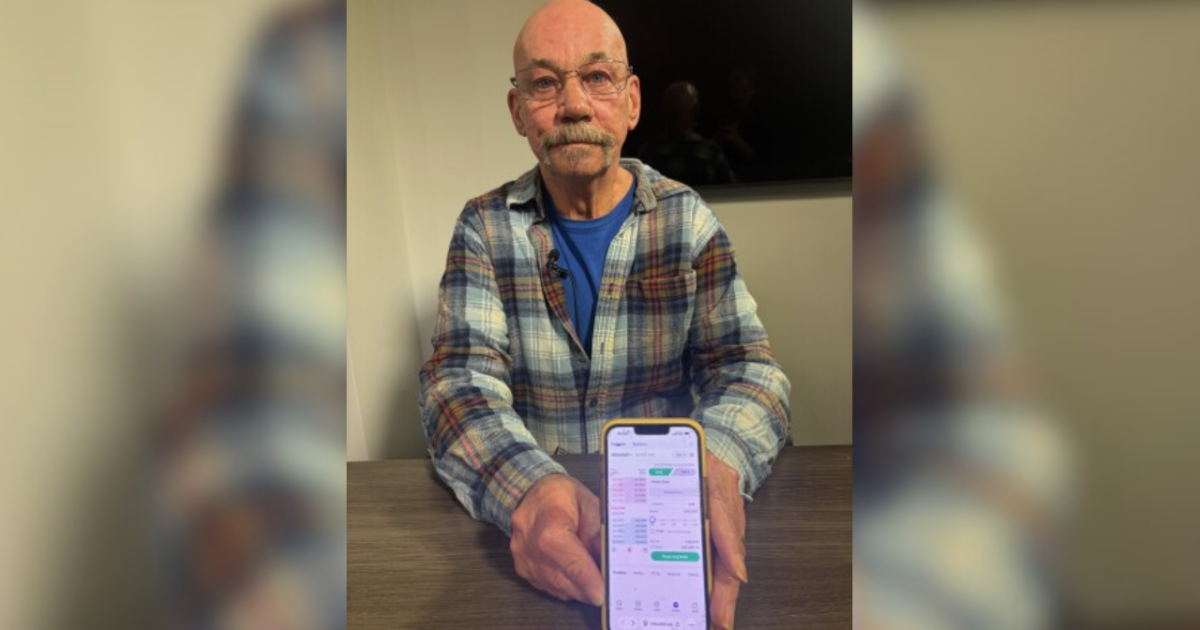
Bedford retiree warns others after losing $10K to pig-butchering scam
BEDFORD, Ind. — A Bedford retiree is warning others after falling victim to a pig-butchering scam.
“I’m out $10,000 and I want people to know about it,” said Timothy Patton, a retired road construction worker. “I would prefer other people not fall into the same thing.”
WATCH FULL STORY BELOW:
Bedford retiree warns others after losing $10K to pig-butchering scam
Pig-butchering is an investment scam in which the scammers target victims online and develop a relationship before introducing a fraudulent investment opportunity.
The “fattening up” portion comes as the scammers gain your trust. The “butchering” part happens when they take your money.
The FBI says the pig-butchering scam has been around for a while, but the bad guys are using cryptocurrency and new technology to make it even more believable.
Timothy Patton said the scam started while he was scrolling Facebook and he saw a celebrity advertisement for investing.
“It was a study group to learn about investing,” said Patton. “We went from WhatsApp to Signal.”
On encrypted messaging apps, Patton spoke with an advisor named “Sabrina.”
WRTV
For months, he learned about investing in his study group and said they even sent him a gold coin in the mail.
Patton agreed to invest $10,000 from his Roth IRA.
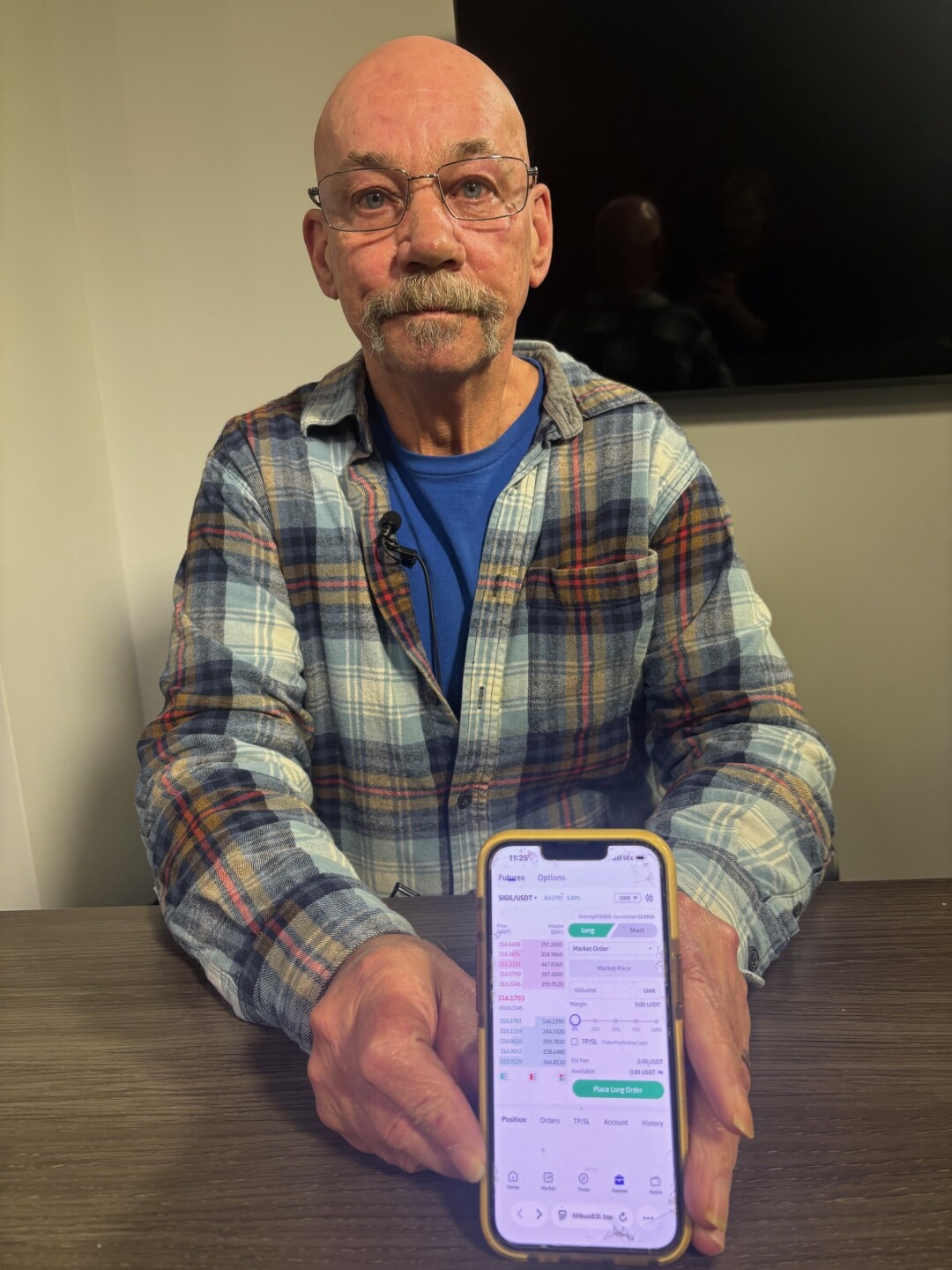
Patton showed WRTV Investigates the trading platform that shows he made $15 million from his $10,000 investment.
“That’s what it shows I made,” said Patton.
However, WRTV Investigates confirmed with several experts the platform is completely fake.
The retiree loved the idea of growing his nest egg, but he started getting suspicious.
“I’d like to fix up my house right now,” said Patton. “They wanted me to pay them $33,000 in order to withdraw it. I don’t have $33,000 so I told them I couldn’t do it.”
He filed complaints with the FBI, the Federal Trade Commission and the U.S. Securities and Exchange Commission (SEC).
He then contacted WRTV Investigates.
“I just wanted to have someone listen to me and explain what was going on and why wasn’t anyone doing anything about it,” said Patton.
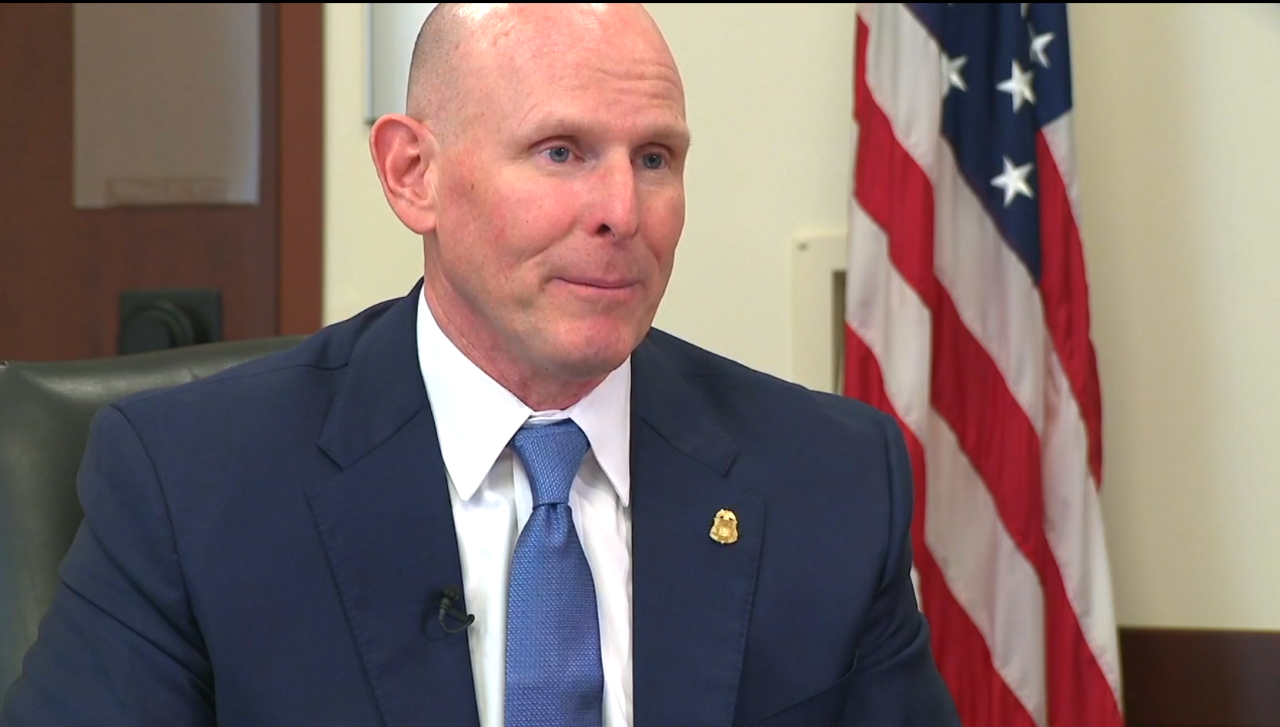
WRTV Investigates took Patton’s story to the FBI’s Special Agent in Charge of the Indianapolis office, Timothy O’Malley.
WRTV
- WRTV Investigates: What is the FBI doing about this problem?
- FBI: We are one trying to educate the public.
- WRTV Investigates: Where are most of these scammers located?
- FBI: Currently Myanmar in Southeast Asia is a big place where they host these call centers. The problem is that when you deal with call centers in foreign countries, it’s hard to identify who the bad guy is a lot of times. You’re using encrypted apps. It’s so difficult.
- WRTV Investigates: Why doesn’t the FBI go after these people and put them in prison?
- FBI: We will go after the criminals. We will always try our best. Sometimes with cryptocurrency investments, the money gets very hard to trace. If we know who the bad guy is and we have a victim we can talk to and we can actually impose consequences, then that makes it a lot easier. With limited resources, we can’t investigate everything. We try to make the biggest impact we can by going after the criminals we can impose consequences.
WRTV Investigates learned the State of Wisconsin is taking action on the same scam that victimized Timothy Patton.
Last month, the Wisconsin Department of Financial Institutions filed a cease-and-desist order against “Sabrina,” likely an alias, and the same trading platform used by Indiana victim Timothy Patton.
The state of Wisconsin is seeking $17,000 in restitution for a man who fell victim to the scam.
WRTV Investigates contacted the Indiana Secretary of State and Attorney General to see if they are taking action or investigating.
“The Indiana Securities Division does not comment on pending cases and investigations,” responded Indiana Secretary of State spokesperson Lindsey Eaton in an email to WRTV.
The FBI says cryptocurrency investment scams, a type of pig-butchering, cost people $5.8 billion in 2024—a 47% increase from 2023.
2025 numbers are not yet available, but in 2024, the hardest hit age group was people over the age of 60 with more than $1.6 billion in losses.
FBI’s Special Agent in Charge of the Indianapolis office, Timothy O’Malley, said there’s a reason scammers are using cryptocurrency to carry out their pig-butchering scams.
WRTV
“It’s new,” said O’Malley. “People don’t know as much about crypto as they need to.” The FBI says new technology helps scammers create apps, websites and trading platforms that are more believable.
“It’s very sophisticated,” said O’Malley. “It’s going to be state of the art. There’s a lot of money to be made, so the bad guys invest a lot in the backbone to support their schemes.”
The FBI recommends the following tips to protect yourself:
- Invest with regulated brokers
- Do not use encrypted messaging apps to communicate about investments
- Don’t give money to anyone you meet online
- Do your research. A lack of information about a company is a red flag.
O’Malley said the bad guys are constantly adapting.
“They take it all down and it disappears, and then they come up with some new name. and then a new name,” said O’Malley. They’re constantly trying to stay ahead of the curve of law enforcement .”
Timothy Patton knows his money is long gone, but he wants to share his story to help others.
“I understand the embarrassing part of it because I kind of look like a fool,” said Patton. “I’m out $10,000 and I want people to know about it. I would prefer other people not fall into the same thing.”
Timothy Patton provided the scammers with personal information including his Social Security number.
WRTV Investigates told Patton he should file a credit freeze.
Any Indiana resident can request a credit freeze free of charge, according to the Indiana Attorney General’s office.
WRTV
To place a freeze, either use each credit agency’s online process or send a letter by certified mail to each of the three credit agencies.
The Attorney General’s office says to make sure you freeze your credit with each credit bureau- a freeze with one bureau will not transfer to the others.
Equifax Security Freeze
P.O. Box 105788 Atlanta, GA 30348 Place a Security Freeze Online with Equifax
Experian Security Freeze
P.O. Box 9554 Allen, TX 75013 Place a Security Freeze Online with Experian
TransUnion LLC Security Freeze
P.O. Box 2000 Chester, PA 19016-2000 Place a Security Freeze Online with Trans Union
For each, you may be asked to provide:
- Your full name (including middle initial as well as Jr., Sr., II, III, etc.,) address, Social Security number, and date of birth
- If you have moved in the past five years, you will need the addresses where you have lived over the past five years
- Proof of current address such as a utility or phone bill (alternative options include a bank, insurance, or credit card statement listing your full name and address)
- A photocopy of a government-issued identification card (state driver’s license or ID card, military identification, etc.)
ADDITIONAL TIPS FROM THE U.S. SECRET SERVICE:
• Be wary of people you meet on dating websites or social media who offer you unsolicited financial, investment, or cryptocurrency advice.
• Be cautious of unsolicited investment opportunities offered via phone, message, email, social media, or in person.
• Always question the legitimacy of projects that sound too good to be true, are advertised as having high rates of returns with little or no risk to your original financial investment deposit, or are advertised as “the next big thing.”
• Shield yourself from scenarios in which you are encouraged to open an account on a cryptocurrency trading platform and transfer funds from your bank account to invest in cryptocurrency projects.
• Never share personal financial information with individuals you have not met in person. If the promoter of an alleged investment is asking you for sensitive information, such as your social security number or bank account details, is using high pressure tactics to attempt to force you to invest, or claims you need to pay a fee or provide identifying documents to unlock access to an investment opportunity or liquidate existing profits, immediately remove yourself from the situation by ceasing all communications.
• Avoid projects that involve you earning money in exchange for recruiting others to invest in a project, as this is likely a pyramid scheme.
• Consult the websites of federal and state regulatory authorities and online corporate records concerning any proposed investment, investment firm, or anyone representing themselves to be a broker or similar.
• Conduct searches via Internet search engines to attempt to identify any online reports flagging particular investment or cryptocurrency projects of interest as scams.
• Request to review financial statements, annual reports, or audit results for any proposed investment.
• Warning signs that you are a victim of a scam include notifications, messages, or websites indicating that you have made large amounts of money in a short time period.
• Red flags include perceived “friends” or romantic partners who you have met online but who can seemingly never meet in person and avoid showing themselves on video calls. Do not be embarrassed about being a victim. Immediately report this fraud to your local law enforcement agency.