

WHO EMRO – Strengthening early warning systems to detect health emergencies in Yemen
19 April 2026, Aden, Yemen – In Yemen, where a fragile health infrastructure, undermined by years of conflict, faces recurring disease outbreaks, strengthening early detection and coordinated response to public health threats remains a priority.
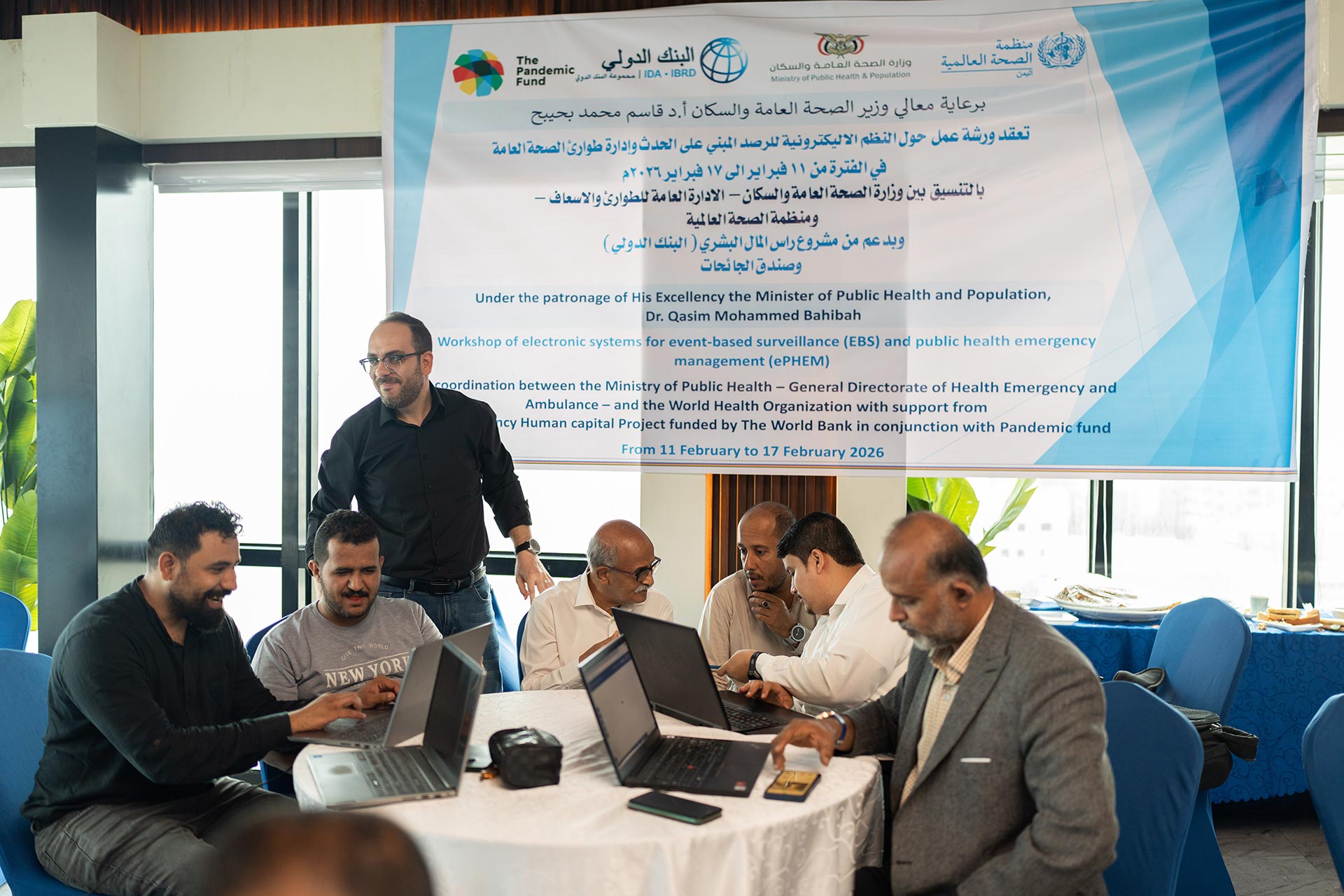
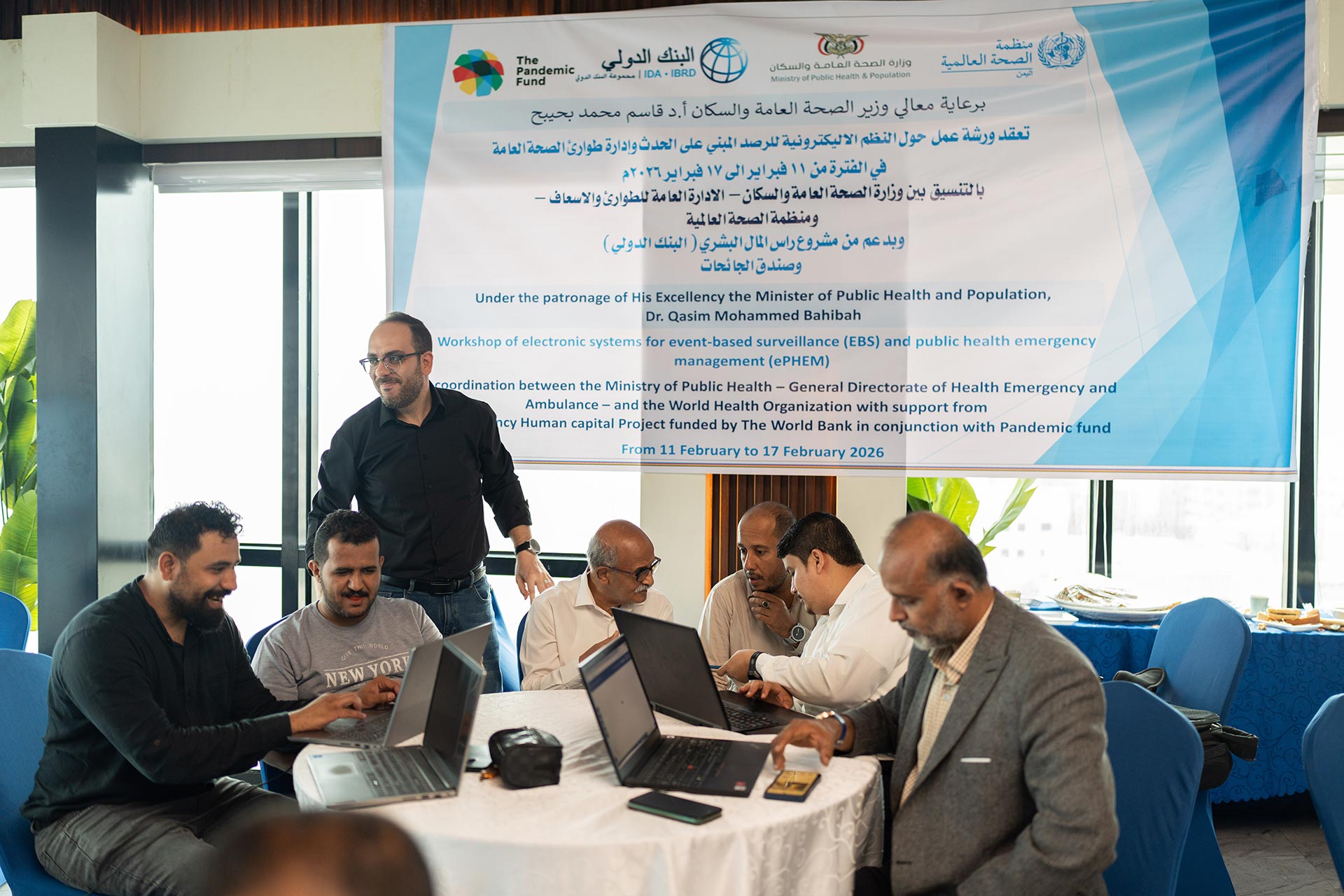 Participants strengthen digital surveillance and emergency management skills during a WHO-supported workshop in Aden. Photo credit: WHO Yemen
To strengthen early warning systems and emergency management capacities, the World Health Organization (WHO), in collaboration with the Ministry of Public Health and Population, convened a training workshop in Aden from 11 to 16 February 2026 on electronic event-based detection systems (EBS) and public health emergency management (PHEM).
The workshop was supported by the World Bank through the Emergency Human Capital Project (EHCP) and by the Pandemic Fund through the Pandemic Preparedness and Response Project.
The 37 participants were drawn from key staff at public health emergency operations centres (PHEOCs), epidemiological departments and other relevant units at both national and governorate level.
Through interactive sessions, discussions and live demonstrations, participants strengthened their knowledge of core public health emergency management concepts and enhanced their ability to detect, assess and manage health events through digital systems.
 Group photo of participants during the WHO-supported workshop on digital surveillance and public health emergency management in Aden. Photo credit: WHO Yemen
The workshop included practical training on two key digital platforms: Epidemic Intelligence from Open Sources (EIOS) and the electronic Public Health Emergency Management system (ePHEM). EIOS enables health authorities to identify early signals of potential public health threats by analyzing publicly available information, including news reports and online sources, for public health purposes. The ePHEM supports structured tracking, and the coordination/ management of emergency responses in real time.
 Hands-on training enhances capacity to detect and respond to public health threats using digital systems. Photo credit: WHO Yemen
Participants gained hands-on experience in the use of these tools in managing public health and emergency response data, identifying early warning signals of public health threats and coordinating emergency response actions more effectively.
“Strengthening digital early warning and emergency management systems is essential in a context like Yemen, where health threats can emerge rapidly and resources are limited,” said WHO Representative in Yemen, Dr Sayed Jaffar. “Through the Emergency Human Capital Project, with support of the World Bank, WHO is committed to building the skills of Yemen’s health workforce and strengthening systems that help detect health risks early and protect communities.”
By investing in digital tools and strengthening the capacities of health professionals, WHO and its partners are supporting Yemen in building stronger early warning and emergency response systems and ultimately saving lives.