

Open Knowledge for Youth Digital Inclusion – Diff
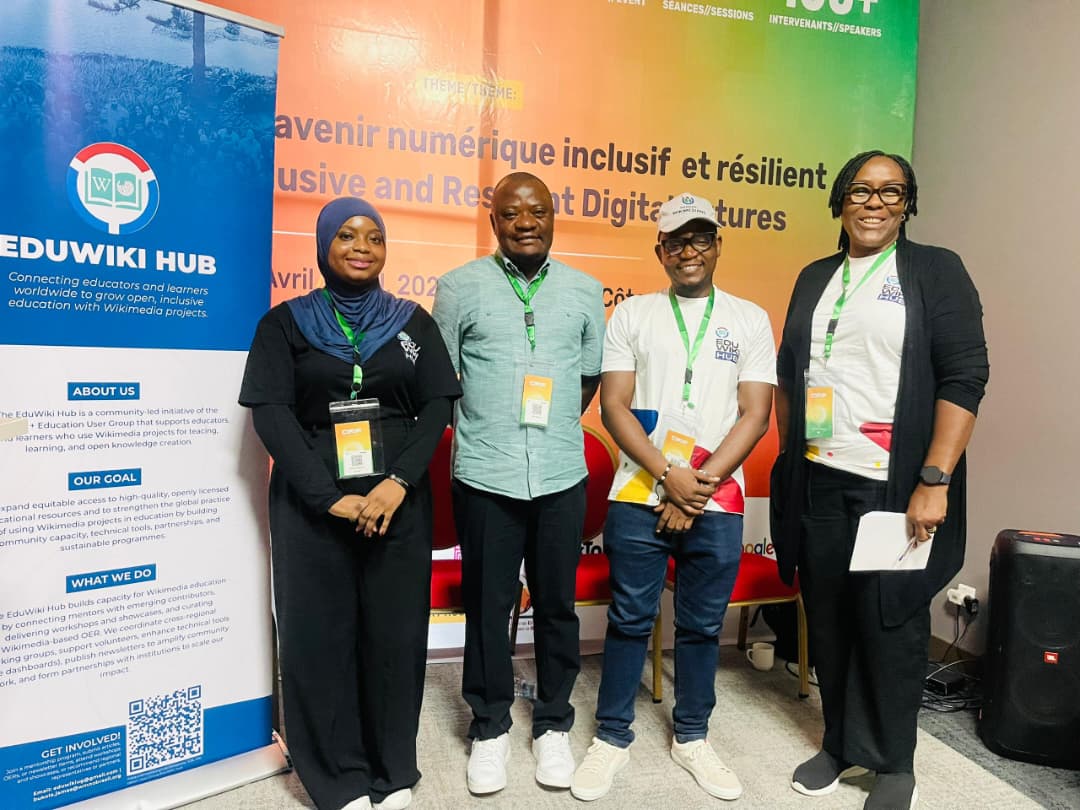
On Wednesday, 15 April 2026, the EduWiki Hub hosted a panel session at the Digital Rights and Inclusion Forum (DRIF) titled “Open Knowledge for Youth Digital Inclusion: Rights, Skills, and Participation.” The session brought together 17 participants for an engaging discussion on how to move beyond access and enable meaningful youth participation in digital spaces.
The EduWiki Hub was represented by Barakat Adegboye, Communications Assistant, who moderated the session and also contributed as a speaker, bringing the EduWiki perspective into the broader digital rights conversation. Her participation at DRIF 2026 was made possible through the support of the Wikimedia Foundation.
Setting the Stage with Library Aid Africa
The session opened with a video from Library Aid Africa, featuring Peace Agada, which highlighted how libraries can serve as active digital hubs for youth engagement. Through initiatives such as the Young African Library Leaders Fellowship, the video demonstrated how digital tools can be used not just for access but for participation, learning, and community impact.
This set the tone for the discussion by grounding it in real, community-driven examples of youth inclusion.
Panel Discussion
The panel featured contributions from:
The discussion explored three key areas: information equality, digital skills, and sustainable models for engagement.
Dr. Nkem Osuigwe shared insights into AfLIA’s work in building youth capacity through initiatives such as the AfLIA Leadership Academy and the Initiative for Young African Library Innovators. She emphasized that meaningful participation starts with mindset, highlighting the need to empower young people to see themselves as active contributors within the knowledge ecosystem.
Sadik Shahadu spoke about the importance of local language content in bridging knowledge gaps. He shared how the Dagbani Wikimedians User Group sustains youth engagement through partnerships with schools, mentorship structures, and initiatives like Reading Wikipedia in the Classroom. He also noted that aligning with youth interests and providing incentives are key to retaining contributors.
Willy Buloso reflected on challenges affecting youth participation, including limited time, indequate awareness, and a weak volunteering culture. He emphasized the importance of clearly communicating the benefits of participation and building trust by creating opportunities, including access to funding and support for growth.

Key Takeaway
A central theme that emerged from the discussion was the need to shift from viewing young people as consumers of digital content to recognizing them as creators and contributors.
Digital inclusion must go beyond being online. It must enable young people to actively shape the knowledge that exists online.
EduWiki Hub Perspective
As both moderator and speaker, Barakat Adegboye highlighted how the EduWiki Hub contributes to this shift by working with educators, institutions, and communities to integrate open knowledge into learning and participation.
She emphasized that Wikimedia-based approaches are practical and adaptable, offering pathways for youth to develop digital and media literacy skills while contributing to locally relevant knowledge.
The session also sparked reflections from participants, including a suggestion to explore the intersection between open knowledge and refugee education as a potential area for future engagement.
Conclusion
The session concluded with a shared understanding that digital inclusion is not just about access, but about participation, representation, and agency.
As conversations on digital rights continue across Africa, open knowledge approaches offer a clear pathway to ensuring that young people are not only included in digital spaces but are also empowered to shape them.
Can you help us translate this article?
In order for this article to reach as many people as possible we would like your help. Can you translate this article to get the message out?
Start translation