

Modernize the Prison to Work Pipeline
Philadelphia faces two urgent, interlocking crises: a persistent workforce shortage across healthcare, transportation, construction, and public service, and a public safety challenge that demands more than policing. The solution to both sits largely behind prison walls, untapped.
For Pennsylvania to expand its workforce and improve public safety, it must treat technology-enabled education and job training inside prisons as critical workforce infrastructure to prepare people for employment long before they return home.
PA incarcerates more than 73,000 people statewide, and Philadelphia alone receives roughly 25,000 returning citizens each year. These individuals represent a workforce waiting to be unlocked. The question is how PA can build the infrastructure to make that workforce ready.
The economic stakes are real. Nearly one in three Americans has an arrest or conviction record, a number projected to reach 100 million by 2030. Post-release unemployment runs nearly five times the national rate. National estimates put the cost of employment barriers for people with records at tens of billions in lost productivity annually. In Philadelphia, where workforce participation and public safety are directly linked, that is a structural failure.
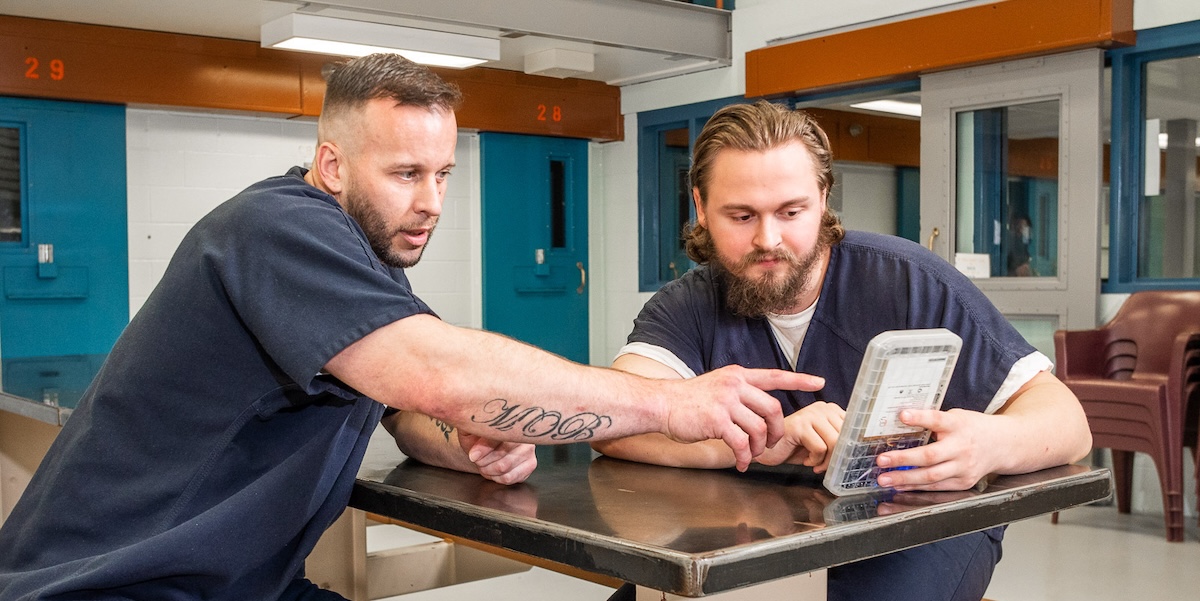
Closing that gap at scale requires technology that delivers workforce preparation inside correctional facilities before people are released. Secure, purpose-built platforms now operating in correctional facilities across the country allow individuals to complete education programs, build digital literacy, earn industry-recognized credentials, and develop job-readiness skills in a structured, accountable environment. These tools operate under strict protocols, support workforce pathways, and cost far less than repeated cycles of incarceration and unemployment.
This infrastructure presents the opportunity to build a workforce pipeline that begins on day one of incarceration rather than the day of release. When corrections agencies, workforce development boards, education providers, and responsible technology partners operate in alignment, the result is a system that delivers prepared candidates, not just released individuals, into the labor market.
Workforce readiness is one of the most effective, evidence-based public safety strategies available, and one that pays for itself. Stable employment is among the strongest predictors of reduced recidivism.
We know what preparation makes possible. Suave Gonzales was sentenced to life at 17 for a crime he didn’t commit. He taught himself to read in solitary confinement, earned college degrees, and after 31 years became a Pulitzer Prize-winning podcaster. Today, he leads I Am More, a reentry program at the Community College of Philadelphia that pairs education and digital literacy with direct employer connections. Jane Oates has spent her career at the intersection of workforce and education policy — from the Philadelphia School District to the PA Senate to leading the U.S. Department of Labor’s Employment and Training Administration. She has seen, from every angle, what happens when workforce systems invest in people before a crisis and what it costs when they don’t.
Workforce readiness is one of the most effective, evidence-based public safety strategies available, and one that pays for itself. Stable employment is among the strongest predictors of reduced recidivism. When people return home with credentials, digital skills, and a job offer in hand, they are less likely to reoffend, less likely to cycle back into costly systems of incarceration, and more likely to stabilize their families and contribute to their neighborhoods. Every $1 invested in reentry programs returns more than $4 to taxpayers, and education and job training reduce recidivism by up to 43 percent. There is a clear return on the public safety infrastructure investment.
April, which was Fair Chance Hiring Month, drew attention to who gets access to opportunity, and PA must focus on what makes opportunity stick: preparation, skills, and continuity before and after release. Employers benefit when the system delivers candidates who are credentialed, digitally literate, and prepared to succeed on day one.
Companies that hire people with records consistently report strong retention, high performance, and reduced turnover, outcomes that are only possible when preparation happens before release, not after.
PA has the political will, the labor and workforce coalitions, and the corrections infrastructure to build a model that works at scale. What is needed now is alignment around a common strategy: expand technology-enabled education and credentialing inside correctional facilities; align corrections agencies, workforce development boards, and employers around shared reentry outcomes; and treat reentry as a core component of PA’s workforce strategy. Philadelphia doesn’t need more programs. It needs a system. Build the infrastructure, and the workforce will follow.
David Luis “Suave” Gonzalez is a Pulitzer Prize-winning podcaster. He was also the first student success coach of I Am More, a reentry program at the Community College of Philadelphia that pairs education and digital literacy with direct employer connections.
Jane Oates is Senior Policy Advisor and former President of WorkingNation, a former Assistant Secretary for the Employment and Training Administration in the U.S. Department of Labor nominated by President Barack Obama, and a Philadelphia-rooted workforce and education leader who began her career teaching in the Philadelphia public schools.
The Citizen welcomes guest commentary from community members who represent that it is their own work and their own opinion based on true facts that they know firsthand.
 MORE ON RETURNING CITIZENS