

Teen ‘futurescapers’ rethink how learning should feel. It doesn’t involve school. – Las Vegas Sun News
Thursday, July 10, 2025 | 2 a.m.
A group of local youths has designed a place to give other high school and college-aged peers career, academic and personal guidance.
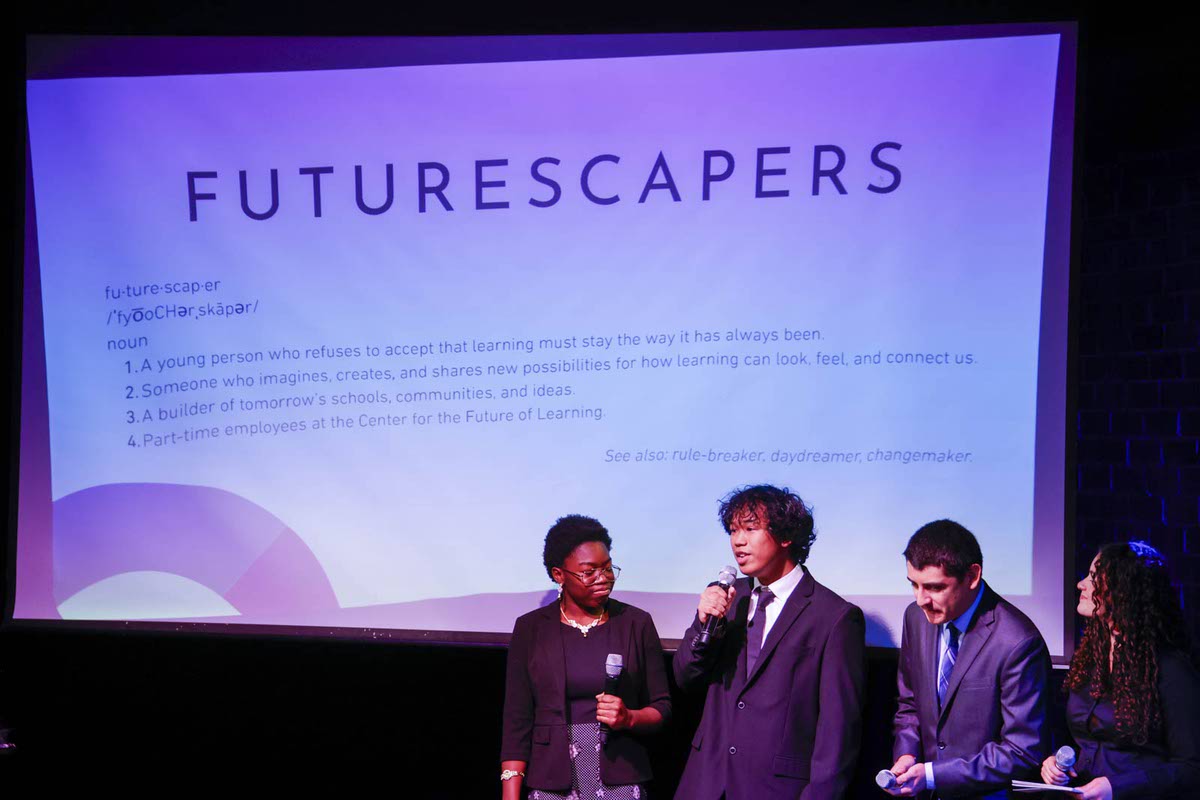
The young people, in collaboration with adult mentors at the local education nonprofit Center for the Future of Learning, have a vision for a place they call the IANhub, so called in reference to the name of a donor. In a presentation last week at the Vegas Theatre Company in the Arts District, they described it as a “mall of learning” that offers digital skills, life skills and mental health education, and performing arts and entrepreneurial business skills. They see classrooms and labs for arts and sciences. Attendance wouldn’t be compulsory, like it is for school, giving teens a sense of agency.
It could open within the next year.
“I feel like the mission of the IANhub is a place to further your own future,” said Danica Ruiz, 17, a student at Southwest Career and Technical Academy about to begin her senior year. “It’s not supposed to be really connected with school. It’s a place to fill in the gaps school doesn’t already fill, and it’s a place where any youth can come to kind of have that self-discovery and have those ‘a-ha’ moments of like, ‘Oh, maybe this is what I want to do. This is what resources I want to look into.’ And I feel like it’s very personalized.”
Thirteen high schoolers and recent graduates have spent this summer building upon work that they and peers have refined over the past three years to sketch out the learning center. As paid apprentices with the catchy title of “futurescaper,” thinkers and planners like Danica interviewed and surveyed peers, parents and community members.
Sean Parker, co-founder and CEO of the Center for the Future of Learning, said he didn’t give the young people all the answers when they asked him what they needed to do.
“I said, ‘Your only guideline is to invent the future. Good luck,’ ” he said.
At first, he said, they wanted to build a charter or private school, but those come with a lot of regulations and laws to follow.
During the presentation, Danica referenced the high chronic absenteeism rates that have persisted statewide in the years since the pandemic.
“Why would young people want to go to the IANhub if they can barely go to school,” she said. “To sum up, it’s because they don’t have to go to the IANhub. Students are forced to go to school and obligated to learn things that might not help them. In the IANhub, they are given the choice of what sessions they want to take, when they want to go, what they want to learn and given opportunities that they aren’t given in school. They can explore what they want to do for themselves and learn skills that will help them in the future, and work with community partners for opportunities that will actually help them.”
On the logistics side, they said the center would ideally be in the central valley or North Las Vegas. They estimate it would cost $1.5 million a year to run the center, and a membership model could be a source of revenue. Membership could cost $20 per month, with the possibility of paying extra to sponsor others. The center could be operational by next spring.
“I think this research, this work, this prototyping, is really critical to advance to the next stage, which is to do some different strategic planning rounds and to then say what is possible in the next six months, next nine months, 12 months,” said Jeanine Collins, Center for the Future of Learning co-founder.
Kaitlyn Ayala-Graves, a 17-year-old who also attends Southwest Career and Technical Academy, said multigenerational collaboration was key.
“I think it’s really important to collaborate, and not just (with) young people, but also having older generations to figure out something where we can all put in that perspective,” she said.