

Syrian Universities as Sanctuaries against Sectarianism: A Student’s View
Ghazal Hamdan is an aspiring journalist who studied computer science at Al-Rasheed University, in Damascus. She describes her views and experience of Syrian university life in the following commentary for Al-Fanar Media.
Throughout history, universities have never just been about degrees. They’ve always been spaces where people dream, resist, build, and come together. Some of the world’s biggest ideas and boldest movements started in university halls, not parliaments. And in Syria, even with everything falling apart, universities remained standing, not just physically, but morally. They became one of the last few places where being different didn’t mean being divided.
Universities are where students don’t just absorb knowledge, they create culture. They challenge what’s wrong, they protect what’s right, and more often than not, they remind societies of who they truly are. In Syria, this function has never been more crucial. While every other space grew more segregated, campuses remained a patchwork of every sect, ethnicity, and belief.
Post-war Syria isn’t just battling poverty and destruction; it’s drowning in discrimination. Decades of dictatorship painted some sects as villains and others as victims.
After the fall of Bashar al-Assad’s regime, people turned on one another, rumours and fear took over. Sectarianism, once a quiet political tool, became loud and everywhere, on social media, in mosques, in homes. Minority groups were accused of complicity, hate speech became everyday language. People didn’t just lose homes or jobs, they lost the sense of whom they could trust, and what they could do.
Students Working Together
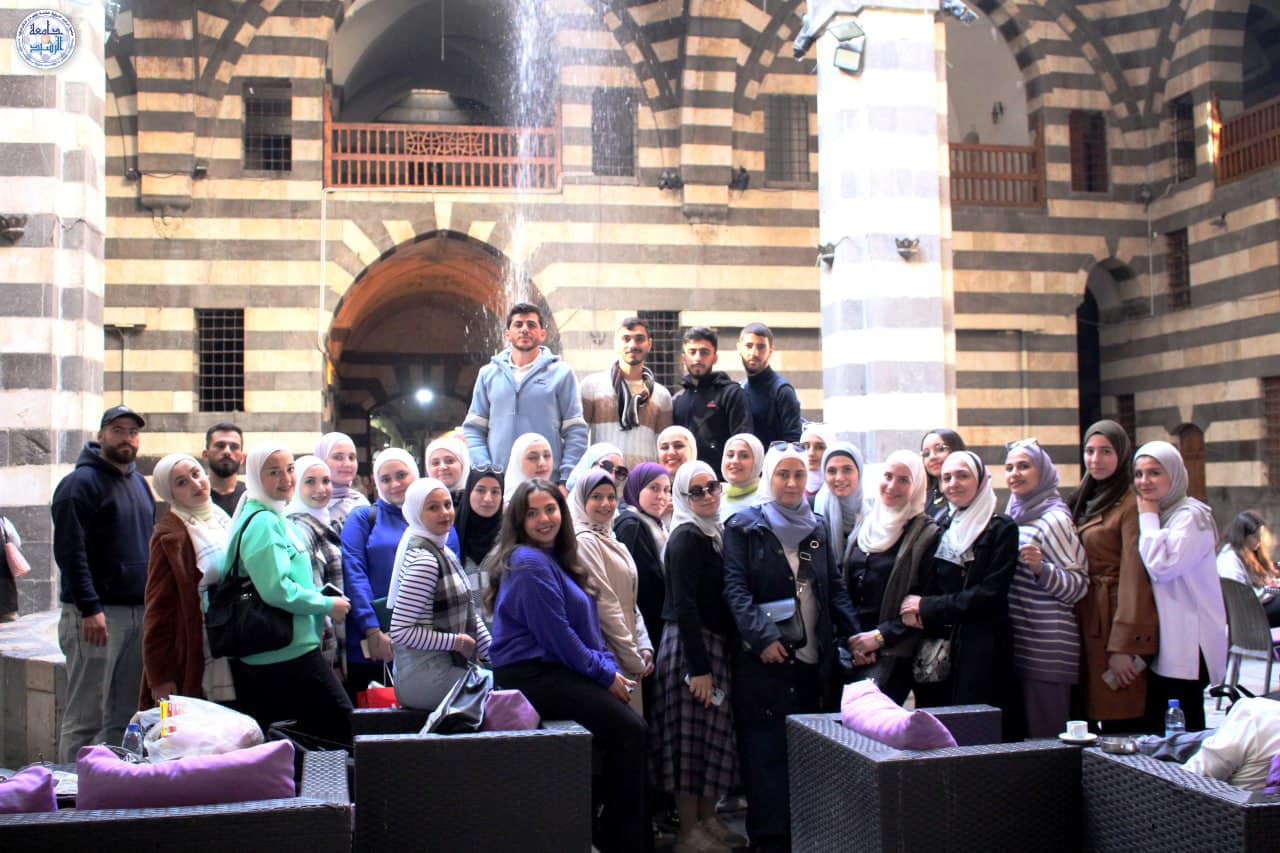
But somehow, universities resisted that wave. They stayed mixed, open, and for the most part, kind. While the streets were loud with accusations, lecture halls were quiet with collaboration. Students didn’t need to ask each other about sect or background. They worked together anyway.
Let’s talk facts. After asking 60 students from different Syrian universities, not one said they only had friends from their own background. Thirty-seven of them didn’t even know what sect their friends belonged to, and didn’t care to know. That’s not just tolerance. That’s real coexistence. That’s people choosing each other before they choose politics.
In study groups, dorm rooms, cafeterias, and bus rides, there’s a quiet kind of resistance happening. Resistance to the labels, to the walls, and defying the rules that wish to break every kind of hope to rebuild. Students build friendships, fall in love, start projects, argue, and grow, all without reducing each other to identities that were never meant to divide us in the first place.
Common Futures amid Strife
Syria has been a home for all religions and ethnicities for thousands of years. It’s no surprise that universities are colourful. It’s not just that Syrian universities are mixed, it’s that they’ve created a new kind of normal. A space where backgrounds blend into shared goals. Where you can sit beside someone whose hometown you’ve only heard of in news headlines and realise your futures are intertwined.
None of this means everything is perfect. Some students, especially from targeted minorities like Alawites, Christians, or Druze, face discrimination, and sometimes worse. They’re called names. They get threatened. Some are too scared to even attend classes. And we can’t pretend education is accessible to everyone right now. Many were displaced, others can’t afford it anymore, and fear still walks into classrooms sometimes.
In some cases, the sectarian tension spills into student interactions. It might be a snide comment here, a hateful meme in a group chat there. But even then, the reaction of the majority often leans toward support, not division. Peers step in, friendships act like buffers. Universities, in that way, become training grounds for the kind of society we want to rebuild.
And we must name the threats clearly. There have been reports of targeted harassment, even violence, toward students of certain sects. But even in that darkness, stories of solidarity shine through. A Sunni class representative standing up for his Alawite peer. Druze families hosting Sunni girls amidst armed clashes. These aren’t fantasies in books, they’re happening.
Coexistence Is Not Just a Dream
Despite everything, Syrians continue to live together. Coexistence is not new to this land. Marriages across sects were always common, neighbourhoods were never fully homogeneous, people didn’t walk around defining each other by faith or name. And in universities, this legacy is alive and well.
Today, we see students who grew up surrounded by violence choosing peace in their daily lives. We see them build relationships that go deeper than labels. Those who dared to speak up against injustices during the rule of the Assad regime refuse to stay silent and endure the current injustices against civilians. And we see proof that coexistence in Syria isn’t just a dream. It’s already our habit, our muscle memory, it just needs space to breathe.
If Syria has any chance of healing, we need to hold on to these spaces, and expand them. Universities aren’t just schools, they’re blueprints. They show us that a different Syria is not only possible, it’s already happening in pockets. We need better support, more inclusive education, and policies that protect students of all backgrounds. But more than anything, we need to listen to the students who have already proved that they can live, and build, together.
Sectarianism may be loud outside, but it doesn’t stand a chance in places where people are still choosing kindness, friendship, and a future that belongs to all of us. Because when young people are given a chance to sit in the same room, read the same book, and dream the same dreams, division doesn’t stand a chance.