

AI and the digital divide: Technology cannot be allowed to outpace inclusion
Contributed Article
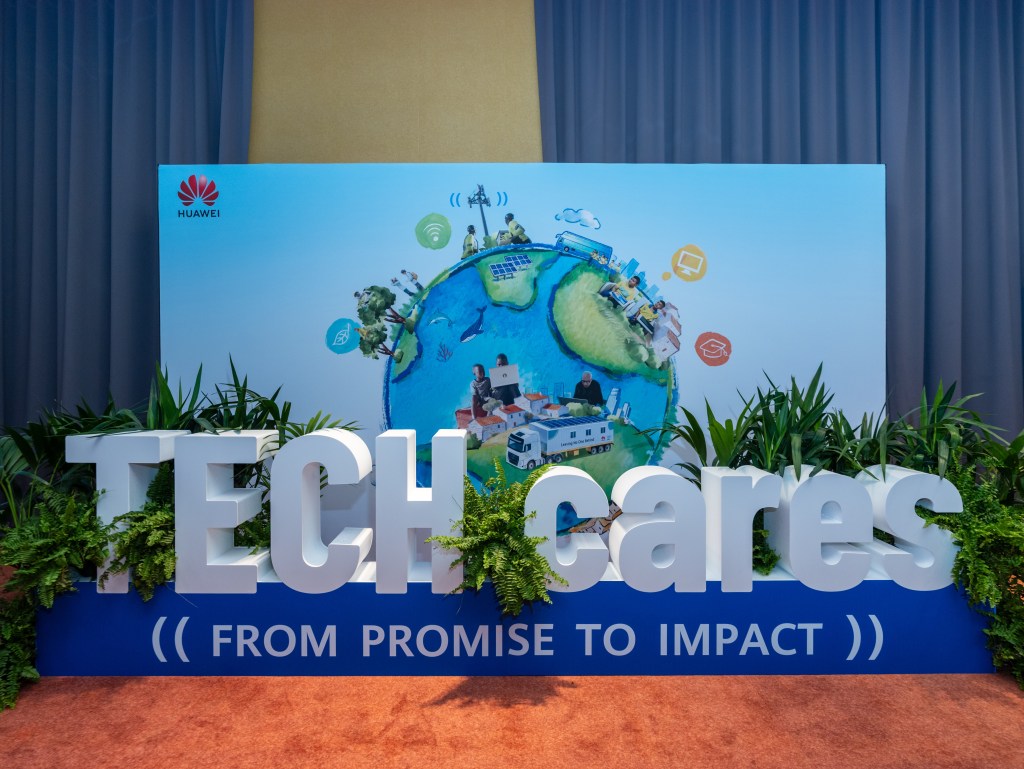
At the Huawei TECH Cares Forum, industry leaders and partners joined to discuss digital inclusion and why embracing AI requires a foundation of digital skills as well as infrastructure.
In recent years, the global mobile ecosystem has made incredible strides in improving digital inclusion, from vastly expanding coverage in hard-to-reach areas to making devices cheaper and more widely available. But despite this significant advancement, there is still much to be done to create a more digital equitable society, especially as AI momentum continues to build.
“We have seen AI progress so much over the last year,” said Huawei’s CEO of ICT Business Group, Yang Chaobin, while noting that “this progress has not benefited everyone”.
The AI era could come late to billions of people
According to figures from ITU, there are 2.2 billion people that still lack access to the mobile internet, with a further 300 million who have access but do not use it, as revealed by a GSMA report. This means that while millions of people are accessing AI tools and services in their daily lives, over a quarter of the planet’s population are still lacking access to basic mobile services.
“We need to start talking about people and stop just talking about algorithms,” said Cosmas Zavazava, Director of the Telecommunication Development Bureau at the International Telecommunication Union (ITU). “The AI era offers life-changing possibility for change, but only if we can deliver it for everyone.”
“The digital divide is the defining challenge of our time,” he added.
Yang echoed this sentiment.
“AI will shape the future. But before we can make that future a reality, we need to build more critical digital infrastructure, including high-speed networks and powerful computing facilities,” he said.
Delivering this connectivity to hard-to-reach areas is a key part of Huawei’s role as a global citizen. The company joined the ITU’s Partner2Connect initiative at its inception in 2022, aiming to connect more than 120 million people in remote areas by the end of 2025. In fact, by the end of last year, Huawei had far exceeded this target, bringing coverage to 170 million people in remote areas across more than 80 countries.
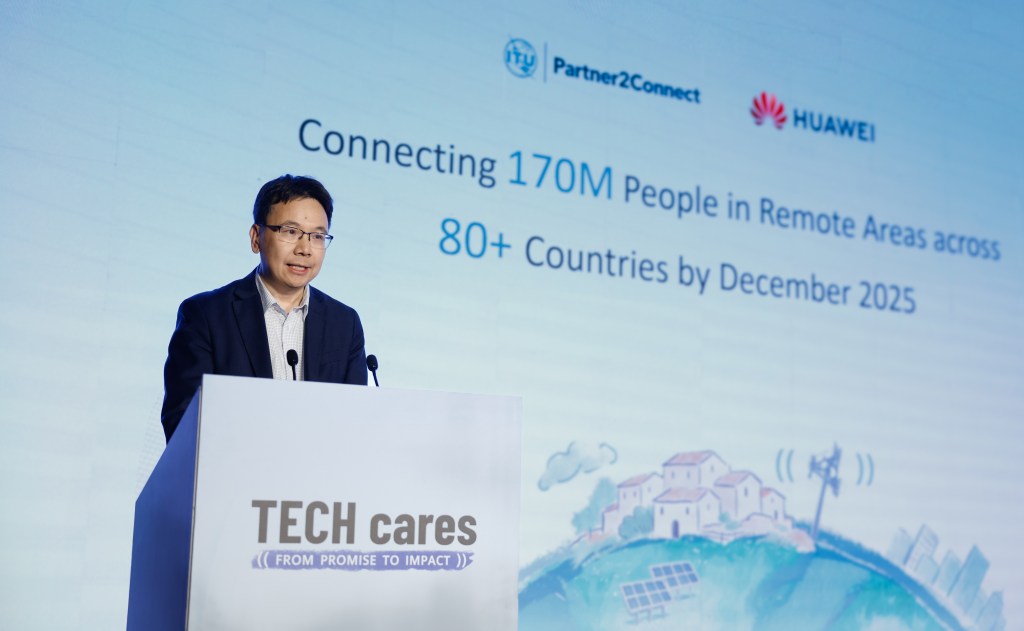
Huawei’s Yang Chaobin reveals Huawei has surpassed its Partner2Connect targets at the TECH Cares summit
Part of this target had been reached by leveraging Huawei’s rural connectivity solutions, including its RuralStar product line’s latest evolution, RuralCow. This solar powered base station operates without fibre or microwave links, providing non-line of sight coverage up to 30km. This means that remote communities that lack the supporting connectivity and power infrastructure can still benefit from robust wireless coverage.
For operators, it also means that the business case for reaching these rural communities is clearer, reducing the time to ROI from 5-10 years to ‘less than 1.5 years’, according to Huawei.
However, as Marina Madale, Executive for Sustainability and Shared Value at MTN, notes, while “the coverage gap is narrowing, the usage gap remains substantial.”
From affordability of devices and data plans, limited digital literacy, and rural energy constraints, there is still much work to be done to improve rural connectivity.
Human-centred and locally-driven AI
Challenges around access and usage are even more pronounced when it comes to AI. AI models built in local languages for remote communities are few, and those that do exist are typically heavily biased due to the limited training data available. For Africa, a continent with thousands of languages, over 75 of which have more than a million speakers, this means a significant portion of the population is cut off from the AI ecosystem and wider economy.
“We need to move from simply integrating technologies like AI, to building more holistic AI readiness,” said Jing Fang, Project Officer at UNESCO’s regional bureau for science and culture in Europe, noting that young people must be taught to “critically engage” with technology to understand risks such as misinformation and algorithmic bias.
Sylvia Poll, Senior Gender and Youth Advisor to the ITU Secretary-General, agreed, warning that data inequality can make entire regions “invisible” in AI systems. Without local datasets and local developers, algorithmic bias may compound existing inequalities in these societies.
“Inclusivity must be a design choice,” said Kenya’s Special Envoy on Technology, Ambassador Philip Thigo. “The greatest divide will be between those who have access and those who have not.”
“This is an existential challenge for developing nations,” he added.
Digital education beyond barriers
But if the local connectivity infrastructure is limited and localised AI models are not yet mature, are millions of people in developing nations doomed to fall behind in AI adoption?
Not necessarily.
Part of the solution, the panelists said, lies in a more agile approach to digital learning. Huawei’s DigiTruck programme, launched in 2019, has supported the training of more than 130,000 people in 21 countries using converted buses as mobile classrooms. This gives students and adults alike the chance to access AI and digital connectivity – often for the first time – and receive training by specialists and local experts.
This type of training will be key to securing these regions’ economic future.
“Connectivity is not a privilege, it’s an economic necessity,” said Madale. “No single player can close this gap alone. We need an ecosystem of collaboration.”
The consensus at the forum was clear: infrastructure deployment, inclusive AI governance, and scaled investment in skills must advance together if AI is to deliver prosperity for the many, not for the few.
Keep up to date with all the latest telecoms news with the Total Telecom newsletter
Also in the news
World Communication Award Winners 2025
Ofcom clears the way for satellite-to-smartphone services
LG Uplus’s AI voice call app glitch leaks user data