

Bringing English to Life in Rural Classrooms: Using Digital Tools to Build Listening and Speaking Skills.

The Core Problem
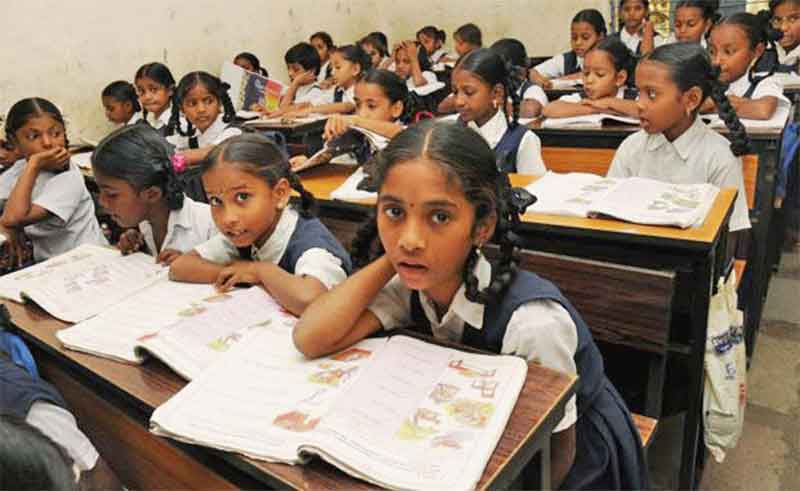
According to UDISE+ 2021–22, India has 1,022,386 government schools, and 92% of them are located in rural areas. This sheer scale makes rural government schools the most strategic target for interventions that can improve educational quality — especially in English listening and speaking, where gaps are most pronounced.
Recent NSSO survey data (Comprehensive Modular Survey, April–June 2025) reaffirm this, showing that government schools still account for 55.9% of all enrolments nationwide, and 66% in rural areas. In other words, improving outcomes in rural government schools directly shapes the future of the majority of India’s children.
Many of these schools now have electricity, toilets, and even some digital equipment. The latest UDISE+ 2023-24 data show that basic facilities in rural schools are almost on par with urban schools — a remarkable improvement over the past decade.
Yet, this progress in infrastructure has not translated into better English listening and speaking skills for students. The dominant teaching method in rural schools — the Grammar-Translation Method — focuses on translating text and memorising grammar rules. Listening and speaking are sidelined.
As a certified English teacher, I have seen first-hand that without listening exposure, students struggle to develop pronunciation, comprehension, and confidence. This holds them back in higher education, the job market, and even everyday digital communication.
Why English Matters Alongside Mother Tongue and Hindi
Mother-tongue instruction is essential for early learning and cognitive development, but English plays a unique role in preparing rural students for the future:
- Language of the internet — most online content, from educational resources to job applications, is in English.
- Language of science and technology — research papers, technical manuals, and global innovations are often documented in English.
- Preferred language in higher education — many Indian universities and professional courses use English as the primary medium.
- Language of international trade and communication — critical for global business and cross-border collaboration.
- Gateway to overseas opportunities — as India positions itself as a supplier of skilled labour to the world, English proficiency can be a deciding factor.
Without strong listening and speaking skills in English, rural students are shut out from many of these opportunities, even if they can read and write the language.
Why Listening and Speaking Matter — and Should Start Early
Young children naturally acquire language through listening and imitation long before they learn to read and write. This principle, well-supported by research (e.g., Stephen Krashen’s Input Hypothesis and UNESCO’s work on early childhood language learning), applies equally to learning English later in life.
If we introduce listening-based English lessons in pre-primary or primary school, students will gain the sound patterns, rhythm, and confidence to speak. By the time they reach higher classes, they can focus on richer vocabulary, complex grammar, and real communication — not just exam preparation.
Why Rural Students Rarely Hear English
This gap in oral skills is not accidental — it’s systemic.
- Grammar-Translation Dominance: The traditional method leaves little room for oral communication.
- Teacher Proficiency: Many teachers themselves lack confidence in speaking English.
- No English Environment: Outside school, students rarely hear English spoken.
- Resource Shortage: Few rural schools have language labs or audio-visual aids.
- Exam Pressure: Tests focus on reading/writing, so listening and speaking are ignored.
- Large Class Sizes: Little chance for individual speaking practice.
- Student Inhibition: Fear of mistakes stops students from trying.
These challenges are well-documented in NCERT’s “Teaching of English at Primary Level in Government Schools” report and the British Council’s “English Impact Report” on rural India.
Teacher Training Efforts — and Why Digital Still Matters
Several states have launched commendable English language training programmes for government teachers:
- Uttar Pradesh: Over 8,500 teachers enrolled in a 132-module DIKSHA-based spoken English course.
- Delhi: A 160-hour intensive programme, with internationally recognised exams for certification.
- Karnataka: The British Council’s KELTEP programme trained 170,000+ elementary teachers through a cascade model.
- Tamil Nadu: A decade-long British Council collaboration trained over 100,000 primary and upper-primary teachers.
- Kerala: The ‘Hello English’ initiative and the State Institute of English run continuous teacher proficiency training.
These are important steps, but such programmes are not yet universal, and training all teachers to a high level will take time.
Digital tools can add value in two ways:
- Bridge gaps where training is pending or extensive retraining is needed.
- Ensure consistent quality, especially in pronunciation and listening exposure, even where teachers are trained — providing a model of clear, standard speech that all students can hear regularly.
The Digital Opportunity
Government initiatives have already created a base:
- DIKSHA: Lessons in 25+ languages, accessible via app and portal.
- PM eVidya: 12 Swayam Prabha TV channels for school grades 1–12.
- State programmes like Andhra Pradesh’s Nadu-Nedu and Odisha’s Mo School, equipping thousands of classrooms with TVs/projectors.
However, spoken English is not yet a structured, core part of these programmes.
The Comprehensive Annual Modular Survey (CAMS) 2022-23 gives us a reality check:
- 44.6% of rural households have broadband, but 71.6% have a mobile phone with active SIM — meaning online-only learning will miss many.
- Only 37.8% of rural people aged 15+ can perform even one basic digital skill.
- Device access is often shared, so school-based solutions remain the most reliable.
Meanwhile, global innovators are also entering India’s education space. OpenAI recently announced a Learning Accelerator programme, including a $500,000 grant to IIT Madras and the distribution of five lakh ChatGPT Plus licences to schoolteachers in collaboration with the Ministry of Education. This signals that digital tools are being prioritised at the highest levels. What is still missing, however, is a structured focus on English listening and speaking within this wave of digital adoption.
A Practical, Low-Cost Solution: The Spoken English Kit
Equip every rural government school with a preloaded USB/SD card containing:
- Daily/weekly video lessons with clear, neutral or Indian-accented English.
- Subtitled animated stories for vocabulary and comprehension.
- Repeat-after-me speaking drills to build fluency.
- Life Skills & Moral Science modules — covering ethics, empathy, rabies and snakebite prevention, basic banking, agricultural marketing, and digital literacy.
This content can run offline on existing TVs, laptops, or projectors — requiring no internet and minimal teacher intervention. It addresses both teacher absenteeism and teacher quality gaps.
Funding Pathways and Proof of Concept
This is affordable and scalable with:
- CSR funds from companies like Infosys Foundation and Tata Trusts, already active in rural education.
- NGO partnerships — and here, Sampark Foundation offers a powerful example.
The Sampark Foundation has already transformed over 31,000 classrooms into smart learning environments in eight states. In Uttarakhand, the government expanded Sampark TV Smart Schools to 4,337 rural schools, reaching 250,000 children, after a pilot showed a 40% jump in learning outcomes. In Maharashtra, its “Smart School–Smart Block” initiative with Mumbai BMC has converted 14,344 municipal classrooms into digital spaces, equipped with over 6,000 LED TVs and supported by teacher training. These examples show that large-scale, offline, TV-based learning interventions are not only possible — they work.
The Payoff
This single intervention can:
- Give rural students daily exposure to correct English speech.
- Improve confidence and employability.
- Bridge rural-urban skill gaps without costly infrastructure overhauls.
- Deliver moral and life skills alongside language learning.
Since education is a state subject under the Concurrent List, and a majority of schools are under the administrative control of state governments, such initiatives can be implemented quickly by states willing to prioritise them.
If we ensure every rural child hears and speaks English regularly from the earliest years, we won’t just be teaching a subject — we’ll be unlocking a skill for life.
Subscribe to Our Newsletter
Get the latest CounterCurrents updates delivered straight to your inbox.
Milind Deshpande is a Certified CELTA English Teacher, Former IELTS Coach from Thane, Maharashtra