

Celebrating 25 Years of Knowledge and the Impact of Women’s Contributions to Wikipedia – Diff

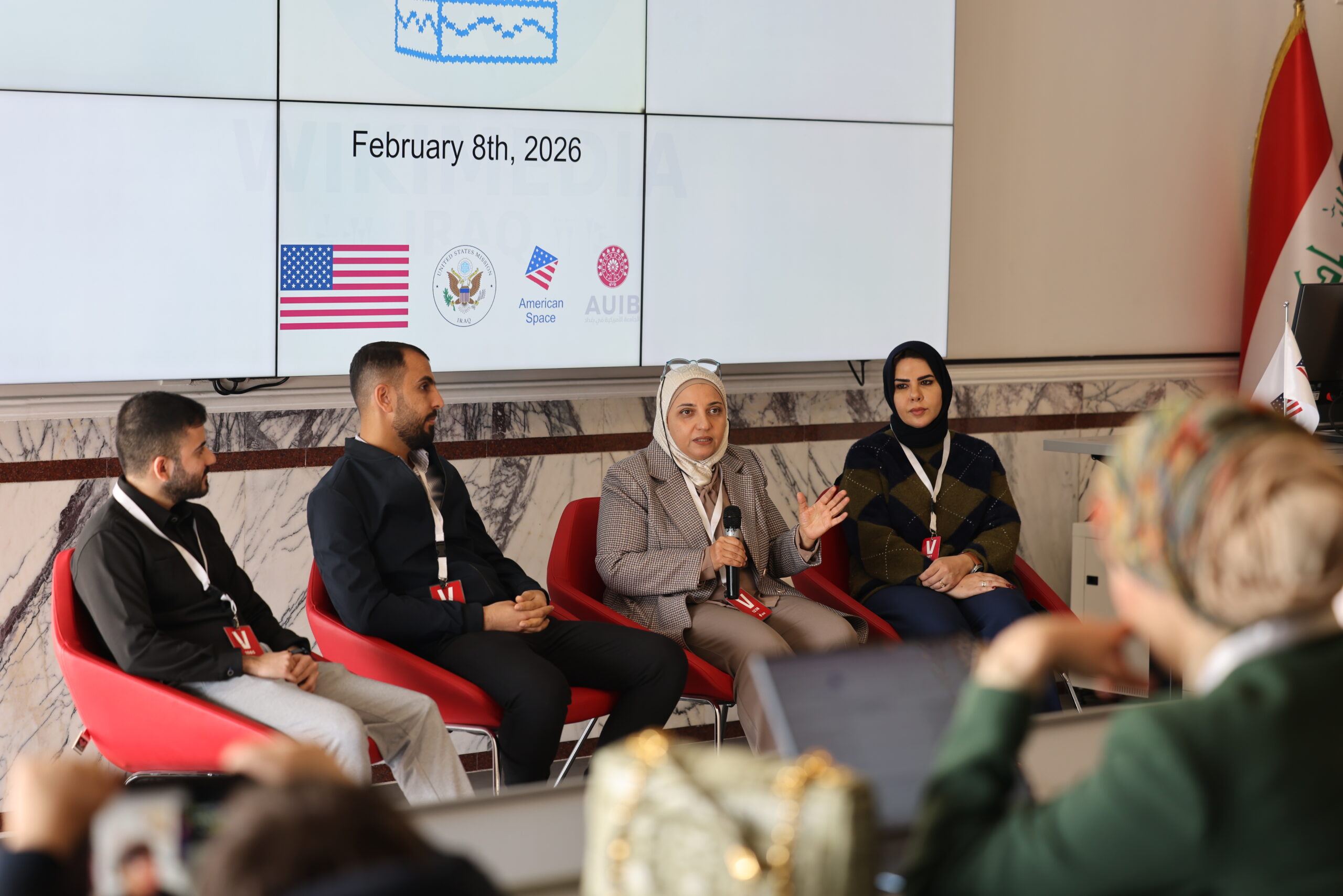
The Wikimedia Iraq group celebrated the 25th anniversary of Wikipedia’s launch at the American University campus in Baghdad. This was the first conference organized by the Wikimedia Iraq in celebration of this occasion, and it brought Wikimedians together from 6 provinces of Iraq in person, you can read more in this Diff post.
The female attendance was remarkable, especially from Baghdad, Sulaymaniyah, and Erbil. As a board member of wikimedia Iraq and a journalist focused on women’s empowerment, I had hoped to meet women from other provinces such as Anbar, Salah al-Din, Diyala, Basra, and others. This ambition wasn’t just about numbers; it was geographical too, because knowledge, like opportunities, should reach everywhere.
During a panel discussion with the board members, I was asked a question that touched upon my field of expertise: Why do you care about women’s contributions to Wikipedia?
I chose to go beyond the conventional answer, which is that women should develop content related to them, because I don’t see Wikipedia merely as text content. I see it as a living laboratory for learning professional skills.
Wikipedia: From Paper Writing to the Digital Space
Over four years of volunteer work on the Wiki projects, I attended and trained in many workshops offered by colleagues from the Arabic Wikipedia group. These workshops weren’t just about text formatting or adding references; they were training in systematic research, information verification, working with clear editorial policies, time management, and team collaboration.
This path allowed me to transition from paper writing to the vast digital space and opened doors and opportunities in the fields of journalism and media for me to express my opinions and work at a higher level of professionalism. I learned how to handle sources, how to build well-documented content, and how to present knowledge that can be defended.
Between Certification and Skill
It pains me to see many female graduates holding certificates without practical abilities, because the education system in our region often focuses more on memorization than on real knowledge. The result is an increasing gap between what is taught in classrooms and what is required in the labor market, especially in the digital economy.
In this context, Wikipedia becomes more than a voluntary platform; it is a space to build skill capital. A female editor learns:
- Research and source verification
- Neutral writing
- Managing discussions
- Working within clear policies and standards
- Organizing and managing campaigns
These are transferable skills that can lead to careers in media, research, civil society, digital content management, and even remote work.
Reaching Women Where They Are
In response to social constraints that may limit some women’s participation, our group organized a special workshop for women this year, taking into account the local context. The goal was not separation, but empowerment providing a safe space to build confidence and skills.
But our responsibility doesn’t end there. It’s our duty to reach out to women all over Iraq and find innovative ways to connect with them through university partnerships, training programs, and digital activities so that contributions are not confined to specific urban centers.
Empowerment Beyond Text
When we work to engage women on Wiki projects, we are not just adding articles, photos, data; we are opening professional doors. We are providing tools. We are redefining participation from being consumers of information to producers of it.
For me, Wikipedia was never just an encyclopedia. It was a turning point. A professional laboratory. And a space to rebuild confidence in the ability to make an impact.
In light of the high unemployment rates among graduates, especially women, I believe that investing in the digital and cognitive skills provided by the Wikimedia movement is an investment in both economic and intellectual independence.
After 25 years of free knowledge, perhaps the greatest challenge ahead of us is not only closing the content gap but also closing the opportunity gap.


Can you help us translate this article?
In order for this article to reach as many people as possible we would like your help. Can you translate this article to get the message out?
Start translation