

Chugai’s Nicolas Henriot on agility, digital change and charting Europe’s next century | Pharmaceutical | The Pharmaletter
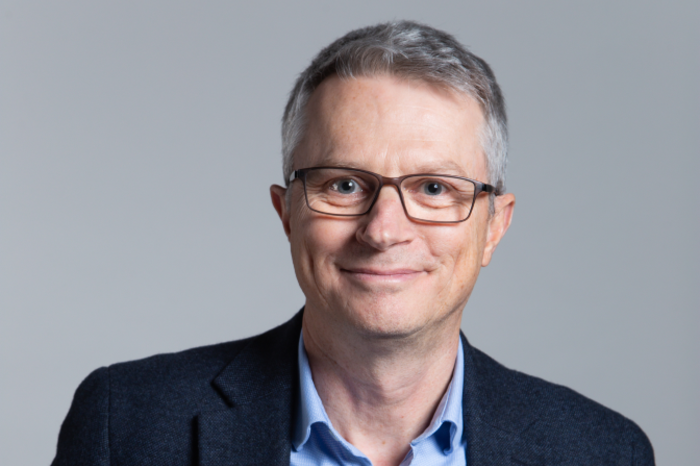
Chugai (TYO: 4519) starts 2026 having just celebrated its first century, just as Nicolas Henriot completes his first year leading Chugai Pharma Europe. It is a moment of symmetry that the new general manager says has sharpened the region’s sense of purpose, balancing a century of scientific heritage with a need for agility in a fast-moving European market.
Mr Henriot began by listening. He spent his first weeks meeting teams across countries and functions, gaining what he calls “a view from the inside out.” One image stuck with him: an eight-armed action figure created by staff to symbolize their habit of stepping up beyond defined roles. It captured, he says, the culture of “willingness to jump in, collaborate, and deliver.”
Much of his early focus has centred on tightening alignment with colleagues in Japan. Chugai Pharma Europe is one of the group’s three global centers, and he notes that “understanding what our colleagues in Japan need and expect from us” is helping bring clearer priorities.
A refreshed management structure now places more emphasis on portfolio, pipeline and operations, and Mr Henriot has encouraged continuous feedback so teams “move with greater clarity and confidence.”
Gaining pace
The centenary has provided further momentum. Chugai Pharma Europe marked the milestone by reflecting on achievements that range from purifying G-CSF for the first time to listing on the Dow Jones Sustainability Index.
Yet Mr Henriot frames the celebrations less as nostalgia, and more as a prompt to consider future impact, asking “What can I contribute today, that future generations will celebrate 100 years from now?” Confidence, humility and ambition, he argues, must coexist as Chugai steps into its next century.
This mindset underpins Chugai’s TOP I 2030 strategy, which aims to double R&D output and reshape the business around research and early development, digital capabilities and open innovation. Europe’s role is already well defined. The region supports early-phase clinical trials for Chugai-origin programs and captures insights from healthcare systems to inform global development decisions.
Acting as a “strategic partner to Japan for their global ambitions,” Mr Henriot says European teams are helping identify external technologies and partners that complement the company’s scientific strengths, echoing efforts in Japan such as the creation of the Chugai Venture Fund in Boston.
In the new era of AI, digital skills are emerging as one of Europe’s most distinctive contributions. Rather than positioning technology as a corporate slogan, Mr Henriot has encouraged a pragmatic, people-first approach. Recent internal surveys led to the rollout of a new project-management tool, while staff across Europe have completed a five-week upskilling program focused on Microsoft Copilot.
He notes that confidence scores rose from 2.9 to 4.3 out of 5 as employees learned “basic AI principles through to prompt optimisation,” with real-world use cases now being collected to reinforce adoption.
Training and support systems form the backbone of this shift. The PACE initiative, centred on productivity, accomplishment, communication and efficiencies, is helping teams build practical skills across everyday tools, from Outlook to AI. Regional operations leaders review market nuances and function-specific challenges to ensure technology is embedded effectively. Mentoring, structured career conversations and recognition programs are also expanding, all tied to a principle of “accountability through empowerment.”
Building on the basics
Clinical development and commercial readiness remain central priorities. Early proof-of-concept work in Europe helps determine whether programs are out-licensed to Roche (ROG: SIX) or other partners, making early-stage protocol design critical.
On the commercial side, Mr Henriot is driving functions to build capabilities that support the company’s ambition of one global launch every year from 2030. This includes strengthening digital channels, customer engagement and the co-promotion model with Roche across key therapy areas.
Partnerships, he says, remain core to how Chugai Pharma Europe grows. “Our co-promotion model with Roche is deep in our European DNA,” he notes, referencing decades of collaboration that have delivered major therapies in lung cancer, hemophilia and autoimmune diseases. The renewed alliance with Helsinn adds further momentum, and Mr Henriot, alongside the partnering team, is also exploring opportunities beyond traditional medicines, including digital therapeutics. Long-term commitment, he argues, shapes Chugai Pharma Europe’s approach to selecting and nurturing partners who can help achieve “value and impact we couldn’t achieve alone.”
Asked what personally drives him in the role, Mr Henriot says motivation comes from two places: the potential of Chugai’s science, and the chance to create an environment where people can do their best work. Europe may be a smaller region within the wider enterprise, he says, but it carries the responsibility to make a distinctive contribution.
“Chugai may be 100 years old, but Chugai Pharma Europe as a unified organisation is still in its early chapters,” he reflects. If he can help the region become known “not just for what we achieve, but for how we achieve it,” through collaboration, patient focus and integrity, that is the legacy he hopes to leave.
Chugai’s next century will demand new skills, new structures and new forms of partnership. Under Mr Henriot’s leadership, Europe appears ready to play its part: with speed, purpose and a quietly ambitious spirit.