

How AI skills can strengthen Europe’s workforce
As AI reshapes how we learn, work, and innovate, one question increasingly defines Europe’s economic trajectory: how do we ensure that everyone can benefit from this technological shift?
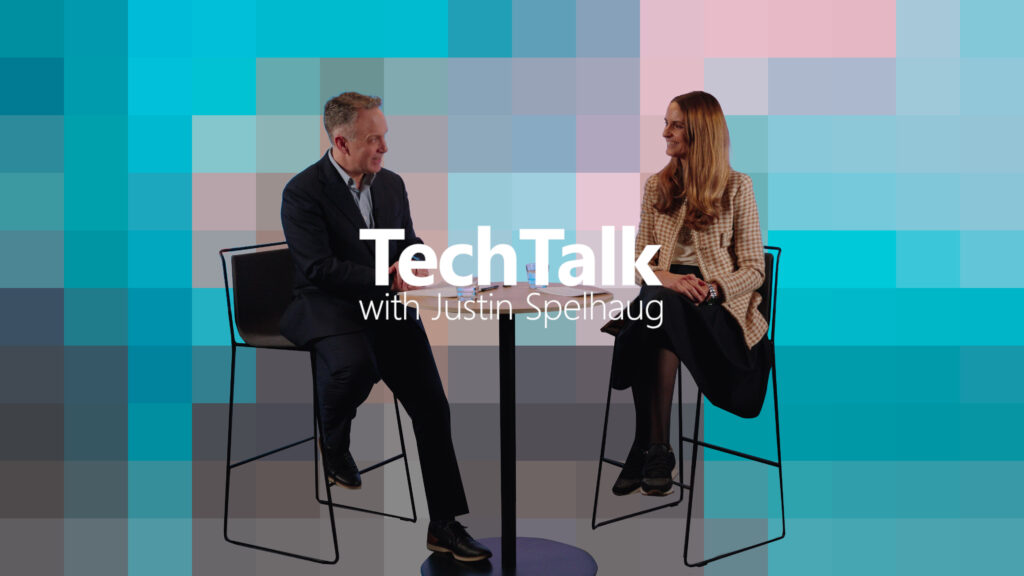
In our latest Tech Talk, Justin Spelhaug, President of Microsoft Elevate, talks about what it takes to build an inclusive AI-ready society.
Microsoft Elevate reflects Microsoft’s commitment to widening the circle of opportunity in the AI economy. It reflects Microsoft’s commitment to widening the circle of opportunity in the AI economy and focuses on where AI meets people’s lives: in classrooms, workforce programs, and the nonprofit organizations communities rely on every day. Its mission is built on a simple but powerful idea: skills ecosystems must be strengthened as systems—across education, the workforce, and the nonprofit sector—if we want AI to widen opportunity rather than deepen divides. These systems are under real pressure and navigating rapid change. Microsoft Elevate’s work is about strengthening them, so people have the skills and support to thrive as AI reshapes how we learn and work.
AI will be transforming work in the long term but not in the way many people fear. Justin Spelhaug noted that the public debate often focuses on job displacement. Yet early evidence tells a different story: work is being augmented and transformed, not automated at scale. Recent studies by the International Labor Organization and leading think tanks show widespread task transformation and productivity gains, rather than the job losses previously predicted. Two factors may explain the shift: early projections overestimated the speed of generative AI adoption, and they underestimated the complexity of human work, which rarely fits into easily automated tasks. However, understanding this complexity is essential for designing the right policy frameworks and skilling programs.as well as leading think tanks show widespread task transformation and productivity gains, rather than the job losses previously predicted. Two factors may explain the shift: early projections overestimated the speed of generative AI adoption, and they underestimated the complexity of human work, which rarely fits into easily automated tasks. However, understanding this complexity is essential for designing the right policy frameworks and skilling programs.
Microsoft Elevate takes a systems approach: from classrooms to communities. It begins in education, equipping teachers with tools and knowledge to safely and effectively embed AI into learning. In Germany, for example, Microsoft is helping 200,000 teachers build AI-supported classroom practices. In Poland, more than 500,000 teachers are already accessing AI learning content via national platforms, and further partnerships are underway across Europe. This focus then extends into the workforce, ensuring employees can adapt to evolving roles and to nonprofits, which are often deeply embedded in local communities, helping people gain access to the technology and the skills needed to succeed.
Preparing Europeans for that future means designing evidence- and research-based programs across primary, secondary, higher education, and adult learning. Every student graduating today must understand how AI works, how to use it effectively, and how to evaluate its outputs responsibly.
Delivering skills programs on a national scale will require close public-private partnerships. “Everything that we do has to generate scale, and scale can only be generated through close partnership said Justin Spelhaug. Only by driving closer alignment can we build a workforce that is digitally confident, economically resilient, and prepared to leverage AI as a driver of competitiveness.
Watch the full conversation with Justin Spelhaug here: