

How WikiMuda Makes Knowledge Fun – Diff

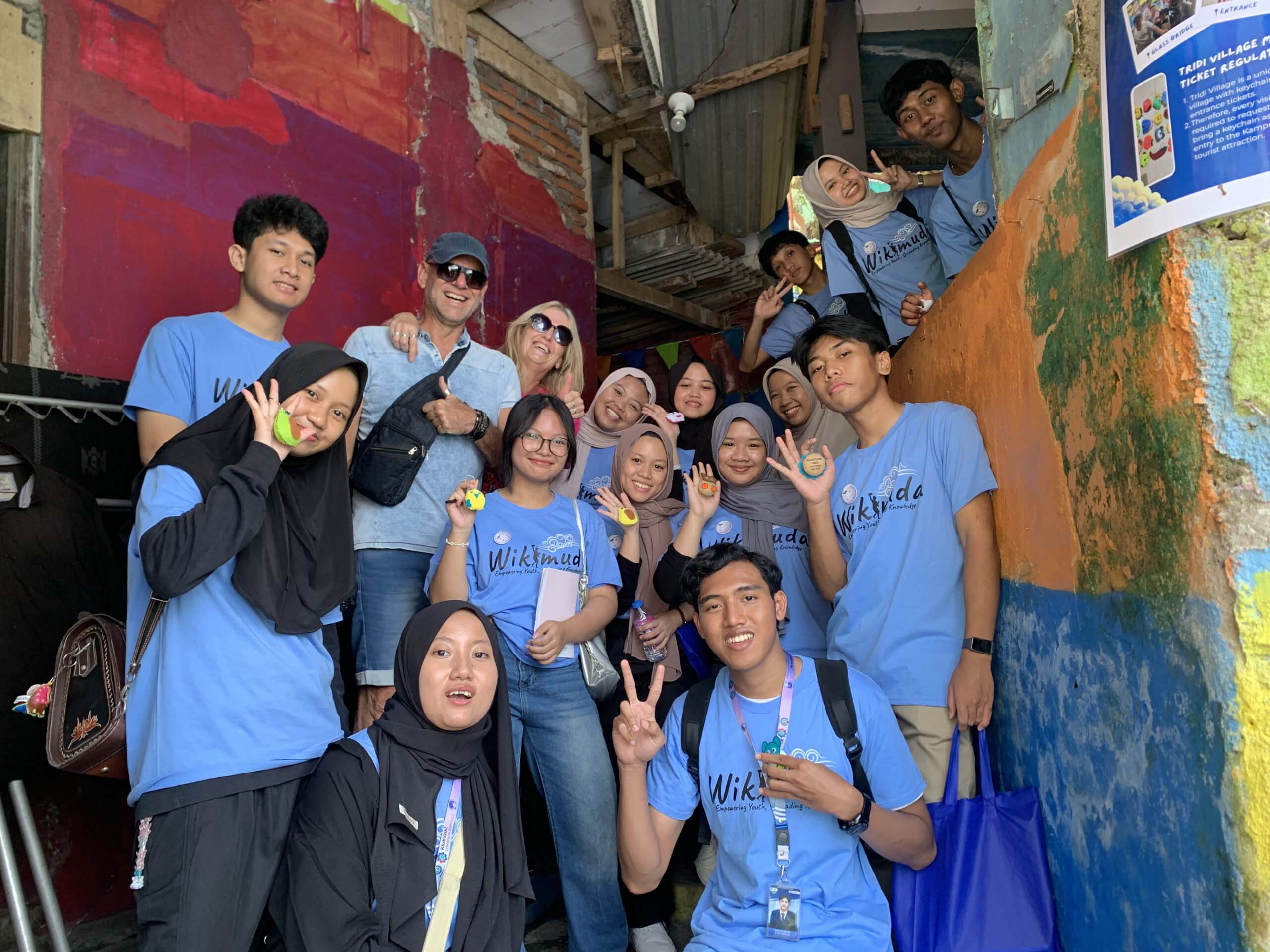
In a classroom in East Java, a group of high school students sat in front of their laptops, not to complete assignments, but to write their first Wikipedia articles about places they pass every day. What once felt like ordinary surroundings suddenly became meaningful sources of knowledge worth sharing with the world. This moment marked the beginning of WikiMuda, a youth-driven initiative designed by KlubWiki Universitas Brawijaya to empower young people in Indonesia to document local knowledge and contribute to open-access platforms. The program was carried out over three months, from September to November 2025, allowing participants to engage in a series of training sessions, editing activities, and field documentation. Implemented across Malang, Pamekasan (Madura), and Lawang, the program engaged high school students, teachers, and first-year university students in contributing to Wikimedia projects through a participatory and hands-on approach.
Indonesia’s cultural and geographical diversity is vast, yet much of its local knowledge, ranging from public spaces and regional histories to everyday cultural practices, remains underrepresented online. WikiMuda was created to help bridge this gap by positioning young people not only as learners, but also as active knowledge holders who can document and share their own environments. The program was carried out in collaboration with SMAN 7 Malang, SMAN 1 Pamekasan, and SMAN 1 Lawang, providing a structured learning environment within schools. As the program evolved, the team also introduced WikiMuda Adventures, an additional initiative targeting first-year students at Universitas Brawijaya. This expansion responded to the transition of students from school to university, ensuring that their engagement with Wikimedia could continue beyond the classroom.
Building Digital Skills Through Local Context

The program began with identifying underrepresented topics on Indonesian-language Wikimedia projects, particularly in areas such as local geography, cultural heritage, history, and public spaces. Participants were then introduced to the fundamentals of Wikipedia editing through offline training sessions that combined short theoretical explanations with immediate hands-on practice. Through guided edit-a-thons and documentation activities, participants learned how to write neutral, well-sourced articles and upload original photographs to Wikimedia Commons. This blended approach proved effective in helping first-time contributors quickly build confidence and skills.
To make the learning process more engaging, WikiMuda also introduced a gamification element throughout the program. Participants were encouraged to complete a series of “missions”, such as creating or improving articles, uploading photos, or documenting specific local sites. As they progressed, they explored different areas around them, turning the documentation process into a form of discovery. At certain points, participants were also invited to take part in a “treasure hunt” experience, where they could find small merchandise as rewards for completing their missions. This approach not only increased motivation, but also made the learning experience more interactive and enjoyable. More importantly, each completed mission directly contributed to Wikimedia platforms, ensuring that the gamified activities remained meaningful and impactful.
For many participants, this was their first experience contributing to a global knowledge platform. One student from SMAN 1 Lawang shared, “I didn’t realize that places around me could be important enough to be on Wikipedia. Now I feel like I can help people learn about my hometown.” This shift in perspective reflects how local knowledge, when validated and shared, can become a powerful entry point into digital participation.
From Local Contributions to Global Impact

Through these activities, WikiMuda successfully engaged 127 participants, all of whom became active Wikimedia contributors. Together, they created 92 new articles and improved 182 existing ones, contributing nearly 60,000 words and hundreds of references to Wikipedia. In addition to written content, participants uploaded 538 media files to Wikimedia Commons, documenting local culture, public spaces, and everyday life in 2025. By documenting local knowledge in Indonesian, participants are not only preserving their own cultural context, but also making it accessible to a global audience. These contributions help ensure that stories from smaller communities are represented in one of the world’s largest open knowledge ecosystems. The documentation results of this project can be accessed in the Wikimedia Commons category.
Beyond measurable outputs, the program also revealed important insights into how young people engage with digital knowledge. One of the most effective approaches was positioning participants as knowledge holders rather than passive learners. When encouraged to document places and stories from their own surroundings, participants showed stronger engagement and a deeper sense of ownership. The combination of short explanations and immediate practice proved far more effective than lecture-based methods, especially for first-time contributors. Continuous mentorship from experienced Wikimedia contributors also played a crucial role in maintaining both content quality and participant motivation.
The integration of gamification further strengthened participant engagement. By turning learning activities into mission-based challenges, participants became more active and curious in exploring their surroundings, while still contributing meaningful content to Wikimedia projects. The program further demonstrated that digital literacy can function as a tool for cultural preservation and community empowerment. Participants not only developed technical skills, but also became more aware of the importance of documenting knowledge accurately, respectfully, and responsibly.
Challenges and Adaptation

At the same time, the implementation of WikiMuda was not without challenges. Navigating bureaucratic processes in schools often required strong local connections, and in some cases, planned activities had to be relocated due to permission constraints. Technical issues with the Wikimedia Outreach Dashboard also required the team to manually verify participant contributions through article histories and upload logs. Additionally, scheduling conflicts among students meant that organizers had to extend mentoring beyond formal sessions. Environmental factors also played a role. During a field documentation activity in Lawang, heavy rainfall forced the team to change their planned location. Interestingly, the alternative site resulted in better documentation outcomes, highlighting the importance of flexibility and adaptive planning in community-based initiatives. In one particularly memorable moment, students from SMAN 1 Lawang presented the organizing team with commemorative gifts. They shared that the program had helped restore their confidence after experiencing disappointment in a previous academic competition. This moment reflected an impact that goes beyond metrics, showing how participation in open knowledge can also inspire and empower young people.
The introduction of WikiMuda Adventures marked an important step in expanding the program’s reach. With strong interest from first-year university students and support from lecturers, the initiative demonstrated the potential for sustained youth engagement beyond secondary education. This expansion required careful management of time and resources, but it also highlighted the importance of being responsive to emerging opportunities. By adapting to participants’ transitions and needs, WikiMuda was able to maintain continuity and deepen its impact.
As the digital landscape continues to evolve, initiatives like WikiMuda show that young people are not just consumers of information, but active contributors to global knowledge. By empowering youth to document their own stories, the program helps ensure that local voices from Indonesia are not only preserved, but also heard worldwide. With its adaptable model and strong community-driven approach, WikiMuda holds significant potential to be replicated in other regions. More importantly, it demonstrates how collaborative knowledge sharing can bridge the gap between local experiences and global platforms, strengthening a more inclusive and representative open knowledge ecosystem for the future.
Can you help us translate this article?
In order for this article to reach as many people as possible we would like your help. Can you translate this article to get the message out?
Start translation