

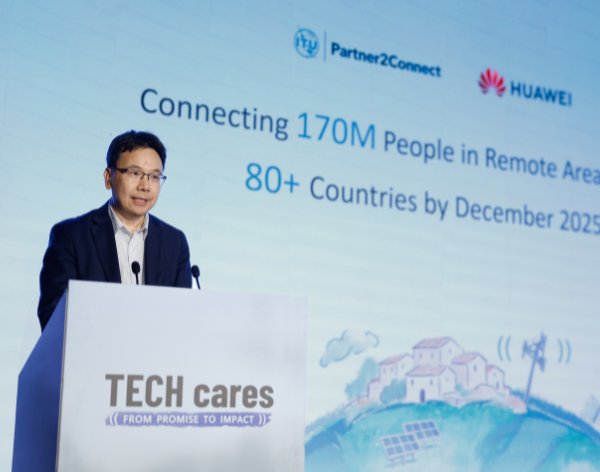
Huawei exceeds ITU Partner2Connect pledge target, bringing connectivity to 170m people globally
The milestone was announced in Barcelona on March 1, 2026, by Yang Chaobin, CEO of Huawei’s ICT Business Group, during the company’s TECH Cares Forum, held alongside Mobile World Congress.
The achievement exceeds the commitment Huawei made in 2022 when it joined the ITU-led initiative, pledging to connect 120 million people in underserved areas by 2025.
Yang thanked Huawei’s operator customers and ecosystem partners for what he described as a “shared effort” to close the connectivity gap.
“We not only met our target, but we exceeded it,” he said. “By the end of 2025, we had worked with our customers to connect 170 million people in remote regions to the digital world.”
Digital divide risks widening in AI era
The forum brought together around 80 representatives from governments, industry, international organisations and non-profits to examine the next phase of digital inclusion, particularly as artificial intelligence accelerates.
Yang warned that despite rapid technological progress, the digital divide persists and could widen in the AI era.
“High-speed networks and robust computing facilities are essential foundations for an inclusive and sustainable AI era,” he said. “AI will shape the future, but before we can realise its full potential, we must strengthen digital infrastructure and ensure no community is left behind.”
Huawei’s fulfilment of its P2C pledge, he added, demonstrates how infrastructure investment can translate into tangible social impact, including improved access to healthcare, education and financial services in rural communities.
Cosmas Zavazava, director of the ITU Telecommunication Development Bureau, praised the progress made under the coalition framework.
“Connecting rural and underserved communities requires innovative business models, inclusivity, effective use of communication resources, community engagement and sustained investment in local capacity,” he said. “I applaud Huawei’s commitment to universal and meaningful connectivity, and I am proud of our strong and successful partnership.”
The ITU’s Partner2Connect Digital Coalition was launched to mobilise commitments and investments aimed at achieving universal connectivity, particularly in least developed countries and small island developing states.
Connectivity and skills: twin pillars of inclusion
Beyond network rollout, Huawei executives stressed that digital inclusion also depends on skills development.
Jeff Wang, president of public affairs and communications at Huawei, said inclusion rests on two pillars: access and capability.
“Inclusive connectivity must go hand in hand with digital skills empowerment,” he said.
Huawei works with governments and local partners to expand digital access, deliver training and develop STEM curricula for students, young people, women and older citizens. Its ‘Skills on Wheels’ programme—mobile digital training units deployed in remote and underserved areas—has reached more than 130,000 people in 21 countries since its launch in 2019.
Examples highlighted at the forum included digital classrooms supporting students in Kenya, inclusive finance initiatives in rural Bangladesh, and mobile medical connectivity solutions linking remote communities in Argentina to healthcare professionals.