

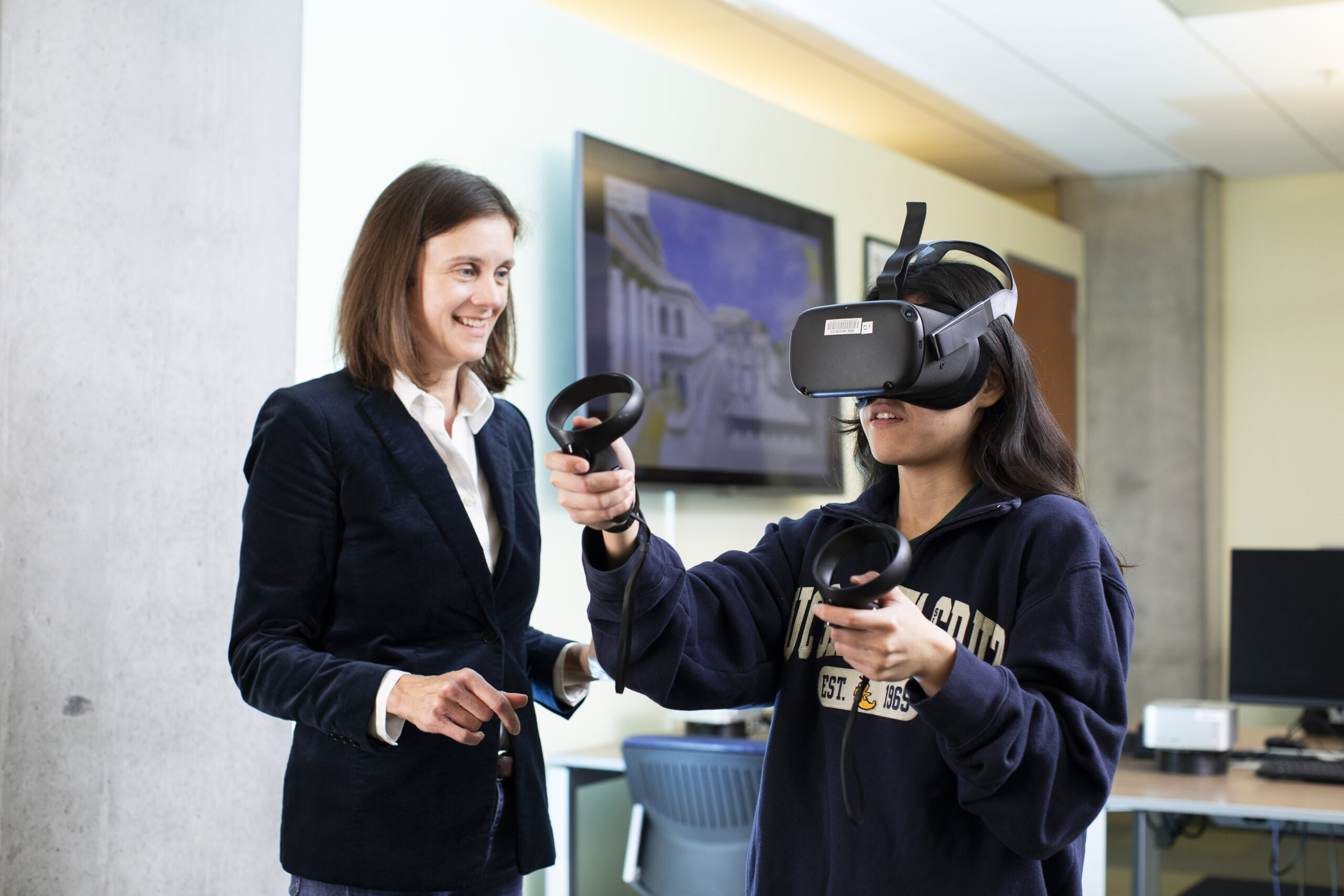
Humanities skills are transferable skills
UC Santa Cruz humanities students graduate with a toolkit of transferable skills in high demand across fields ranging from academia to the entertainment industry and high-tech startups.
They analyze, synthesize, collaborate, write, listen, and adapt. Even in a rapidly changing employment landscape, where industries evolve and career paths rarely follow a straight line, humanities majors hold a consistent advantage, according to a recent job outlook survey.
Most employers seek applicants with strong problem-solving abilities, the ability to work in teams, and excellent written communication skills. These foundational skills are not niche or industry-specific. They are precisely where humanities training excels.
Here are the stories of UC Santa Cruz humanities graduates thriving in a wide range of fields.
Building what breaks — and fixing what fails
Robert Alverson (history, 2009) is now a test engineer at Pyka, a company that builds autonomous electric spray planes, commonly known as crop dusters. A UC Santa Cruz alumnus, he works in the company’s reliability department.
“For context, our planes are roughly 40’ wingspan, 20’ long, weigh 1,400 pounds at maximum weight and cruise at just over 60 miles per hour,” Alverson said. “This is similar in size and weight to a small manned airplane, and quite a bit larger than quadcopter spray drones.”
Alverson’s work is technical, hands-on, and deeply analytical. It also draws on the collaborative skills he developed in humanities classes at UC Santa Cruz.
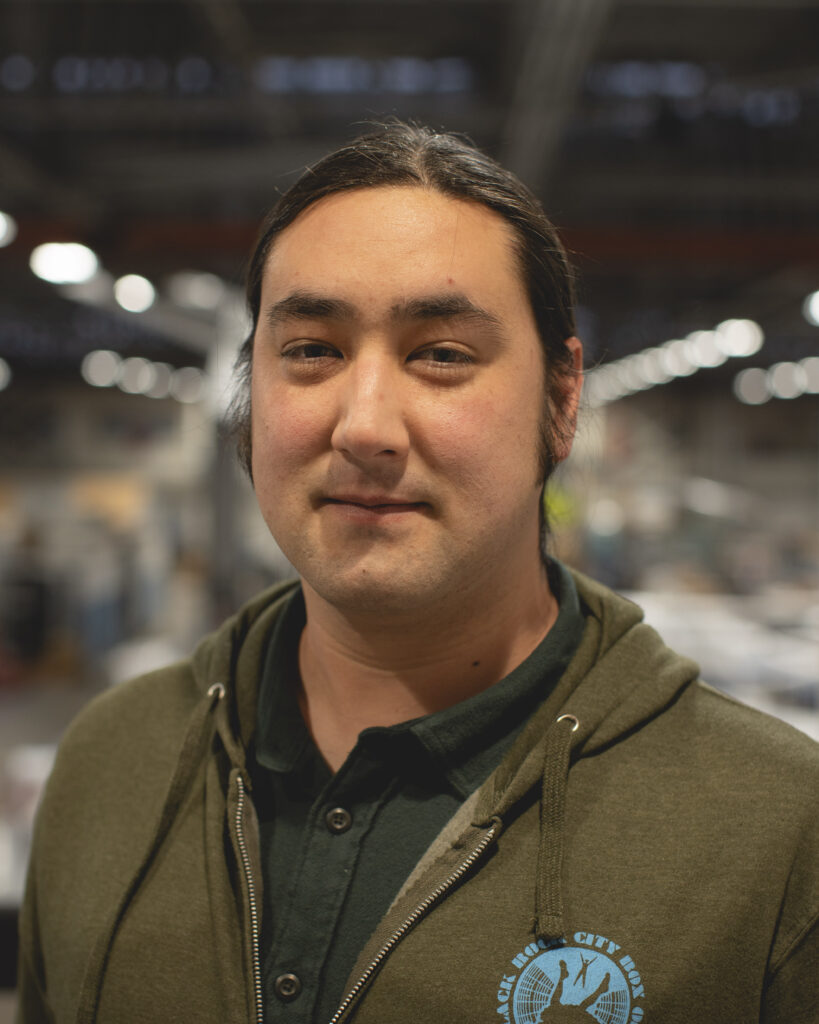
“The diversity of systems, problems, and potential solutions means that there’s always something new to work on or learn, which is a great environment for a generalist,” he said.
A history degree might seem like an unusual path to aviation reliability engineering. Alverson sees a direct connection.
“While a BA in history is an unlikely starting point for where I’ve ended up, the core values of inquiry, challenging assumptions, and supporting your arguments with evidence is a good place to come from for many roles,” Alverson said.
In history seminars, students interrogate primary sources, synthesize large volumes of material, and detect patterns. Alverson applies those skills daily.
“What I enjoyed most in my classes was getting to open up a whole new topic every ten weeks — the skill this fosters is being able to rapidly absorb and synthesize information,” he said.
The art of print
Katie Nealon (literature/creative writing, 2009) turned her love of poetry into entrepreneurship. She is the owner of Folding Bones Press and operations manager of the nonprofit North Bay Letterpress Arts.
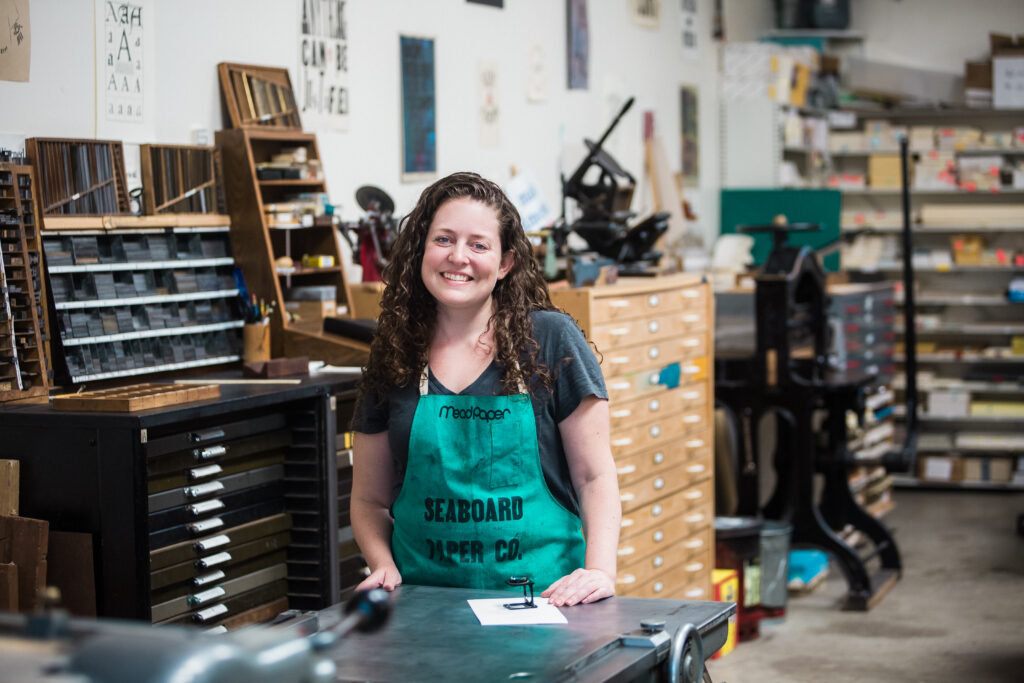
“I imprint ink, foil stamp, emboss, die cut, score, perforate, and bind paper products,” Nealon said.
Her first job after graduation wasn’t in printing—it was in digital marketing. First, she translated her writing training into marketing roles across industries. She drew on her creative writing skills to secure copywriting and digital marketing positions for over a decade.
After graduating during a recession, she relied on communication and adaptability.
“I did learn through extensive job hunting that networking was essential, and my communication expertise aided in that,” she said.
Today, she quite literally holds words in her hands—proof that writing, analysis, and storytelling can anchor a fruitful and enjoyable career.
Leading at the intersection of people and policy
For Dillon Auyoung (linguistics, 1990), the humanities provided essential preparation for his work as head of social responsibility at Comcast California. He leads initiatives that strengthen communities, expand digital equity, support small businesses, and mobilize employees to volunteer and serve where they’re needed most.
Since graduation, his career has spanned government affairs, community engagement, public policy, technology, and media.
“My humanities education — especially studying linguistics — gave me a foundation that has shaped every chapter of my career,” Auyoung said. “It taught me to understand the human experience: how people communicate, how systems are built, and how meaning is created.”

Linguistics sharpened his leadership toolkit. Complex problem-solving and critical thinking in the classroom—analyzing patterns in phonetics, syntax, morphology, and semantics—trained Auyoung to break down complicated issues and identify interdependencies and meaning.
“It taught me how to learn quickly, ask better questions, and see patterns others might miss,” Auyoung said. “That adaptability has allowed me to stay relevant in a rapidly changing world and to keep making a difference as workplaces, technologies, and communities evolve.”
Shaping the news we hear
As a UC Santa Cruz student, Pierre Bienaimé (literature, 2010) immersed himself in a class that required intensive writing assignments in the style of The New Yorker.
“I picked some pretty nerdy topics—like the history of a certain type of board game, or steampunk culture,” he said.
Those intensive classes prepared him for his current career as an audio producer at The Wall Street Journal.

“On a typical day, in the morning I talk with my team about what news coverage from The Wall Street Journal we’d like to feature on the podcast later that day,” Bienaimé said. “I book conversations with two or three of the reporters behind those stories and record their conversations with our podcast’s host. Then I edit those conversations down to just a few minutes.”
In journalism, he regularly draws on the analytical skills he developed at UC Santa Cruz.
“In literature classes we’re often examining a text’s conventions: the unspoken norms that shape how an author writes their prose or makes their arguments,” Bienaimé said. “What cultural or historical context do you really need to get an accurate understanding of the writing? In journalism, we’re doing much the same. In the case of news analysis—or conversations with reporters—that element is put under even more focus: what’s the bigger picture?”
Directing stages, building communities
Nazeerah Rashad (critical race and ethnic studies; global and community health, 2025) is a Bay Area musical theater director for a nonprofit afterschool program called PlayCV. She rehearses music and blocking and creates choreography for children in first through fifth grade who have auditioned to be in their winter musical, “Frozen Kids!”
“The most meaningful part of my work is being able to encourage kids to discover their artistic passions and build stage presence,” she said.
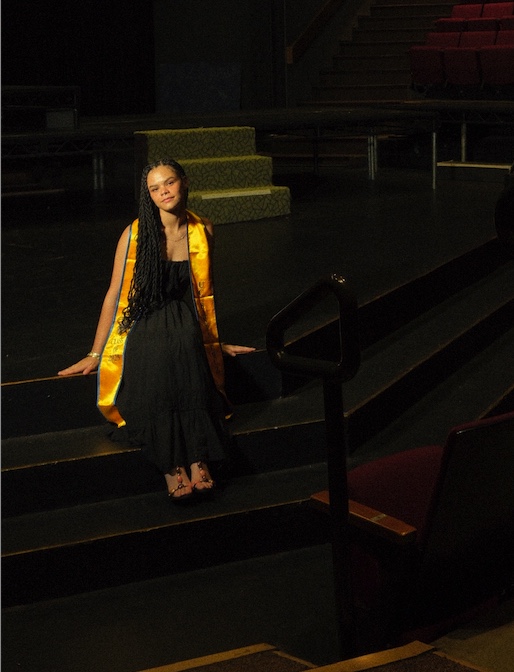
Her humanities education placed sustained emphasis on rigorous discussion, active listening, and the intentional cultivation of supportive learning communities—skills she now applies daily in rehearsal spaces with young performers. As a senior, Rashad took advantage of resources to explore career paths in the humanities and to hone professional skills, such as networking, through the Employing Humanities initiative. The resources made her more confident about entering the workforce after graduation.
“I have a strong resume, I know how to conduct an informational interview, I have a network of mentors and peers to reach out to for advice,” Rashad said. “I don’t think I would be nearly as prepared to search for work after graduation if I wasn’t a student of the Humanities Division.”