

inside the world of online fraud
Fraud now makes up more than 40 per cent of all criminal activity in the UK. As an investigative journalist I have spent years uncovering various frauds and talking to victims. But before this, I knew scammers: I bunked off classes with them, played sport with them, shared lunch with them and, very briefly, nearly became one of them.
I went to a state school in north London, which despite its upwardly mobile aspirations for us, couldn’t mask that many of the pupils came from “difficult backgrounds”. Our parents worked in low-paid jobs and most of my friends lived in council flats and received free school meals. Some were already affiliated with gangs. But as we saw it, we weren’t any different from the kids in the private schools nearby. We thought, if they could have nice things, then surely we were entitled to have them too. And the way to get them? That was through fraud.
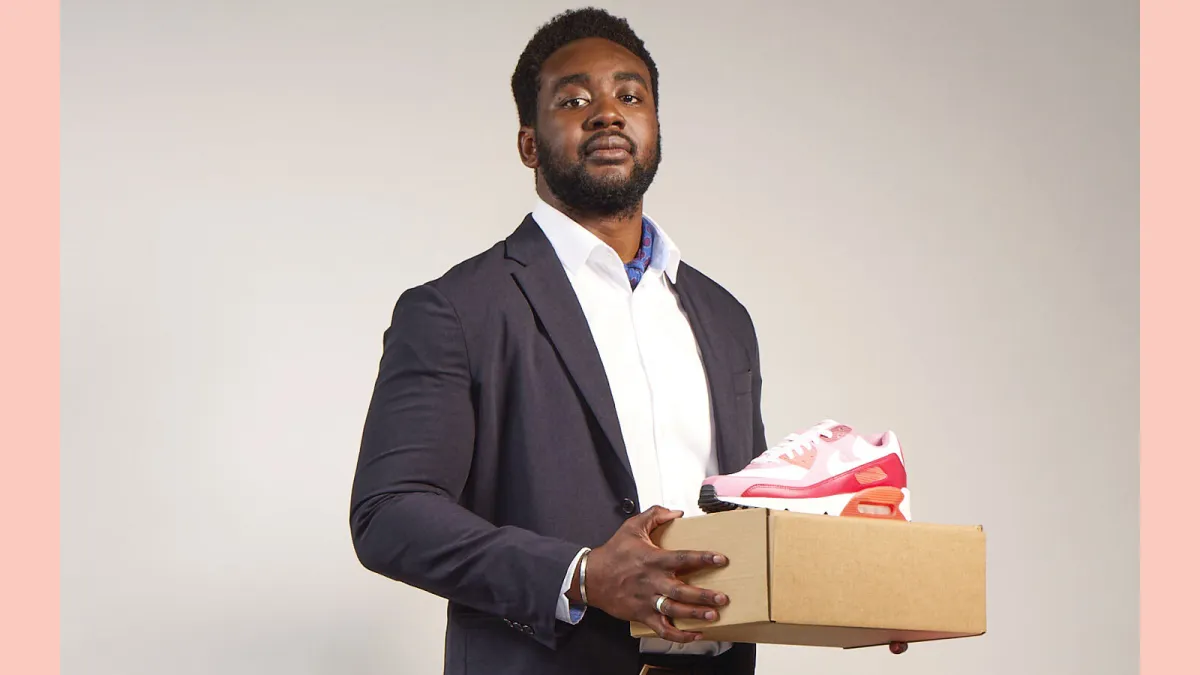
“Nice trainers, Tom. Where’d you get them?” I remember our science teacher pointing one day to my friend Tom’s £100 Nike Air Force 1s.

“I clicked JD, Miss,” Tom replied, smirking. My teacher clearly wanted to ask what “clicked JD” meant — it is buying something online fraudulently — but instead she got on with our lesson to avoid the disruption that would follow.
Tom did get his £100 Air Force 1s from the clothing store JD Sports. He had used “fullz” to buy them. That’s slang for a fraud victim’s personal and financial information, which he’d purchased on a “fullz site”. The fullz enabled him to pay for the trainers with someone else’s funds. He’d then had them delivered to an address which bore no link to him — known as an “addy”. The owners of these addys were usually a friend of a friend, recruited with the promise of free cash. You’re getting paid for basically just holding a parcel. And if the police come knocking, well, then the trainers were a surprise present from a second cousin.
Banks and retail companies work constantly to try to stamp out this practice by warning customers never to share financial information, and to be aware of clicking on phishing links — in which people are tricked into giving up their details. Nevertheless about 2.6 million cases of online purchase fraud were recorded in the UK in 2024, with nearly £400 million lost.
There was still a risk that Tom could be traced through his IP (internet service provider) address, so he used a VPN (virtual private network) to mask this, meaning anyone trying to track his location would end up in some province of India or the US, depending which server he was piggybacking on.
Friends shared fraud tips on social apps
These tricks of the fraud trade were openly shared and discussed at school. Friends would share the problems they’d come across during clicking and the best workarounds. They’d let each other know the best “dark web” sites to buy fullz, and share tips for how to avoid getting caught. Apps like Instagram and Snapchat helped pass this information about.
I remember sitting in the lunch hall before a maths GCSE exam. There were about 12 of us huddled together and the conversation soon turned to fraud. “Yo, look what I clicked. Holder’s name was Janine,” said a boy who went by the name of Krankz Corleone, holding up a Gucci bag as if he were a Formula 1 driver brandishing his trophy on the podium. One by one, my fellow classmates displayed the items that they too had acquired by fraud. One pointed to the Prada shoes on his feet. Another pulled out a stack of £20 banknotes; one held up four Santander bank cards, none of which bore his name.

At that age I wanted the same clout as Krankz Corleone. So one afternoon when I had the house to myself — my mother, a nurse, was still at work and my dad was out delivering parcels — I chose Snapchat as my weapon of choice while the adrenaline ran through my system.
There are two main levels of fraud services on social media. One tier provides access to “clicking”. The other, which is slightly harder to locate, provides you with hard cash. Tier one are what are called “the sellers”. They go on Snapchat or Instagram and post a picture of the designer product, with a caption like, “HMU [hit me up/get in touch] if you want half-price Gucci.” On the face of it, there’s nothing criminal about this type of post, and certainly nothing that would get alarms ringing in a social media company’s “dedicated team” of content reviewers. The most probable assumption is that the Gucci product on sale is a fake. In fact, they’re selling the Gucci cheap because they got it free — it had been clicked.
But that afternoon in my bedroom, I was looking for tier two of scammers: “the herders”. Herders rely on the perception of wealth (ie posting pictures of flashy designer items) and offer money using captions like, “HMU if you wanna make p [Get in touch if you want to make money].” Or, “Swing me your square if you wanna make p [Give me your bank card details if you want to make money].”
It only took a few minutes on Snapchat to find one, and I stared at those words, which were accompanied by an image of 12 stacks of purple notes. I swiped up on the post and typed out: “What’s the plan?”
A notification popped up on my screen: @sweet1 is typing. And then another one: @sweet1 sent you a message — a voice note. Without hesitation I hit play: “Basically I need your credit card or someone else’s credit card,” the first voice note said. It was followed by another. “And then I give the details to my older. In four to five days the money comes. You don’t have to do anything. You’re not losing any money. Nothing bad is gonna happen.”

That “older” to which @sweet1 was referring was part of a larger criminal network making money through drug dealing, robbery and, in extreme cases, human trafficking. In order to spend this money, they needed to clean it — ensure that it couldn’t be traced back to them. This money-laundering process is known as money muling. “Mule-herders” use social media to entice desperate and/or gullible young people — money mules — into committing fraud on their behalf by allowing cash to pass through their bank accounts, in the process “cleaning” it.
In the end, I was too risk averse to go through with it. I was worried that there was nothing stopping @sweet1 and her older from running off with my bank card and rinsing my account — all £8.89 of it. But during my school years, I saw how cyberfraud crossed into the mainstream thanks to social media. As more and more people in my year group downloaded Instagram and Snapchat, the more scamming and money muling became an open secret.
Most parents and teachers are oblivious to what young people are getting up to on their smartphones. In 2023 there were more than 17,000 cases of muling reported to the UK’s leading fraud-prevention organisation, Cifas. Of these, 3,881 involved young people under the age of 21.
Money muling among young people has become so prevalent that last month the Home Office announced, as part of its new fraud strategy, that it would provide fraud and money laundering information resources for school-aged children.
For me, fraud was something I’d grown up with. As I got older I realised that no matter how open the operators in this world are — posting opportunities for crime on their channels — many of the general public know absolutely nothing about it, especially muling.
Students make the perfect money mules
I investigated my first case as a journalist when I was still at university in Essex. Sarah, a Canadian friend, had asked to meet me somewhere we wouldn’t be seen, as she was afraid. She told me how she’d made friends with a group of boys in her economics class who one day had started making references to the fact that they were in a fraud gang.
“They were talking about how they were basically in uni as a cover, and I should be careful asking what they were talking about because I shouldn’t know this information,” she said. “They told me that they flip money [another form of money laundering]. They use students’ bank cards and ID cards to do some of the work for them, so that their own names aren’t going through machines with all that money. They would ask university students for their ID cards and their bank cards and then distribute a percentage of the money into their bank accounts. The money that they’d got doing the fraud work involved violence.”
Sarah described how these students had shown her a pile of bank cards, along with a copy of the cardholder’s ID (a driver’s licence or passport).
“They offered me a percentage that would go into my account if I took money out for them.”

I also came across stories where a herder had tricked students into becoming money mules. One told me they had been sent a Snapchat suggesting an easy route to make money by increasing their student loan, only for their bank details to be stolen in the transaction and their account used to hold money.
Universities provide perfect hunting grounds for mule-herders because students are ripe for fraud: they have financial autonomy — no parents snooping around their accounts, plus an overdraft to manage as they please. Often it is their first time budgeting and paying bills and they may be desperate, with not enough money from their student loans to pay rent and bills and go out.
Almost every university now warns students about the signs and dangers of money muling. The trouble is, when you’re a cash-strapped student, you might ignore those warnings. According to a 2025 Cifas report, people under 30 account for 60 per cent of mule cases.
Rendezvous in McDonald’s — with a concealed camera
After university, I worked on a Radio 4 Money Box investigation into money laundering via mules. Over Snapchat I befriended a mule-herder by the name of Foozy by acting as if I was interested in his proposition. We chatted for a couple of weeks but when I met him in person I was still taken aback when he turned out to be a spotty lad, no older than 18.
We met at McDonald’s in Victoria station. He was dressed in a black Nike tracksuit. I was wearing a concealed camera. He talked with his hand over his mouth, almost as if he was subtly trying to conceal his face. Initially, I thought he knew he was being filmed by me.
“If I’m gonna talk to you, I want to talk away from other people. There’s room over there,” he said eventually. He gestured to a seating area behind us.
Like any good sales person, Foozy led with the juicy benefits of money muling, explaining his “quick and easy” method of allowing money to be deposited into my account, then taking that money out in cash while allowing me to keep a small percentage for myself.
“Typically you put in around £30,000 and the process is we have two cheques. One will be £14,000; the other will be £16,000. They take a few days to clear. They’re not instant because it’s a large amount of money,” he said.

“How long, though?” I asked.
“Of course, of course. Um, HSBC cheques take two to four days to clear. I mean, it’s worth the wait,” he answered.
I’d seen other mule-herders facilitating deals upwards of £5,000, but £30,000 seemed a huge amount. It’s not every day that you walk into a bank and request to withdraw a sum like that. However, Foozy claimed he had that problem figured out.
“[For] the cash-out process you’ll need ID, as usual. We’re gonna basically have to make an excuse for you to take that much money out.”
“What would be the best excuse, though?” I asked.
“We’ll give you your storyline, because it depends how the money comes in. We push money differently sometimes. Actually, that’s a good point: it might not be a cheque, so we might have to give you an excuse, why it’s coming from this person. Just if they ask a question — they don’t usually ask — but obviously large sums of money, they’re more likely to ask.”
“Yeah, cause that’s what I didn’t want, like, if I go to the bank and…” I said.
“They won’t do anything as long as you’re not looking weird about it,” Foozy reassured me.
It’s hard to believe a bank would allow you to take out that much money over the counter, but it does happen. It’s (in theory) your money and your choice. All they can do is ask a few pertinent questions to make sure you’re not acting under duress and you’re fully aware of what you’re doing. I’ve come across many stories of people (not all criminal adjacent) being able to walk into a bank and withdraw large amounts of money — not quite £30,000, but still in the thousands. It must have been something that had successfully worked for Foozy before, otherwise he wouldn’t have stayed in this game.
When I asked Foozy if he was worried about getting caught and what would happen to my account if he did, this was his reply: “Nothing will happen to your squares [account]. The thing is, when they go through your bank, if anything ever happened, they wouldn’t arrest you or nothing. The most they would do is close down the bank account, and that means you can’t apply again with that bank for a few years. But then you can apply with other banks quite easily.”
This is not quite correct. Bank accounts that are identified as being involved with money muling do get shut down, and to apply for another one is almost impossible. Another thing Foozy was wrong about was the likelihood of getting arrested. Mules (and their herders) do get arrested. Take the case of Abdi Mohamed and Nyanjura Biseko, both 22-year-old students living in West Sussex, who allowed a sum upwards of £10,000 to be transferred through their student bank accounts. Abdi and Nyanjura were eventually arrested and pleaded guilty to the charge of possessing criminal property.
After they were convicted, they told me that they didn’t know where the dirty money they’d laundered had come from. They suspected it had criminal origins, but didn’t know it was the product of an online scam that had defrauded the public out of £37,000.
Back to Foozy. “Right, so when I’m done with this we’ll go outside and meet the two guys I came with. You give them your deets and we’ll take it from there.”
At this point I made an excuse to leave but gave Foozy the impression that I’d be back shortly. I walked briskly to the Tube. My BBC producer, Tom, who’d been keeping an eye on me, relayed later how two “big guys” had come inside to speak to Foozy, and the three of them had searched McDonald’s for me. When they realised I wasn’t there, they got into a car and left. Tom took their number plate which didn’t match the car.

People rap about fraud all over TikTok
From what I later learnt about Foozy, he’d been raised by a single mother on a rough London estate. Like my school friends, he probably didn’t set out to be a scammer. Scamming had chosen him. In fact, what always stood out for me, as it still does, is how crucial social media was to his business. The social media we and our children all use was how he advertised to money mules and how he made connections with fellow fraudsters.
All those fraud terms — like clicking or fullz — that my school friends used to mask what they are talking about are searchable on social media platforms. Type in fullz and you’ll find users offering you the chance to buy people’s financial information. Facebook, Instagram, Twitter, Snapchat, Telegram, even Amazon, all contain guides on how to commit fraud, and TikTok is full of videos with people rapping about defrauding or clicking major retailers and using people’s fullz to fund a glamorous lifestyle.
A well-known TikToker I investigated was called Tankz. One of his posts was captioned “Day in the life of a clicker”. The video started off with the words in his bio: “This video is for entertainment purposes only,” and then proceeded to show an image of trainers in a box. “I clicked myself some new Js and I’m gonna go to my addy to pick them up.” The video then cut to a pair of blue and black Nike Jordans and Tankz’s voice in the background saying, “I’m probably gonna sell these on. They’re looking kinda dead.” The rest of the clip was footage of Tankz riding on an electric scooter and flaunting bank notes, which he claimed he’d acquired from fraud, all the while not showing his face once.
TikTokers such as Tankz are engaging and entertaining and incredibly relatable for young people. Tankz also offered a fraud guide that you could buy on Instagram. Charging between £30 and £100, he covered everything from how to launder money through betting apps and fintech banks (ie Monzo), to how to fraudulently claim refunds from PayPal or where to buy card details.
After a long investigation for the BBC’s Panorama I discovered that Tankz was a student living in Wembley, but the police decided they didn’t have convincing enough evidence to prosecute him. These days he has a new career as a YouTuber posting videos about how he used to be a scammer and is on a path of redemption. But the point is that TikTokers like him have a major cultural influence. Content that promotes fraud as an easy get-rich-quick scheme gives young kids watching a role model in criminality that almost seems harmless.
During years of investigating fraud, I’ve talked to both the people whose job it is to protect the young from becoming scammers, and to those protecting the public from becoming their victims. Social media companies, the police, the banks, Cifas, and their responses are all very similar: they take fraud very seriously and are working hard to crack down on it.
At the beginning of the year the government launched a new fraud reporting line — Report Fraud — to build a clearer picture of who is committing these crimes and how to catch them. Still, all forms of banking fraud cost UK account holders £722 million in 2024. And an estimated £10 billion pounds of criminal money is cleaned through money muling every year.
Institutions fighting fraud all continue to blame one another. The banks and police blame social media companies; the social media companies blame the fraud boys… I’m not sure where blame lies. What I do know is that these industry groups are often too far removed from the reality of the way young people live today ever to have a proper idea of how tempting it can be.
Scam Nation: Undercover with the Next Generation of Cyber Fraudsters by Kaf Okpattah (William Collins, £16.99) is published on April 23. To order a copy go to timesbookshop.co.uk or call 020 3176 2935
Grooming: Rachel Thomas at S Management using Maria Nila and Weleda