

The Digital Divide and the Need for Transparent Governance ‹ ColoradoBoulevard.net

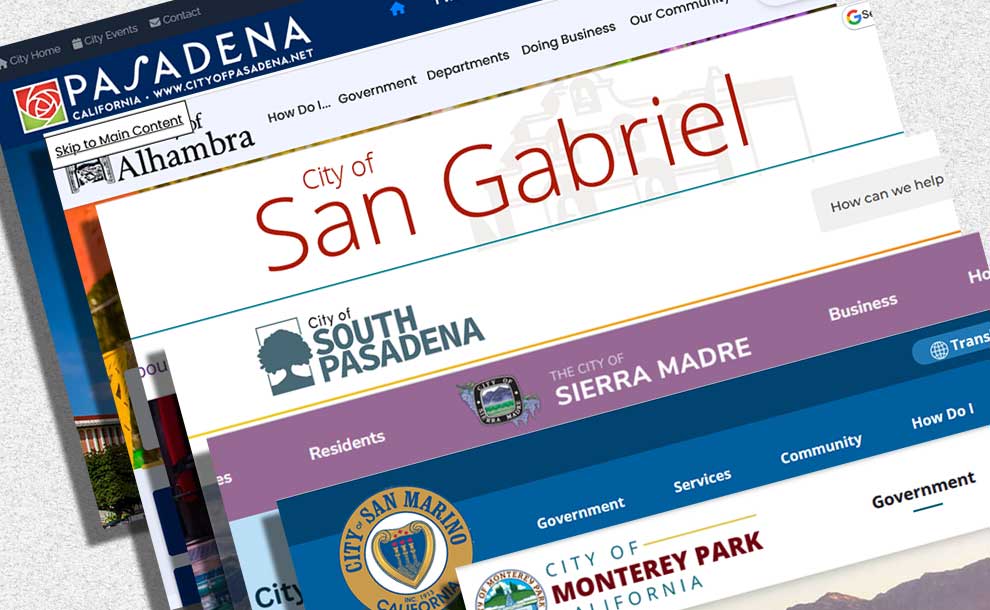
Cities’ webpages (Photo – Graphics Dept.)
It’s time for cities to step up their efforts to provide better access to information for all residents, whether they’re online or not.
By Wafic Khalil
In recent months, I’ve noticed an increasing number of social media posts from the City of Sierra Madre. The posts asked residents questions like: Which services would be easier to complete online? or What city services would you check frequently? The questions were part of a push to redesign the city’s website to better serve its online audience. While such efforts are admirable, they overlook a crucial point: a significant portion of the population is not online, does not own a smartphone, or chooses not to engage with digital technologies due to reasons ranging from lack of interest to fear of new technology.
In the past, if you needed information, you could simply pick up the phone and ask the operator for an address or phone number. Now, if you’re not part of the tech-savvy crowd, it can feel like you’re being left out of conversation. This is especially concerning when we consider that many of the services offered by cities are moving online. We must remember our responsibility to support residents who aren’t online, whether they lack access or just are reluctant to embrace technology.
To ensure there are easy, accessible ways for all residents to interact with local government, city offices should maintain phone lines that are fully staffed so that those without internet access or digital skills can still reach City Hall and get the services they need.
Accessibility also is an essential element of transparency in governance. For example, the old website of the City of Pasadena clearly listed the email addresses of councilmembers and city staff, making it easy for residents to contact officials directly. The redesigned website, in place for a few years now, has significantly reduced this level of access. Currently, only the Mayor and Councilmember Madison have their emails listed publicly. It’s left up to each councilmember to decide how they wish to be contacted.
Alhambra, San Gabriel, Monterey Park, and South Pasadena, have similar practices. In San Gabriel, Monterey Park, and Alhambra, for instance, the representative’s address is available, but residents must hover over an email link and right-click to save the address. This creates unnecessary steps and barriers for people who may not be familiar with technology. South Pasadena lists full bios for three of its councilmembers but omits details for others, such as Ferguson and Primuth. (We were also unable to find any councilmember email addresses for Sierra Madre.) This lack of consistent, transparent communication from elected officials is not just frustrating; it also can undermine trust in the local government.
There is one city that stands out in terms of transparency: San Marino. The city still lists the email addresses of all of its councilmembers directly on its website. This straightforward approach reflects a commitment to open communication with the public.
While some cities might argue that withholding email addresses is necessary for security or privacy reasons, it’s important to note that official email addresses are public records. In 2017, the California Supreme Court ruled that government employees cannot shield public records—such as work-related emails sent on personal devices or through private accounts—from public view. This ruling helps ensure that the public has access to information related to governmental operations, making transparency a cornerstone of modern governance.
It’s time for cities to step up their efforts to provide better access and transparency for all residents, whether they’re online or not.
Open, transparent communication is vital for a healthy democracy. By making communication easily accessible, cities foster an environment where citizens feel empowered to engage with their local government and hold officials accountable.