

What the Tech?! Digital Innovation for Migratory Species and Protected Area Conservation – events
Co-organising partners from Tech4Nature flagship projects:
- Mexico – C Minds, a women-founded, non-profit action tank based in Latin America that accelerates the contextual and ethical use of AI for social and environmental impact, and IUCN member;
- Costa Rica – Centro Científico Tropical (CCT), a private, non-profit, Costa Rican organisation and IUCN member; and the Macaw Recovery Network (MRN), a nature conservation NGO based in Costa Rica, dedicated to the protection and recovery of endangered Parrots and their habitats;
- Brazil – The consortium of partners delivering the “Amazon Coastal Watch: Empowering Communities for Climate Resilience and Species Conservation” Tech4Nature Brazil project, including IUCN-Brazil, Huawei-Brazil, Universidade Federal do Pará (UFPA), Instituto Chico Mendes de Conservação da Biodiversidade (ICMBio).
Migratory species face escalating pressures from habitat loss, climate change, pollution, and unsustainable exploitation. The Global Species Action Plan (GSAP) and its digital knowledge platform, GSAP SKILLS, offer a transformative opportunity to accelerate conservation efforts by consolidating tools, resources, and case studies that support science-based decision-making.
Tech4Nature, co-led by IUCN and Huawei, demonstrates technologies such as AI, acoustic monitoring, IoT sensors, and citizen science platforms to strengthening biodiversity data, support local participation, and improve conservation outcomes. Across Latin America, Tech4Nature’s projects are demonstrating how digital innovation can transform conservation practice for species and for protected and conserved areas.
This What the Tech?! session will highlight three distinct applications of technology in conservation:
- Brazil: IoT sensors and environmental monitoring systems track tidal movements, salinity, and temperature in the Soure Marine Extractive Reserve, informing mangrove conservation and supporting community-led management.
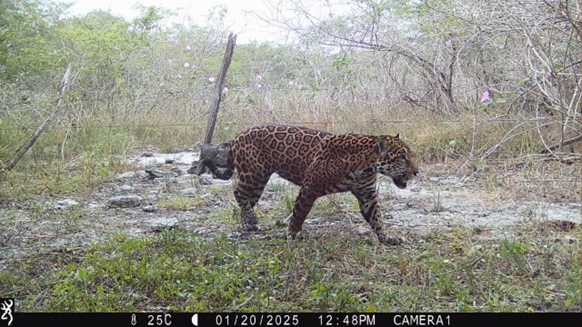
- Mexico: AI-powered image analysis, acoustic monitoring, and citizen science platforms enhance jaguar and ecosystem monitoring in the Dzilam de Bravo Reserve while building local capacity for data collection and analysis.
- Costa Rica: Digital participation tools and citizen science initiatives connect communities directly to protected area governance and species conservation, strengthening collaboration between conservation authorities and local stakeholders.
An audience-driven Q&A will invite participants to engage directly with the teams implementing these technologies to explore how these real-world examples align with the GSAP framework and how GSAP SKILLS can support replication, adaptation, and scaling. The discussion will address practical considerations such as data collection and verification, community engagement, and the partnerships required to enable success.
Key takeaway: Participants will gain practical insights into how emerging technologies and digital knowledge platforms – anchored in the Global Species Action Plan – can generate real-time ecological data, strengthen community engagement, and drive measurable conservation impact for migratory species across Latin America and beyond.