

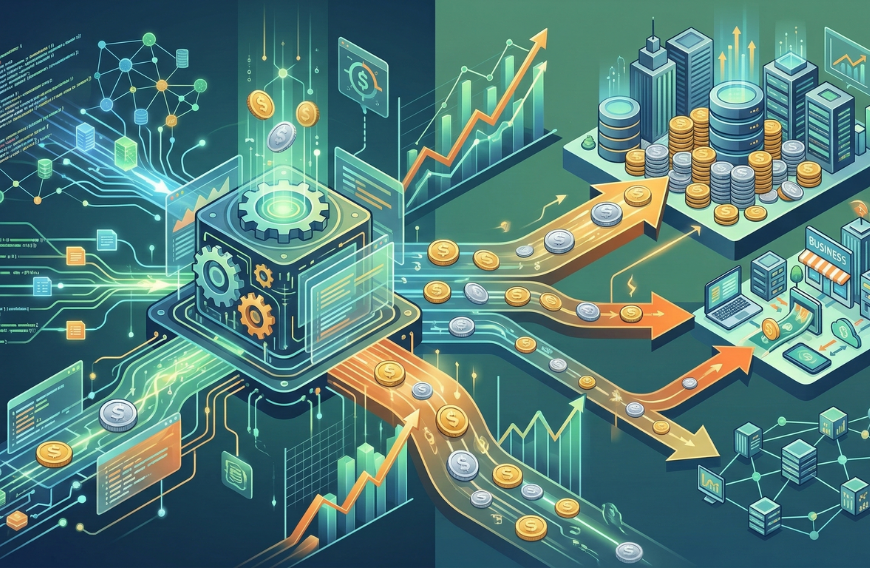
Who’s making money from your data in dynamic pricing
For more than 25 years, Big Tech has quietly executed one of the largest wealth transfers in modern history by extracting trillions of dollars in value from consumer data. Every search, click, purchase, location ping, and social interaction has been harvested, analyzed, and monetized, often without meaningful understanding or consent from the individuals generating it.
That same data is then used to refine behavioral targeting, sell advertising, and now train artificial intelligence systems that further entrench platform dominance. Consumers, meanwhile, continue to give up their rights blindly, seduced by convenience and “free” services, rarely pausing to ask what they are actually trading away.
Maryland may now be emerging as one of the first states to openly challenge the role of algorithms in shaping prices.
Proposed legislation supported by Wes Moore and Joseline Peña-Melnyk seeks to restrict the use of personal consumer data in dynamic pricing systems used by retailers. At its core, the legislation attempts to prevent businesses from charging different prices to different consumers for the same product based on algorithmic analysis of personal data.
The debate may appear at first glance to be about consumer protection, but it represents something far larger. It is one of the earliest direct confrontations between state governments and the growing influence of artificial intelligence and algorithmic decision systems in everyday economic life.
Dynamic pricing itself is not new. Airlines and hotels have relied on demand-based pricing for decades. Ride-sharing companies such as Uber continuously adjust fares based on real-time demand, while e-commerce giants like Amazon routinely change prices throughout the day based on inventory, competition, and customer behavior.
What is different now is the degree of personalization made possible by modern data analytics and artificial intelligence. Retailers increasingly rely on algorithms that merge vast streams of behavioral data, including shopping history, browsing activity, location data, loyalty program participation, and inferred income levels, to determine what price a particular consumer may be willing to pay.
READ: Sreedhar Potarazu | India’s AI content crackdown: Why it matters to Big Tech and the US (February 10, 2026)
In theory, such systems optimize supply and demand. In practice, they introduce a far more complex question:
When algorithms determine prices based on personal data, is the market still setting the price, or is the algorithm manipulating it?
Two customers standing in the same store, purchasing the same item at the same moment, could theoretically be offered different prices based entirely on the data profile associated with their digital identity. The algorithm’s goal is not simply to set a fair market price but to identify the highest price that a specific consumer will tolerate before abandoning the purchase.
At that point, pricing becomes less about economics and more about behavioral prediction.
The fuel powering these algorithms is personal data generated almost entirely by consumers themselves. Every smartphone location ping, credit-card purchase, online search, streaming choice, and social media interaction contributes to the digital portrait companies construct about each individual.
Retailers increasingly supplement this information with in-store analytics that track foot traffic, mobile apps that monitor browsing behavior, and loyalty programs that link offline purchases to online identities. Yet despite being the source of this data, consumers rarely understand how extensively it is being used to shape the economic environment around them.
Maryland’s proposed restrictions therefore raise a deeper set of questions that reach far beyond retail pricing.
If algorithms determine prices using consumer data, who actually owns the components that make those decisions possible?
Does the retailer own the algorithm because it uses the software? Does the software company that developed and licensed the pricing system own the algorithmic logic embedded within it? Do consumers possess rights to the data that feeds those algorithms? Or does the state ultimately claim authority to regulate the outcomes those algorithms produce in the marketplace?
The answers are far from clear.
The algorithms themselves are typically treated as proprietary intellectual property owned by technology companies. Retailers license these systems much like they license accounting software or inventory management platforms. Consumer data, meanwhile, is often treated as a commercial asset by the companies that collect it, even though that data originates with the individual.
The state’s role traditionally focuses on regulating outcomes such as unfair pricing, price discrimination, or anticompetitive behavior. However, regulating algorithmic systems introduces a new challenge: the decision-making process itself is embedded inside complex software models that may be opaque even to the companies deploying them.
This raises another critical issue. If Maryland successfully restricts algorithmic pricing in retail stores, will the same principle apply to digital platforms whose entire business models rely on dynamic pricing?
Ride-sharing platforms such as Uber and Lyft use algorithms to adjust fares based on real-time demand, traffic patterns, driver availability, and location data. E-commerce companies such as Amazon modify prices continuously using automated pricing engines that analyze competitor listings, inventory levels, and consumer browsing behavior.
If dynamic pricing driven by algorithms becomes restricted in physical retail environments, it is difficult to see how digital marketplaces would remain exempt from the same scrutiny.
That leads to an even more fundamental question about jurisdiction. Who regulates algorithmic pricing systems that operate across state lines and are often deployed by multinational technology firms?
READ: Sreedhar Potarazu | AI sovereignty race: US and China lead, India watches (
State legislatures can regulate retailers operating within their borders, but the software driving those pricing systems may be developed in another state or another country. The consumer data used to train the algorithms may be stored in cloud servers located anywhere in the world. The retailer deploying the system may not even fully understand how the algorithm arrives at its pricing decisions.
In that environment, traditional regulatory frameworks struggle to keep pace.
Historically, governments regulated prices directly in limited circumstances such as utilities, insurance markets, or antitrust enforcement. The rise of algorithmic pricing introduces a different challenge because the state is no longer regulating a static price but rather a continuously evolving decision system.
The question therefore becomes not only who regulates prices, but who regulates algorithms.
Artificial intelligence and automated decision systems now influence hiring decisions, loan approvals, insurance underwriting, healthcare diagnostics, and increasingly the prices consumers pay for goods and services. Yet the regulatory structures overseeing these systems remain fragmented and largely reactive.
Maryland’s effort to address algorithm-driven dynamic pricing may ultimately prove to be one of the earliest attempts by a state government to confront the economic power embedded in artificial intelligence systems.
Whether the legislation succeeds or fails, the broader issue will not disappear. Algorithms increasingly sit at the center of modern economic life, quietly shaping markets in ways that most consumers never see.
If the Maryland debate establishes a precedent, it may force policymakers across the country to confront a set of questions that have so far remained largely unanswered.
Who owns the algorithms that shape economic decisions? Who owns the consumer data used to train those algorithms? Who bears responsibility when those systems influence prices, access, or opportunity?
And perhaps most importantly, who ultimately governs the invisible digital infrastructure that increasingly determines how markets function?
The battle over dynamic pricing in Maryland may appear to be about retail transactions, but it represents something much larger: one of the first tests of whether democratic institutions can meaningfully regulate the algorithmic systems that now operate at the heart of the digital economy.