

Behind the Bytes: July Recap
July was a month of many mirrors, at every turn, there were reflections, of politics and the coalitions already shaping 2027; of insecurity, and the data that could help confront it; of digital skills and the shifting future of work; of West Africa, and the integration that ECOWAS promises; of foreign influence, civic power, environmental loss, and youth engagement.
Through conversations, training, research, and community engagements, two questions kept resurfacing: What is being seen? And more importantly, what is being missed?
This edition of Behind the Bytes offers a detailed account of the work, the people, and the questions that defined July.
Webinar on 2027 Elections: Opposition Politics and Party Dynamics
Dataphyte closed out the month with a thought-provoking webinar on “2027 Elections: Opposition Politics and Party Dynamics,” held on July 30th. The conversation, moderated by Dataphyte’s Head of Models and Metrics, Lucy Okonkwo, drew over 80 participants and featured two seasoned experts, Mr. Bisi Abidoye, Assistant Managing Editor, Premium Times and Mr. Chibuike Mgbeahuruike, Election Consultant at the Centre for Democracy and Development (CDD), Abuja.
 The speakers emphasised the role of opposition and political parties in consolidating democracy, stressing that democracy in Nigeria should not be reduced to a system that serves only political actors; it must remain public-oriented and citizen-focused. They also highlighted the role of the media in shaping public perception, noting that the media’s ability to frame political stories effectively influences what the public knows and what issues they prioritise.
Data Story Lab 6.0
On Saturday, July 26, 2025, Dataphyte hosted a focused learning session as part of the free Data Story Lab series. This edition was all about working with fiscal and governance datasets: how to analyse them, ask the right questions, and extract insights that reveal how public money is being used.
 Participants learned how to approach complex data and translate it into compelling public interest stories, with a special focus on transparency, budgeting, and accountability.
 Dataphyte Academy Co-ordinator, Kehinde Ogunyale, providing practical insights on analysing fiscal and governance datasets for accountability, storytelling, and policy advocacy.
The video recording is available on the Dataphyte Academy YouTube channel. Subscribe to stay updated.
Foreign Influence, Civic Resilience, and Data Advocacy: Dataphyte Engages National Endowment for Democracy (NED)
On July 19, 2025, Dataphyte welcomed representatives from the National Endowment for Democracy (NED) to its Abuja office for a strategic conversation on foreign influence, civic society resilience, and data-driven advocacy.
The Dataphyte team highlighted how the support from NED has helped Dataphyte’s mission to advance data journalism and accountability journalism in Nigeria through several sectoral investigations into government spending, exposing funds mismanagement and illicit financial flows that have stalled development. Dataphyte’s Country Director, Mr Oluseyi Olufemi, addressing NED representatives
The National Endowment for Democracy (NED) has supported Dataphyte’s efforts in delivering policy advisory through insights, data analytics, media literacy content, and stakeholder engagements. This support has positioned Dataphyte at the forefront of governance innovation in Nigeria and strengthened its commitment to advancing the civic space.
 The meeting also spotlighted Dataphyte’s evolution into a multi-dimensional organisation dedicated to providing actionable data that informs public policy and strengthens democratic accountability.
As foreign influence in Nigeria deepens and external funding sources shift, Dataphyte’s commitment remains clear: to provide actionable data that empowers citizens, informs policy, and advances democratic accountability.
External Engagements
Kehinde Ogunyale made two appearances on Nigeria Info 95.1FM Abuja in July.
In his first appearance, he discussed “Methane Emissions in Nigeria: A Shared Concern,” exploring how policymakers and stakeholders can adopt more transparent and accountable approaches to reducing harmful emissions and protecting the environment.
In the second, he addressed “E-Government: Improving Access to Services or Increasing Surveillance?” A conversation focused on the balance between digital innovation in governance and the need to safeguard citizens’ privacy and rights.
GITEX Abuja 2025
Goloka Analytics was one of the 20 startups selected to pitch at the GITEX Nigeria Roadshow in Abuja, hosted by NITDA and the Office for Nigerian Digital Innovation (ONDI).
The pitch was evaluated by a panel of judges from NITDA, ONDI, and GITEX against seven criteria: originality, impact, scalability, visibility, sustainability, global relevance, and presentation. While the team didn’t make it into the top five finalists, the experience was far from a loss.
 The team walked away with valuable exposure, practical insights, and promising partnership leads that will shape Goloka’s journey in the months ahead.
HumAngle Fellows Visit Dataphyte
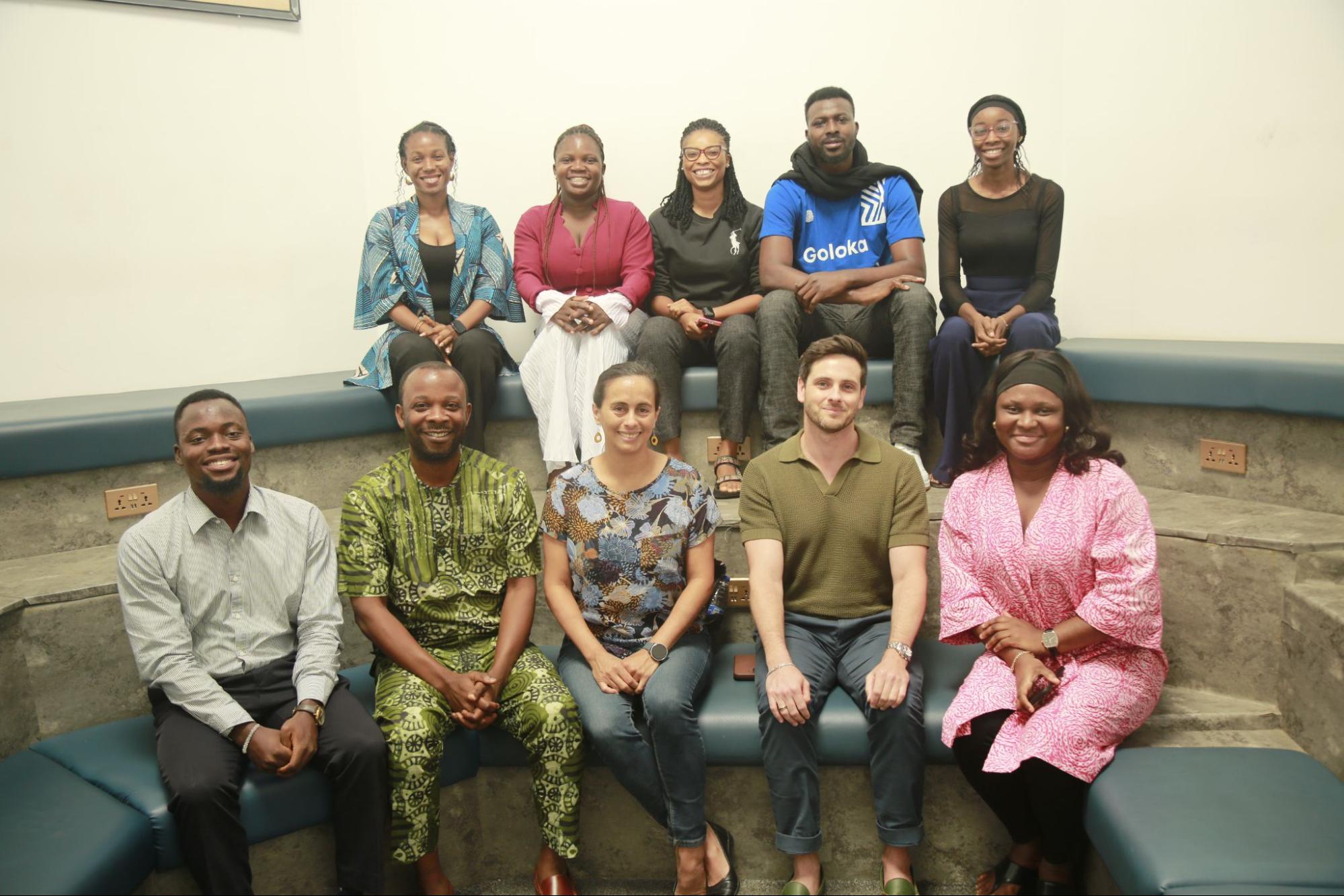
Dataphyte hosted the HumAngle Foundation Technology and Civic Impact Fellows on the 17th of July for an interactive session on “Leveraging Data for Civic Engagement.”
Dataphyte’s Academy Coordinator, Kehinde Ogunyale and Head of Policy and Research Communication, Khadija Kareem, facilitated conversations and hands-on activities showing how data can drive advocacy, transparency, and participation. Fellows engaged with tools, explored case studies from Dataphyte’s civic work, and reflected on their roles as journalists and civic actors in shaping public awareness.
 It was an energising exchange of knowledge, values, and visions. As always, Dataphyte is proud to be part of growing communities that care about storytelling and systems.
World Youth Skills Day 2025: Dataphyte CEO Speaks on AI and the Future of Work
To mark World Youth Skills Day 2025, Dataphyte’s CEO, Joshua Olufemi facilitated a session during a special webinar hosted on July 15 by the Federal Ministry of Education and the Federal Ministry of Youth Development, in collaboration with UNICEF Nigeria. The session focused on the evolving role of artificial intelligence in shaping the future of work for young Nigerians.
 The session, titled “Building Digital Skills for Tomorrow: AI Learning and Strategic Pathways,” focused on how AI and digital literacy can open up meaningful opportunities for Nigerian youth while bridging the digital divide.
 He emphasised that digital empowerment is no longer optional. From content creation to civic tech, from AI-powered research to social impact, the future belongs to those who can not only consume data but create value from it.
Rethinking Security through Data and Accountability (Twitter/X Space – July 9, 2025)
As insecurity continues to evolve across Nigeria, Dataphyte hosted a Twitter/X Space conversation on July 9th titled “Rethinking Security through Data and Accountability.”
The conversation explored what data reveals about Nigeria’s recent security challenges, particularly in Benue, Zamfara, and Borno. It also examined the disconnect between security budgets and actual safety outcomes, highlighting the limitations of current spending frameworks.
 The session also explored the role of media coverage in shaping public understanding of insecurity, whether by amplifying fear or helping audiences make sense of complex realities. It concluded with a shared call for more transparent security data, greater leadership accountability, and context-specific strategies that prioritise the needs of local communities.
It was a reminder that data isn’t just for reports, it’s a tool for change. You can listen to the conversations here.
JULY INSIGHTS
The Dataphyte insights team continued to ask questions that matter, publishing content across governance, economy, health, and education through our weekly insight reports: Pocket Science, SenorRita, Marina & Maitama, Data Dive, and other short-form and long-form reports.
In July, Dataphyte published 13 insight reports, 9 special reports, and a series of daily data cards that spotlighted Nigeria’s development challenges through a data lens, providing readers with the tools to better understand the issues that matter.
Pocket Science
-
Pocket Science explored the realities of Nigeria’s economy at the individual and sectoral levels. It looked at the aluminium sector as an untapped diversification pathway, the precariousness of employment where having a job no longer guarantees stability, and the growing potential of Nigeria’s agricultural exports to drive foreign exchange earnings.
SenorRita
-
SenorRita focused on women’s rights, representation, and inclusion across institutions. From the complexities of cross-border adoption between Nigeria and the UK, to the integration of women into the armed forces, and the push for dedicated seats for women in governance.
Marina & Maitama
-
Marina & Maitama editions offered deep dives into Nigeria’s financial and economic landscape. They tracked the surge of cryptocurrency adoption, explored Dangote Refinery’s roadmap to list on the stock exchange, and examined GTBank’s historic milestone of crossing ₦100 per share alongside the broader rebasing of Nigeria’s GDP, which revealed a service-driven economic structure.
Data Dive
-
Data Dive provided geopolitical, cultural, and labour-focused perspectives. The editions examined Nigeria’s foreign policy ties with St. Lucia, the country’s evolving role in BRICS, the passing of two influential figures, President Buhari and the Awujale of Ijebuland, and the crisis of workers’ rights that pushed Nigeria into the world’s worst-ranked countries for labour protections.
Special Reports
-
The Special Reports offered investigative and policy-driven insights into critical issues shaping Nigeria and Africa. They covered gender-focused allocations in the 2025 budget, the malaria burden, and Dataphyte’s new project to track security.
They also revealed systemic gender inequalities, such as women’s exclusion from land and property rights, absenteeism of girls in schools due to poor infrastructure, and women’s limited access to wealth from cashew farming.
Beyond gender, the reports addressed Africa’s place in the AI era, raising concerns over minority languages being sidelined, the absence of AI accountability, and the unfair use of African cultural assets to train global AI models without compensation.
Together, these publications provided timely, data-driven insights that connected policy, economy, culture, and governance, and strengthened public understanding of Nigeria’s challenges and opportunities.
A Regional Milestone: ECOWAS at 50
On July 7th, Dataphyte launched a milestone report, “ECOWAS at 50: Unveiling the Past, Shaping the Future.”
The report celebrates five decades of regional integration, diplomacy, and economic cooperation, while also interrogating the cracks and contradictions. From peacekeeping missions to trade facilitation, ECOWAS has played a pivotal role. But recent events, especially the AES exit, call for rethinking the strategy.
 The report offers a deep analysis on ECOWAS’s historical achievements, its evolving role in West Africa’s democratic consolidation, and the urgent need for reforms that match today’s geopolitical realities.
The report offers the clarity and insight necessary to meaningfully engage with the region’s future.
Download it here: bit.ly/ECOWASat50
Read other publications here
Looking Ahead
From civic security to regional unity, from digital futures to democratic influence, July was a month of asking hard questions and responding with evidence and empathy.
Thank you to everyone who shared space, time, questions, and insights with Dataphyte.
August is already underway, and the work continues: gathering data, telling stories, and building tools for a more informed and inclusive Nigeria.
Let’s keep going.
Our Products
Dataphyte also develops and continually improves tools that transform raw data into actionable insights and real-world impact:
Goloka is a hyperlocal data collection and analytics platform that leverages artificial intelligence, mobile tools, geospatial tracking, and community-driven contributions to deliver fast, reliable, verified data for smarter decisions.
Nubia is an open-source AI assistant that helps researchers, media organisations, and civic actors interpret large, messy datasets, be it on policy, trade, or environmental shifts into story-ready insights.
These innovations are part of Dataphyte’s bigger mission: to make data not just available, but actionable.
Stay Connected
Want to learn more about our work?
Visit our website to explore our latest insights and initiatives.
Behind The Bytes – Bridging Data, Media, and Civic Engagement