

how smart skills will power Britain
The government’s planning and infrastructure bill, published in early 2025, is designed to get Britain building again. It has been accompanied by a surge in investment that signals a new era for UK manufacturing and construction, one that demands not only materials and machinery but also skilled hands and resourceful minds.
Behind every bridge, turbine and rail line sits a trade ready to shine: welding. But welding’s reach extends far beyond construction. From aerospace components and automotive frames to food processing equipment, energy systems and advanced medical devices, this craft underpins almost every sector that keeps this country moving. Yet, despite its central role, welding faces challenges that must be addressed to maximise the opportunity ahead.
Key takeaways
-
Welding is critical to the UK’s industrial revival: As the government pushes new planning and infrastructure projects, welding underpins nearly every major sector – from construction and transport to aerospace, energy, food and healthcare – making it essential to Britain’s economic growth.
-
A major skills shortage threatens progress: The UK is forecast to face a shortfall of over 35,000 welders by 2027, driven by an ageing workforce and insufficient new entrants, putting major infrastructure and manufacturing projects at risk.
-
Welding is a modern, high-tech profession: The outdated image of welding no longer applies. Today’s welding blends engineering, creativity and digital technology, including robotics, automation, AI-driven quality control and augmented reality.
-
Training and early engagement are key solutions: Partnerships with organisations like WorldSkills UK, colleges and training centres such as CATCH are vital to attracting young talent and ensuring welders are trained in efficiency, safety and sustainability from the start.
-
Efficiency and sustainability can improve now—not later: Practical innovations like smarter gas management (e.g. precision gas flow and digital monitoring systems) can significantly cut costs, reduce emissions and improve weld quality today, without waiting for full automation.
FAQs
-
Why is welding so important to the UK economy right now?
-
What challenges does the welding industry currently face?
-
Is welding still a manual, high-risk job?
-
How is the industry addressing the skills gap?
-
How can welding operations improve efficiency and sustainability today?
The challenge and the opportunity
Ask most people about welding and you’ll hear words like hot, noisy and maybe even dangerous. The reality? Welding today is a high-tech, precision-driven discipline that blends creativity with engineering expertise.
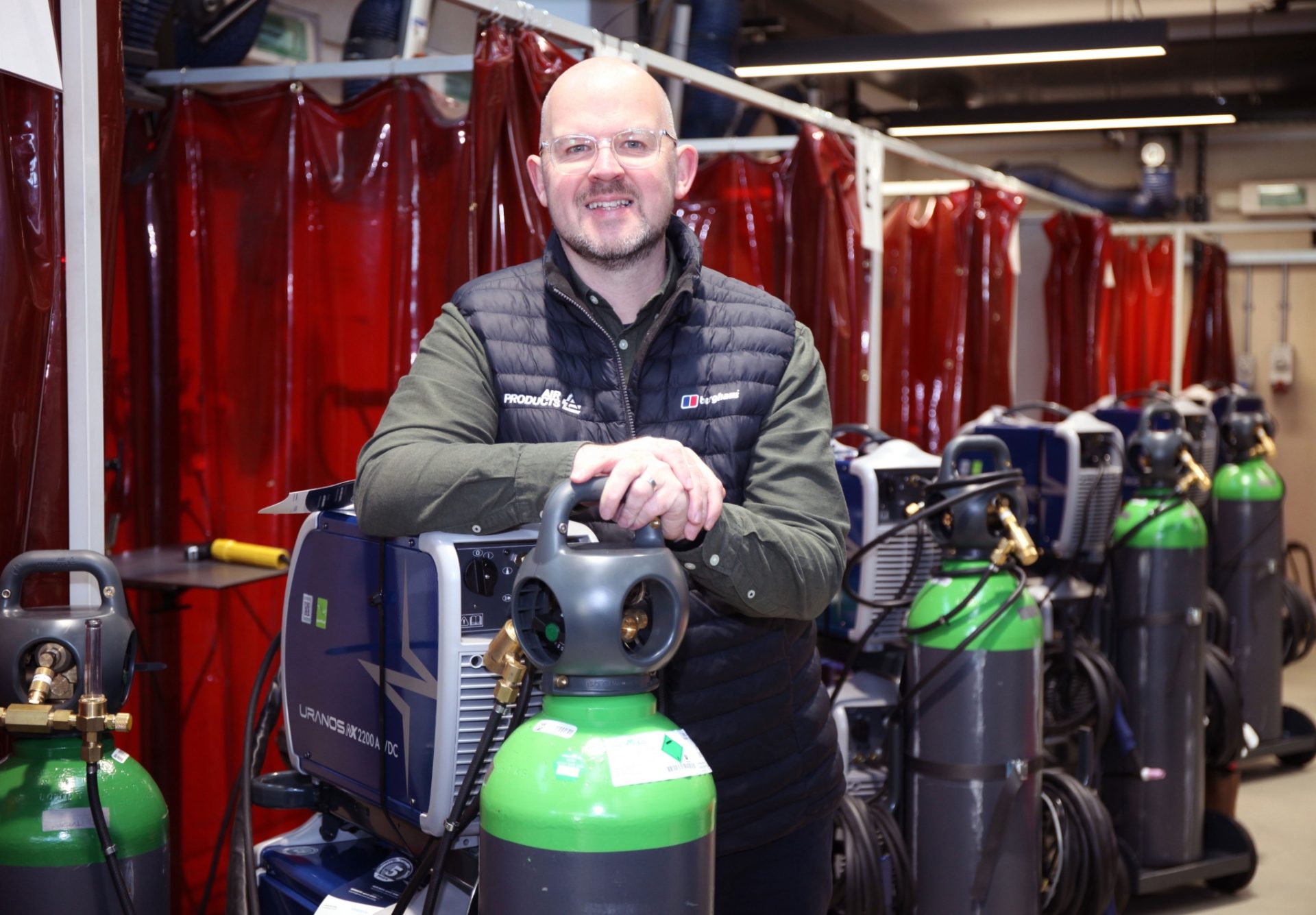
As Principal Application Specialist at Air Products, I’ve spent nearly three decades in this industry, starting as an apprentice and growing with the profession. That experience gives me a deep appreciation of how far welding has come – and what it needs to thrive.
I’m supported by a small but highly skilled team of four qualified welders – both men and women – bringing around 100 years of combined industry experience. Each holds recognised welding certifications, from practical credentials through to welding engineer level. This breadth of knowledge means we speak the language of welders and understand the realities of the shop floor.
One challenge stands out: finding and keeping the right skills. By 2027, the UK is predicted to face a shortage of over 35,000 welders. Nearly half of today’s workforce is approaching retirement, and without action, major projects could stall.
That’s why initiatives like WorldSkills UK, the country’s most prestigious welding competition – which we’ve supported for more than 20 years – are so important. They showcase welding as a vital career path and inspire hundreds of apprentices to develop world-class skills.
Alongside WorldSkills, we also partner with colleges and training centres to give students critical hands-on experience with modern welding. From free resources and live demos to tailored programme support, we help ensure tomorrow’s welders enter the workforce with confidence and capability, because of course – this looming skills gap isn’t just a challenge – it’s an opportunity.
Welding today is creative, impactful and increasingly digital. It’s time we told that story better – to young people, educators and industry leaders alike. Welding isn’t just joining metal; it’s doing it better, faster and cleaner to create lasting quality – and it’s about building the next generation of talent to sustain our industrial ambitions.
The path to greater efficiency and innovation
The future of welding is evolving rapidly. Advanced technologies such as robotic welding systems, fully automated production lines, augmented reality helmets and AI-driven quality control are transforming workshops worldwide. These innovations promise higher precision, faster throughput and improved safety – but progress doesn’t have to wait for tomorrow.
There are practical steps the industry can take today to optimise processes and boost efficiency. One of the most impactful is smarter gas management. Often overlooked, gas control plays a critical role in cost, quality and sustainability. In high-volume operations, even small inefficiencies in gas flow can lead to defects, wasted time and unnecessary emissions.
That’s why precision gas flow is at the heart of what we do. Through our Gastrak Service, we help customers eliminate pre-weld surges, maintain accurate flow rates and reduce overuse – all without major system changes. The results speak for themselves: businesses can cut gas consumption by 25–65%, meaning fewer deliveries, lower costs and reduced CO₂ emissions.
For operations looking to take efficiency even further, we offer Gastrak e2 Service– which brings automation and intelligence to gas management, delivering real-time monitoring and digital control of flow rates across multiple stations. It integrates seamlessly with robotic welding systems, automated production lines and manual setups, ensuring consistent performance shift after shift.
Beyond precision, these management systems add another layer of safety and sustainability by detecting leaks early, helping prevent gas loss and reducing environmental impact. All of this contributes to greener, more cost effective operations, which makes it crucial to focus on the right building blocks – training.
Building skills for modern manufacturing
Across the UK, we’ve partnered with CATCH – the country’s largest welding training centre – to ensure apprentices learn not just how to weld, but how to weld well: with efficiency, safety and sustainability in mind. Working alongside 61 employers and training hundreds of students every year, CATCH is creating a pipeline of talent ready for the future of manufacturing.
CATCH integrates Gastrak Service into its training programme, so that students can learn best practice from day one: eliminating pre-weld surges, maintaining accurate flow rates and reducing gas waste without costly system changes. Having hands on experience with technology that makes a real difference to the quality, cost and sustainability of the weld, means they are better prepared for the demands of modern industry.
Shaping the future, together
Welding touches every industry – from aerospace and automotive to energy, food production and healthcare. Operators across these sectors have a unique opportunity to shape the future by investing in training, embracing innovation and working closely with educators to equip the next generation with the right skills and tools.
It’s time to update the story of welding. It may not make headlines, but it’s central to our industrial future. With the right investment in people and practice, welding can help sustain and grow UK industry – cleaner, smarter and stronger.
For more articles like this, visit our Innovation channel