


Skills boost for young people as new Technical Excellence Colleges announced
Around 65,000 learners across England will gain access to high‑quality training for some of the country’s fastest‑growing industries, as the government announces 19 new Technical Excellence Colleges under its Industrial Strategy.
Backed by £175 million of government funding, the new centres will specialise in advanced manufacturing, clean energy, defence, digital and cutting‑edge technologies, equipping young people with the high‑level technical skills needed to secure well‑paid, skilled jobs.
The expansion comes amid rapidly rising demand for technical skills, with estimates suggesting that almost 600,000 additional workers will be needed in these key sectors by 2030.
The new Technical Excellence Colleges are designed to provide a clear pathway from education into work, supporting productivity, innovation, and long‑term economic growth across the UK.
The £175 million investment will support high‑quality teaching, improved and industry‑aligned courses, and state‑of‑the‑art specialist equipment.
Colleges awarded Technical Excellence College status have been selected based on their ability to deliver outstanding technical education in areas critical to Britain’s economic future.
Funding for the programme is jointly backed by:
- £97m from the Department for Education
- £50m from the Ministry of Defence
- £28m from the Department for Business and Trade
Together, the investment will help build the skilled workforce required in Britain’s fastest‑growing sectors.
From Durham to Plymouth, the new Technical Excellence Colleges are strategically located to reflect local and regional industry needs, ensuring skills training is delivered where demand is strongest.
By aligning education provision with employer demand, the colleges will help:
- Drive regional economic growth
- Support local supply chains
- Improve employment opportunities for young people in their own communities
The colleges aim to deliver gold‑standard technical pathways, helping young people access skills that are valued equally to traditional university routes.
The programme supports the government’s ambition for two thirds of young people to be in higher‑level learning by the age of 25, while ensuring technical education is recognised as a prestigious and respected choice.
The announcement follows the first wave of Technical Excellence Colleges, revealed in August 2025, when £100 million of funding began supporting improvements to facilities, teaching, and employer partnerships.
One example is Bedford Technical Excellence College, which specialises in construction and is already delivering advanced training for learners, as well as supporting other providers nationally by upskilling teaching staff.
This collaborative model will be expanded as new TECs begin operating as hubs of excellence, sharing best practice across the further education sector.
Milton Keynes College has been selected as a digital Technical Excellence College, reflecting its existing strengths in AI and robotics.
Its designation aligns with:
- The Oxford–Cambridge Growth Corridor
- Strong regional demand for advanced digital and technology skills
The college will play a key role in preparing learners for rapidly evolving digital careers.
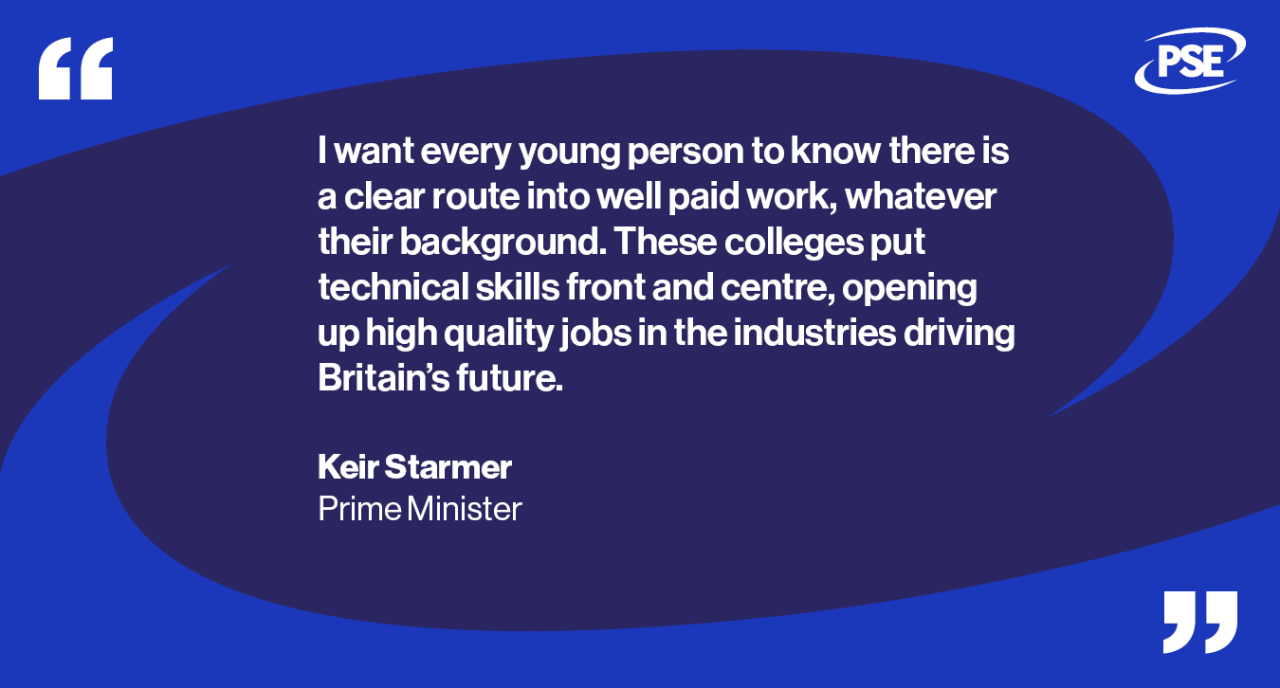
Prime Minister Keir Starmer said:
“I want every young person to know there is a clear route into well‑paid work, whatever their background. These colleges put technical skills front and centre, opening up high‑quality jobs in the industries driving Britain’s future.
“We are backing talent across the country, strengthening our workforce and making sure opportunity is built into the system – not left to chance.”
All 19 new Technical Excellence Colleges will begin delivery from April 2026, working with employers and education providers to raise standards nationwide.
The announcement also builds on a wider £1.5 billion government investment to support nearly one million young people into learning or employment and to create 50,000 additional apprenticeships over the next three years.
Together, the initiatives aim to ensure more young people gain the skills, confidence and opportunities needed to take their first step on the career ladder and help power Britain’s future growth.
Image credit: iStock