

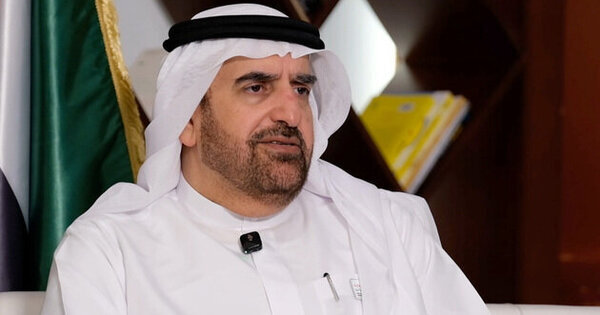
UAE leads in leveraging knowledge, advanced technology to support education
DUBAI, 26th April, 2026 (WAM) — The United Arab Emirates has presented a leading model in leveraging knowledge and technology to support various sectors, particularly education, as its advanced digital infrastructure has ensured continuity of the learning process during periods of remote education without creating learning gaps.
National initiatives and open digital resources, such as the Mohammed bin Rashid Al Maktoum Knowledge Foundation, have enhanced access to knowledge content for all segments of society, supporting the transition towards a knowledge-based economy and strengthening the readiness of future generations.
Jamal bin Huwaireb, Chief Executive Officer of the Mohammed bin Rashid Al Maktoum Knowledge Foundation, told the Emirates News Agency (WAM) that digital knowledge today represents a fundamental pillar in building flexible and sustainable educational systems capable of adapting to various conditions and challenges.
He added that global experiences, from the 2008 financial crisis to the COVID-19 pandemic and conflicts, have shown that countries investing in knowledge economies and advanced digital infrastructure are better positioned to respond quickly, minimise losses, and transform challenges into opportunities for growth.
Bin Huwaireb highlighted in this context the approach established by the UAE’s Founding Father, the late Sheikh Zayed bin Sultan Al Nahyan, who consistently emphasised the importance of building during times of prosperity in preparation for future challenges.
He stressed the importance of early investment in digital infrastructure, development of knowledge content, and empowerment of educational and technical cadres to ensure continuity of education during crises.
He noted that the UAE operates under a strategic vision focused on embedding a culture of continuous learning and enhancing open access to knowledge through qualitative initiatives and innovative digital projects that provide millions of educational and knowledge resources for students and researchers.
He said knowledge readiness is not an option but a necessity to ensure sustainable development and build generations capable of innovation and global competitiveness, emphasising that investment in people and knowledge remains the most important pillar in addressing challenges and turning them into opportunities for prosperity.
He added that the Mohammed bin Rashid Al Maktoum Knowledge Foundation, in cooperation with the United Nations Development Programme, launched the Future Skills initiative, which offers more than 13,000 specialised training materials enabling students in the UAE and Arab and Islamic countries to acquire skills aligned with the digital era and labour market needs.
He affirmed that investing in knowledge, strengthening international cooperation, and developing future skills are essential elements in building more resilient and sustainable societies capable of addressing challenges and achieving prosperity.