

Why agtech needs a workforce to scale
When an AI system misidentifies a pest on a smallholder’s field, there is no “undo” button. A single recommendation – if not validated against local conditions or corrected in time – can cost a farmer an entire season’s income, and in some cases a family’s food supply. That reality separates agricultural technology from consumer apps, and it is why scaling AgTech is fundamentally a workforce challenge, not a software challenge.
Cheaper intelligence, higher stakes
AI is collapsing the cost of agronomic intelligence. It can now diagnose pests, forecast yields, and assess quality – tasks that once required expensive specialists – at a fraction of the cost. But cheaper intelligence does not mean easier adoption. It raises the premium on “humanware”: the people who validate AI outputs, translate recommendations into a farmer’s real constraints, and sustain trust across the long months between planting and harvest.
The scale of the gap is striking. A recent study by PriceWaterhouseCoopers and the Federation of Indian Chambers of Commerce and Industry found that in spite of India’s 3,000 AgTech ventures, solutions still reach fewer than 15 million of the country’s 146 million farmers. In market terms, this means that AgTech has captured just 1 percent of an estimated $24 billion opportunity. The study concludes that diffusion is constrained by distribution capacity. In other words, the jobs and skills that turn AgTech into a service, and that AgTech in turn creates and sustains, are the real bottleneck.
The jobs few are talking about
AgTech solutions – AI-enabled advisory services, shared mechanization, fintech, traceability, and early warning systems – create demand for service roles that sit between the platform and the farm: trusted intermediaries who onboard farmers and sustain trust across seasons, equipment operators who keep hardware running, and data stewards who ensure quality and consent.
These are not generic “digital skills.” They are clearly defined roles with measurable performance indicators such as reliability of service, number of transactions completed or whether farming equipment is functioning. This is what makes these skills investable.
Why assurance is the missing piece
Farmers rationally demand assurances before they can adopt a certain technology. Five questions determine whether AgTech earns a farmer’s trust:
- Will it work this week on my crop, in my field?
- If it fails, who will fix and pay for it?
- What do I do today, given my cash and labor?
- Is the technology suitable for my microclimate and practice?
- Who can explain it in my language?
None of these are product features. They are human capabilities. This is why dependable AgTech depends on four core job families.
- Digital intermediaries – the trusted face at the last mile: demonstrations, grievance handling, translating a satellite advisory into this week’s decision.
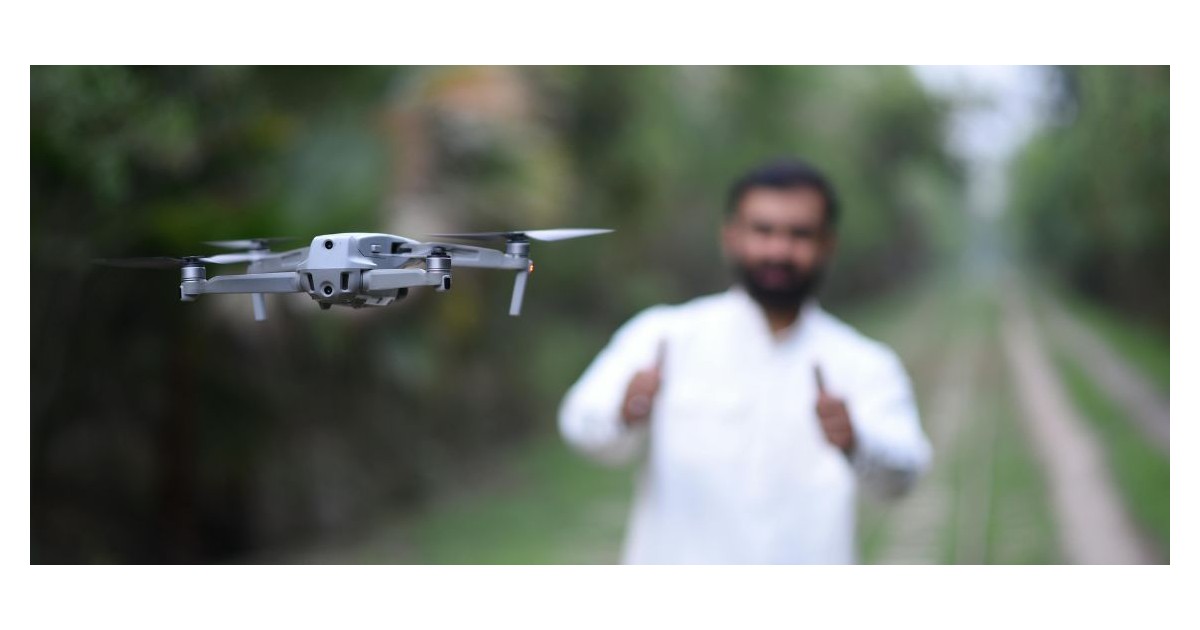
- Technical operators – drone pilots, mechanics, supervisors at shared equipment centers. They keep hardware running and planting windows open.
- Bilingual professionals – agronomists fluent in both field conditions and digital tools, who catch bad recommendations before they scale (including veterinary para-professionals – community animal health workers who interpret disease alerts for local conditions).
- Data stewards – experts that guarantee quality, privacy, consent, auditability. When farm data is used for finance or compliance, someone must ensure it is accurate and authorized.
The first question is not which training pathway to deploy, but where in the system the binding constraint actually sits – whether it is a missing role, a sequencing failure, or an institutional gap that no training program alone can close. When these roles exist and the surrounding institutional architecture supports them, technology becomes a dependable service. When they do not, it remains stuck at the pilot stage.
The virtuous cycle
The relationship runs both ways – and that is the point. AgTech cannot scale without skilled people to operate, maintain, and assure its services. But skills programs cannot justify their investment without the jobs and income that AgTech creates.
AgTech platforms generate the demand signals training systems currently lack: specific roles, competency profiles, identifiable employers. They also produce performance data that translates into earning power, not just certificates. The result is rural employment that keeps talent closer to home.
India offers two illustrations of this virtuous cycle in action:
- Namo Drone Didi combines drones, operators and maintenance training through women’s self-help groups – turning a gadget into a community service. Without the drone, there is no “precision spraying service provider” role. Without trained operators, the drone sits unused. The technology creates the jobs, and the jobs make the technology work.
- NAHEP modernized agricultural universities and expanded industry-relevant curricula in areas like AI, precision farming, and agribusiness analytics, strengthening the pipeline of job-ready talent the AgTech service economy requires.
The bottom line
In the AI era, the measure of success is not how much technology reaches farms. It is whether farming becomes more productive, secure, and profitable, and whether the communities around it gain the skilled jobs they need.
AgriConnect, a World Bank Group initiative to help 300 million smallholders turn harvests into higher incomes by 2030, has high ambitions when it comes to technology, as discussed in a recent Spring Meetings event. Bringing that technology to scale will depend on whether skills are treated as core infrastructure rather than an afterthought.