

Madagascar’s Resilient Response to Restoring Energy and Connectivity in Public Higher Education
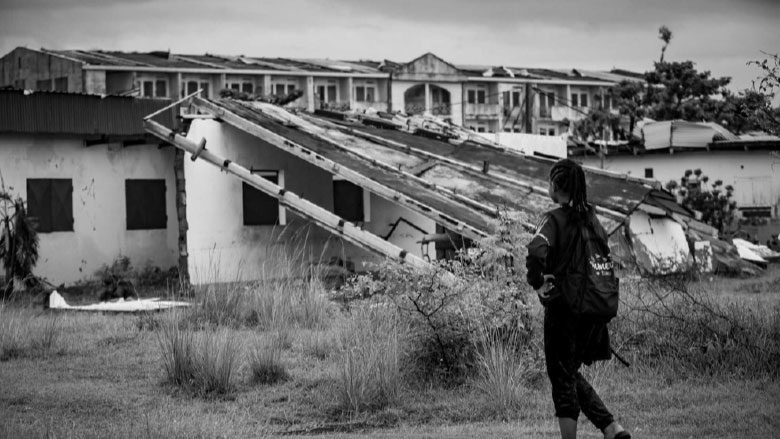
Students woke up on February 11, 2026, to a campus unrecognizable. At the Public University of Barikadimy in Toamasina, roofs had vanished, classrooms were flooded, books drifted in muddy water, and electricity lines lay useless on the ground. “It feels like I’m walking through a real nightmare,” said Haingomalala, a student in Management. “Cyclone Gezani swept everything away and left nothing behind.”
Cyclone Gezani had ripped through the eastern coast of Madagascar, the city port, Toamasina, with devastating force, destroying 80 to 90% of the university’s infrastructure. Classes stopped overnight. There was no power, no internet, no safe classroom, no way to teach or to learn.

Before the cyclone, many students already relied heavily on the university library for free internet access. The alternative, cybercafés where every hour online came at a precious cost. After the storm, the library, study halls, and Wi‑Fi terminals were unusable. For students, staying connected meant traveling long distances, paying transport fees, paying for internet, even paying just to charge a phone. For many, that was simply unaffordable.
As the scale of destruction became clear, one principle guided the emergency response: education must not stop. Young people’s skills are central to their future livelihoods, thus restoring learning was essential to protecting their future opportunities, jobs, and the human capital of the country.
A rapid response built differently
Within four weeks, four solar‑powered digital hubs were installed close to where students live and study. Designed for resilience, each hub brings together electricity, connectivity, and modern learning spaces, ensuring that power and internet come back together, and stay available even when the grid fails.
Each hub is equipped with 25 internet‑connected computers, free high‑speed Wi‑Fi and safe, shared workspaces for students. This rapid response solution deliberately brought together energy and digital solutions, restoring services while laying the foundations for a more resilient education system. The World Bank-supported Digital and Energy Connectivity for Inclusion in Madagascar (DECIM) Project worked in close partnership with the Ministry of Digital Development, Digital Transformation, Posts, and Telecommunications and the University of Toamasina to deliver this.

Reconnecting thousands of students
Together with community Wi‑Fi at the university library, the system now allows up to 5,000 students to reconnect simultaneously, many of them for the first time since the cyclone. The dedicated Wi‑Fi hotspot at the library, active since March 2026, now supports up to 1,000 simultaneous connections within a 100‑meter radius. A charging station allows students to power phones, tablets, and laptops, another essential service in a post‑cyclone context.
For students like Tody, a student in mathematics and applied informatics, reliable access to power, devices, and connectivity is first about finishing coursework but it is also key to build the digital skills and confidence young people need to participate in a changing labor market.
Tody felt the difference is critical and tangible. “A computer is essential for my studies, but I don’t have one,” he explained. “When professors share their course outlines, I like to research in advance. Before, that meant going to a cybercafé which is slow, expensive, and [uses] money I needed for food. Now I can come here every day and work whenever I need. The internet is fast and reliable. This crisis didn’t just bring emergency help, it helped create a sustainable solution that supports our education.”
