

AI is not meant for learning. It’s meant for productivity
A back-to-basics approach to learning: ‘The Digital Delusion’ reveals how students learn best, and its not through high tech AI in classrooms.


Cursive writing returns to classrooms in New Jersey, Pennsylvania
Education Week says more than half of U.S. states now require or strongly encourage cursive, up from 14 states a decade ago.
- Neuroscientist Jared Cooney Horvath argues that AI tools like ChatGPT are designed for productivity, not for learning.
- Research suggests that reading on paper and handwriting notes lead to better comprehension and retention than using screens or keyboards.
- AI can short-circuit learning by allowing students to “cognitively offload” tasks, preventing them from developing critical thinking skills.
- Experts caution that higher-order thinking is built upon foundational knowledge, which students cannot bypass with technology.
Do you think AI promotes kids’ learning? Think again. While technology companies are marketing artificial intelligence as a tool to accelerate learning, neuroscientist Jared Cooney Horvath argues in “The Digital Delusion” that tools like ChatGPT are designed for productivity, not learning.
This distinction matters, especially in early adolescence. In middle school, students undergo the most significant period of brain development since ages 0–2. During this time, neural connections are strengthened through practice and productive struggle. Learning that is slowed down rather than accelerated tends to be more lasting and transferable. Horvath captures this succinctly: “EdTech is the hare: fast and flashy, but quick to fatigue. Higher-order thinking is the tortoise: slow and steady, but ultimately more enduring.”
When considering the usefulness of digital tools, we need to be led by neuroscience. For experts in their fields, AI can capture efficiencies. But when students attempt to capture those same efficiencies, they often bypass the very processes required for building critical thinking skills. In fact, speed gets in the way of higher-order thinking. Deep learning is often slow and tedious.
Horvath also deconstructs a popular myth: that today’s students, as “digital natives,” learn differently. More than two decades of research show that while young people may prefer short videos or instantaneous feedback to other methods of instruction, the brain itself has not changed how it encodes or retains knowledge. Learning still requires attention, effort, and engagement.
Key takeaways from research on EdTech and real learning
Here are four key takeaways from Horvath’s research with practical implications for schools:
- Reading on paper beats screens: Research consistently shows that students comprehend and retain more when reading on paper than on screens, a phenomenon known as the “screen inferiority effect.” Paper provides spatial anchors that help readers locate and remember information. When readers scroll online, words have no fixed location. Without these anchors, readers tend to skim, leading to shallower processing.
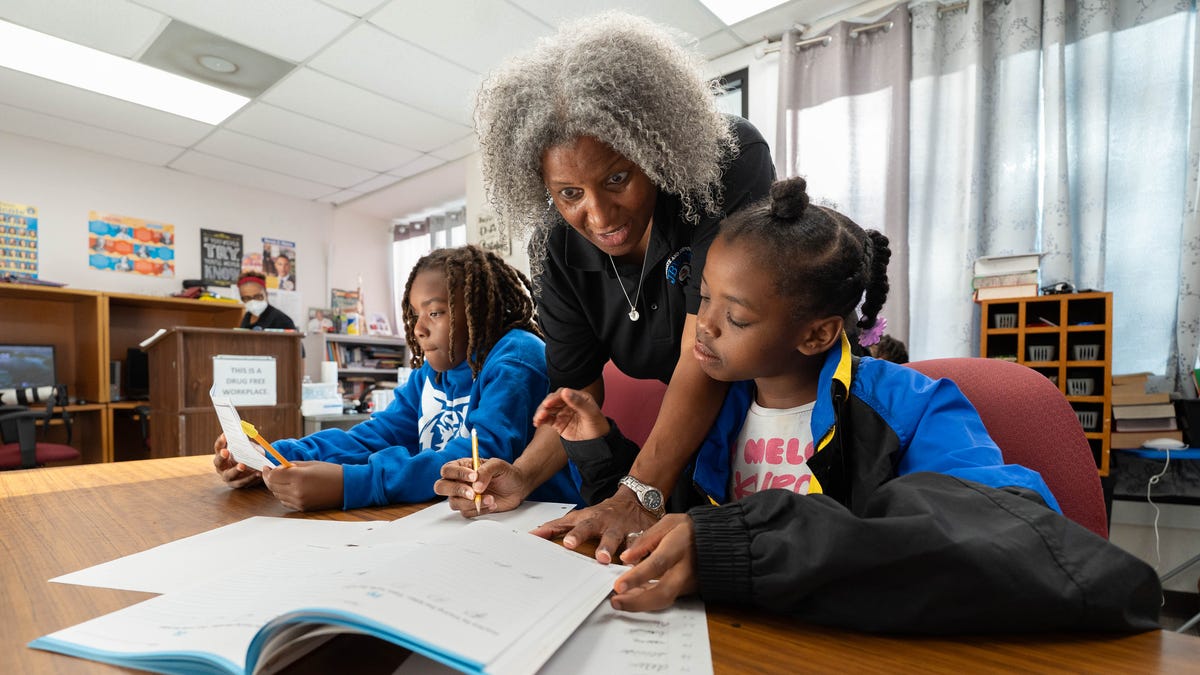
- Handwriting over keyboarding: Handwriting produces stronger learning outcomes than typing. When students type class notes, they tend to transcribe information without processing it. Because students handwrite more slowly than they can type, they are forced to summarize and synthesize the information they hear, two methods of deep cognitive processing. This “longhand superiority effect” leads to better understanding and retention, particularly when students review their notes for assessments.
- Handwriting promotes literacy: Strengthening handwriting can directly support literacy development because writing and reading rely on overlapping neural systems. Brain imaging shows that when children write letters by hand, they activate the same circuits used to decode text. Tapping on a keyboard does not trigger this activation. In sum, as students solidify reading skills, handwriting plays a critical role in the process.
- AI short circuits learning: Artificial intelligence allows for “cognitive offloading,” or using digital tools to perform mental tasks. Horvath compares this to watching a machine lift weights at the gym instead of lifting them yourself. While AI completes tasks quickly, it prevents students from developing the underlying skills needed to perform those tasks independently.
Experts often assume that the AI tools they use to capture efficiencies are equally beneficial to novices. They forget how long it took them to learn to write or do research. Children and adolescents are novices; they need to develop basic skills and there is no AI shortcut for that.
According to Horvath, one of the most “pernicious” arguments from technology companies is the claim that, with knowledge at their fingertips, kids no longer need to memorize facts. They claim that students should simply learn to write effective AI prompts and then edit or judge the output.
This is nonsense. Higher-order thinking is built upon lower-order knowledge. Students need to know facts in order to do deeper thinking. This is why students must learn how to do the intellectual heavy lifting themselves. They need to put their brains on the treadmill, learning how to gather sources, evaluate information, and construct arguments.
Education isn’t training students to use tech. It’s learning how to think.
First, we should prioritize reading on paper to foster comprehension and analysis. Second, we should emphasize handwriting, especially for note-taking and early drafting, as it strengthens cognition and literacy. Third, we should design assignments that engage students in the full learning process — researching, organizing, drafting, and revising — rather than allow them to use shortcuts that bypass these steps. Finally, we should be cautious about permitting students to use AI, especially when it allows them to offload tasks that they need to learn.
Our goal is to develop students who can think independently and adapt over time. If students can read and write well, they will be prepared for the future and its ever-changing digital landscape.
Jonathan Haidt, the author of “The Anxious Generation,” writes that Horvath’s work is “not anti-tech, but pro-learning.” We use technology thoughtfully in schools when it puts kids in the driver’s seat—challenging them to code, join the robotics team, or create a documentary. But when we allow students to be passive consumers of technology, we inhibit their growth.
Education is not about training students to use technology. It is about teaching them how to think. As Horvath reminds us, “effort isn’t the enemy of learning—it’s the secret ingredient.” Producing tomorrow’s leaders requires us to protect the “slow” process of learning, one class and one conversation at a time.
This story was updated to correct a formatting error.
Elaine Griffin is the Middle School Head at University School of Milwaukee, where she has previously served as the Assistant Head of Upper School and an English teacher. Her essays have appeared in Education Next, Independent School Magazine, NAIS’s Independent Ideas Blog, and Connections Quarterly.