

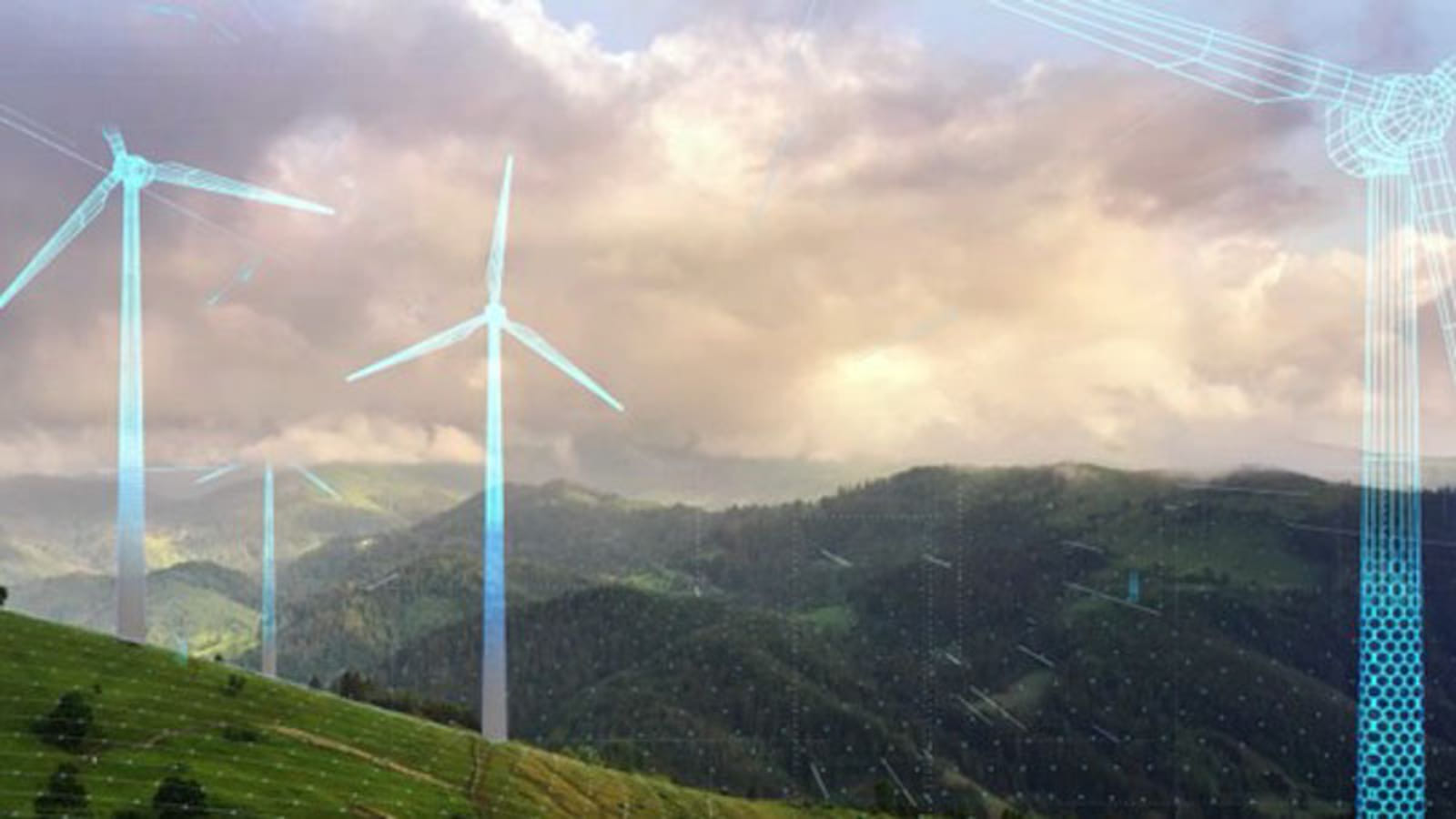
DigiWind advances digital skills in wind and energy systems
The DigiWind Project, an EU co-funded initiative (with funding from the European Health and Digital Executive Agency) delivers interdisciplinary specialised education programmes (SEPs) focusing on advanced digital competencies like high performance computing, AI and cybersecurity.
DigiWind aims to future-proof the careers of STEM professionals, enabling Europe’s accelerated digital and green transition.
Bridging the digital-green skills divide
The EU’s ambitious targets for climate neutrality and digital sovereignty – encapsulated in the European Green Deal and the Digital Decade – require a workforce equipped with advanced, interdisciplinary skills. The wind and energy systems sector, a cornerstone of the green transition, faces a critical challenge: a significant shortage of professionals proficient in innovative digital technologies.
DigiWind directly addresses this need. The overarching objective is to develop and deliver the specialised education programmes – Masters of Science degrees, online self-paced Masters gegrees and lifelong learning courses – that integrate advanced digital skills with deep engineering knowledge in wind and energy systems. By focusing on key capacity areas, DigiWind will prepare candidates and industry professionals to contribute directly to the digitalisation, optimisation and enhanced resilience of the renewable energy infrastructure.
This project’s significance extends beyond mere training. It represents a strategic investment in the human capital necessary to realise core European policy goals. DigiWind’s successful delivery will not only narrow the existing skills gap but also accelerate the deployment of smart, efficient, and secure energy solutions across the continent.
Interdisciplinary curriculum design
DigiWind’s methodology is built on a foundation of dynamic cooperation and a robust, modular learning system designed for maximum reach, flexibility and impact. This approach ensures high quality education and training for a diverse audience of STEM professionals, both new graduates and existing industry personnel.
The specialised education programmes are meticulously designed to integrate core digital competencies with specific applications in wind and energy systems. The curriculum focuses on advanced areas, including:
- High performance computing: Training in areas like modelling and simulation, digital twins, scalable data management and energy efficient computing to optimise turbine design and grid operation.
- AI: Focusing on machine learning, predictive analysis, smart sensors and networks and ethical and trustworthy AI for system optimisation, maintenance and forecasting.
- Cybersecurity: Addressing critical infrastructure protection through modules on secure data management, distributed ledger technology and privacy preserving modelling for enhanced grid resilience.
- Emerging technologies: Including the application of Internet of Things (IoT) and industrial cyber-physical systems across the energy value chain.
Learning journeys for maximum reach
To revolutionise education by expanding geographic reach, gender inclusivity and overall diversity, DigiWind offers three distinct and flexible learning journeys:
- MSc degrees: Full-time, high level academic programmes for students and recent graduates seeking comprehensive specialisation.
- Self-paced online Masters programmes: Flexible, distance learning options designed for working professionals needing to upskill without career interruption.
- Lifelong learning modules: Targeted, short-form courses focused on specific digital competencies for rapid professional development and continuous upskilling.
Proof of concept: Initial open calls
The project has successfully launched and closed two highly competitive open calls to immediately activate the MSc track and attract top talent from across Europe.
The DTU (Denmark) open call offered four fee waivers (€30,000 each) for MSc students entering DTU’s Wind Energy and Sustainable Energy programmes, ensuring top tier education for the next generation of engineers.
The TUS (Ireland) open call awarded up to six partial scholarships (including a fee waiver and €1,000/month stipend for 24 months) for Master’s by research projects at the Technological University of the Shannon (TUS) campus.
Though both calls are now closed, their swift execution demonstrates DigiWind’s commitment to rapidly funneling skilled candidates into research and high level training necessary for the digital transformation of the energy sector.
Structural and sustainable partnerships
The project is driven by an excellent consortium combining academic excellence and industry relevance.
The consortium includes five world-leading higher education institutions, two SMEs at the intersection of digital and renewable energy, a large enterprise specialising in digital skills and education (utilising augmented and virtual reality), and an experienced SME for global community engagement.
This structure guarantees the programmes are industry-validated and delivered with innovative digital infrastructure and educational technologies (Specific Objectives SO3, SO4).
Driving solutions and thought leadership
We focus on the anticipated impact and the framework for achieving the specific objectives (SOs) that drive solutions in the energy sector.
SO1 and SO5 pertaining to upskilling the sector is aimed to direct delivery of a new generation of professionals who can implement digital solutions (e.g. digital twins for predictive maintenance, AI for grid optimisation), immediately narrowing the skills gap.
SO2, SO7 and SO8 pertaining to scaling education and diversity is aimed to attracting diverse and qualified talent, scaling up the educational pipeline for digital experts and promoting a more inclusive workforce necessary for large-scale energy transition efforts.
SO3 and SO6 pertaining to interoperable digital learning is aimed to establishing a dynamic digital ecosystem for learning, promoting computational thinking and providing a sustainable, interoperable infrastructure that can be adapted and scaled across Europe.
DigiWind’s success will be measured by the direct contribution of its graduates to industry digitalisation. For instance, a professional trained in high performance computing and modelling will be able to perform highly complex simulations to improve wind farm efficiency by several percentage points, a financial and environmental gain for the sector.
Similarly, professionals trained in cybersecurity will be vital in protecting the increasingly complex and interconnected smart grid from threats.
These programmes are designed to foster digital mindsets and thought leadership, transforming traditional engineers into digital savvy energy experts.
Early success indicators
The successful conclusion of the DTU and TUS open calls confirms the high demand for DigiWind’s interdisciplinary training.
The project is already on track to admit a first cohort of Masters’ students and researchers who will immediately begin working on digital solutions, such as advanced digital twin applications and AI-driven system optimisation, directly relevant to the consortium’s industrial partners.
This early momentum validates our ability to attract and fund the high potential talent necessary to meet specific objectives (SO2, SO7, SO8) and start narrowing the skills gap immediately.
The DigiWind Project is proving a timely and essential response to the dual challenges of the European digital and green transitions. By providing advanced, tailored education in high performance computing, AI and cybersecurity within the context of wind and energy systems, the project is building the indispensable human bridge between technological innovation and sustainable energy deployment.
The immediate future direction involves the full implementation of the three learning journeys, establishing a continuous feedback loop with industry partners (SO5) and aggressively pursuing our targets for diversity and scale (SO7, SO8).
DigiWind is committed to creating a sustainable framework for digital skills acquisition that will endure beyond the project’s funding cycle.
To learn more about DigiWind, partnership opportunities or to enroll in one of the specialised education programmes, visit the website.
About the author