

Egypt overhauls education system for 25 million students, shifting focus to skills and new Baccalaureate
Egypt is undertaking a comprehensive transformation of its education system for 25 million pre-university students, shifting the focus from enrollment metrics to skills-based learning and introducing a new Egyptian Baccalaureate, Minister of Education and Technical Education Mohamed Abdellatif announced.
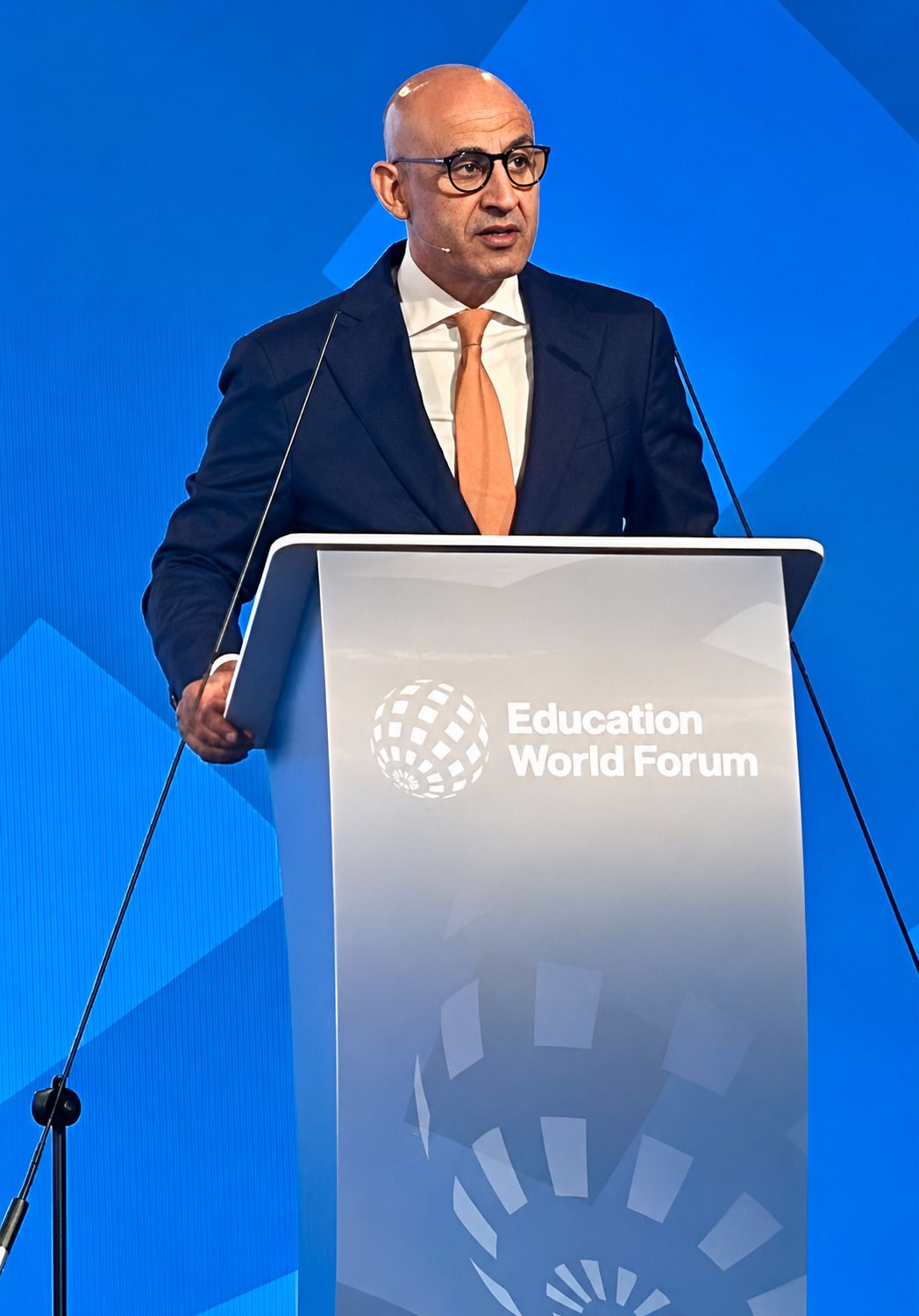
Speaking at the second plenary session of the Education World Forum in London, titled “Education for Future Readiness in a Rapidly Changing World,” Abdellatif stated that skills are the true engine of state power. He outlined Egypt’s agenda to align curricula, assessments, teachers, technology, data, and school governance to prepare learners for a rapidly changing world driven by artificial intelligence, climate pressures, demographic shifts, and global competition.
Abdellatif noted that future readiness requires redesigning education itself rather than merely adding technology to outdated structures. He highlighted the introduction of the Egyptian Baccalaureate, describing it as a structural and philosophical shift aimed at moving learning away from exam pressure towards mastery, applied knowledge, research, critical thinking, and student choice. The new system seeks to produce students capable of explaining answers, defending opinions, and linking knowledge to real life, aligning with both international standards and national priorities.
“If we evaluate memorisation only, we teach memorisation,” Abdellatif said, adding that evaluating thinking, application, and communication teaches students how to think.
For years, education systems measured progress through access indicators such as enrollment rates, school numbers, desk availability, and completion rates, the minister noted. While these remain essential, Egypt is shifting its focus from whether children are in schools to whether effective learning is occurring in the classroom.
Recent state interventions have focused on restoring the central role of the school by boosting attendance, reducing class densities, addressing teacher shortages, increasing learning time, and utilising data to guide decisions. Abdellatif emphasised that these operational details are the foundation of reform, noting that success is not a finish line but a responsibility to achieve continuous improvement.
The minister stressed that future readiness does not mean abandoning basic learning, asserting that AI requires literacy and innovation requires numeracy. Egypt’s reform links fundamental learning with digital skills, technical abilities, financial literacy, communication, creativity, teamwork, and ethical decision-making.
Addressing the role of technology, Abdellatif said AI should be treated as a supportive tool rather than a trend, functioning to expand access without replacing the human connection central to learning. A future-ready classroom empowers teachers with better tools, training, and data, while students must learn to use technology consciously and responsibly.
The reform agenda also targets technical and vocational education, which the minister identified as central to national competitiveness and social mobility. Abdellatif called for multiple educational pathways that command equal respect, ensuring technical tracks are linked to industry, digital transformation, green skills, and entrepreneurship.
He added that systemic reform must be equitable, with success measured by improvements in the most crowded classrooms, rural schools, and underprivileged communities. Data is crucial in this effort, allowing the state to identify where teachers are needed, where class densities are high, and where support must be redirected.
Abdellatif concluded that Egypt remains open to global expertise while maintaining its national privacy and identity. The overarching goal, he stated, is to build individuals equipped with both future skills and strong values, who are globally competitive yet connected to their communities.