

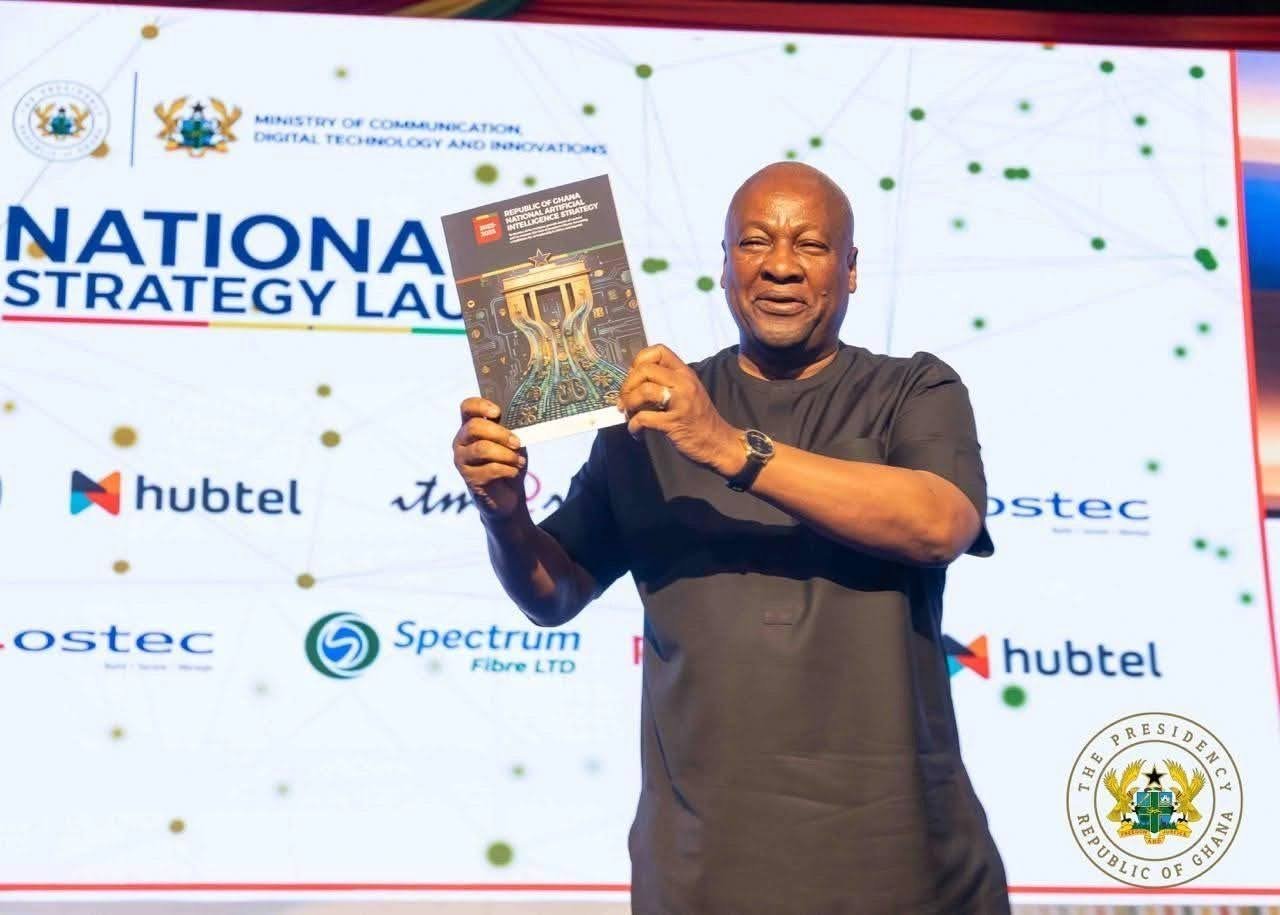
Ghana: a national strategy for AI and digital leadership
The launch of Ghana’s national artificial intelligence strategy is part of a continental dynamic in which several African countries are progressively structuring their digital policies. The objective is clear: not to be mere consumers of technologies developed elsewhere, but to become actors capable of designing, adapting, and regulating artificial intelligence solutions.
Building an “inclusive and sustainable digital economy”, focused on innovation and the creation of skilled jobs
According to orientations made public by the Ghanaian authorities, this strategy is based on several priority axes: the development of digital infrastructures, the training of local talent, the integration of AI into strategic sectors, and the establishment of an ethical data governance framework. The government particularly emphasizes the need to build an “inclusive and sustainable digital economy”, focused on innovation and the creation of skilled jobs.
On the macroeconomic level, the stakes are considerable. The World Bank estimates that the digital economy could represent between 5% and 10% of GDP in Sub-Saharan Africa in the medium term, provided that investments in infrastructure, connectivity, and skills keep pace with technological transformation. In this context, Ghana seeks to capitalize on its already advanced positioning in digital services and fintechs to accelerate its development.
One of the major pillars of the strategy: human capital
One of the major pillars of the strategy concerns human capital. The country intends to strengthen training in artificial intelligence, data science, and software engineering, in order to reduce dependence on foreign expertise. This orientation aligns with the priorities of the African Union, which has repeatedly called on member states to invest heavily in digital skills to accompany the fourth industrial revolution. The challenge is significant: according to several international estimates, Africa will need to train several million digital professionals in the coming years to meet growing market demand.
Data governance: another central axis
Data governance is another central axis. Ghanaian authorities are working on the establishment of regulatory frameworks aimed at governing the use of artificial intelligence, particularly on issues related to personal data protection, algorithmic transparency, and the accountability of automated systems. This approach is part of a broader trend observed across the continent, where countries such as Rwanda, Kenya, and Nigeria are also developing their own digital sovereignty strategies.
A lever for sectoral transformation
Beyond institutional issues, artificial intelligence is seen as a lever for sectoral transformation. In agriculture, it enables yield optimization through the analysis of soils, climate data, and production cycles. In healthcare, it contributes to improving diagnostics and the management of hospital systems, particularly in rural areas. In finance, it promotes financial inclusion by facilitating access to credit through alternative risk assessment models.
Ghana, already considered one of the most dynamic digital ecosystems in West Africa, is thus seeking to strengthen its attractiveness in the face of regional competitors such as Nigeria or Senegal
Ghana, already considered one of the most dynamic digital ecosystems in West Africa, is thus seeking to strengthen its attractiveness in the face of regional competitors such as Nigeria or Senegal, which are also investing in tech startups and digital infrastructures. This regional competition reflects a broader reality: the race for technological sovereignty in Africa is now underway.
However, several structural challenges remain. The first concerns digital infrastructure, still unevenly distributed across the territory. The second relates to the availability and quality of data, essential for training efficient artificial intelligence models. Finally, innovation financing remains a major obstacle, despite the gradual rise of investment funds specialized in African tech.
To position Africa within the global value chain of artificial intelligence, and not only in the consumption of imported technologies
In this context, the Ghanaian strategy appears as an attempt at global structuring, combining political vision, investment in skills, and the creation of an environment conducive to innovation. It illustrates a broader ambition: to position Africa within the global value chain of artificial intelligence, and not only in the consumption of imported technologies.
The Ghanaian initiative marks a strategic turning point. It shows that artificial intelligence is no longer perceived as a mere emerging technology, but as an instrument of economic and political sovereignty. By structuring a dedicated national policy, the country seeks to anticipate profound changes in the labor market, public services, and industrial competitiveness.
But the success of this ambition will depend on three key factors: the ability to sustainably invest in digital infrastructure, the speed of youth skills development, and the establishment of a sufficiently flexible regulatory framework to encourage innovation while protecting citizens.
With this national strategy, Ghana sends a clear message: artificial intelligence is now at the heart of development strategies in Africa. More than a technological tool, it becomes a lever of structural transformation and a marker of sovereignty. The challenge goes beyond national borders: it is about defining the continent’s place in the new global digital economy.