

Huawei, UN Women connect girls to tech careers
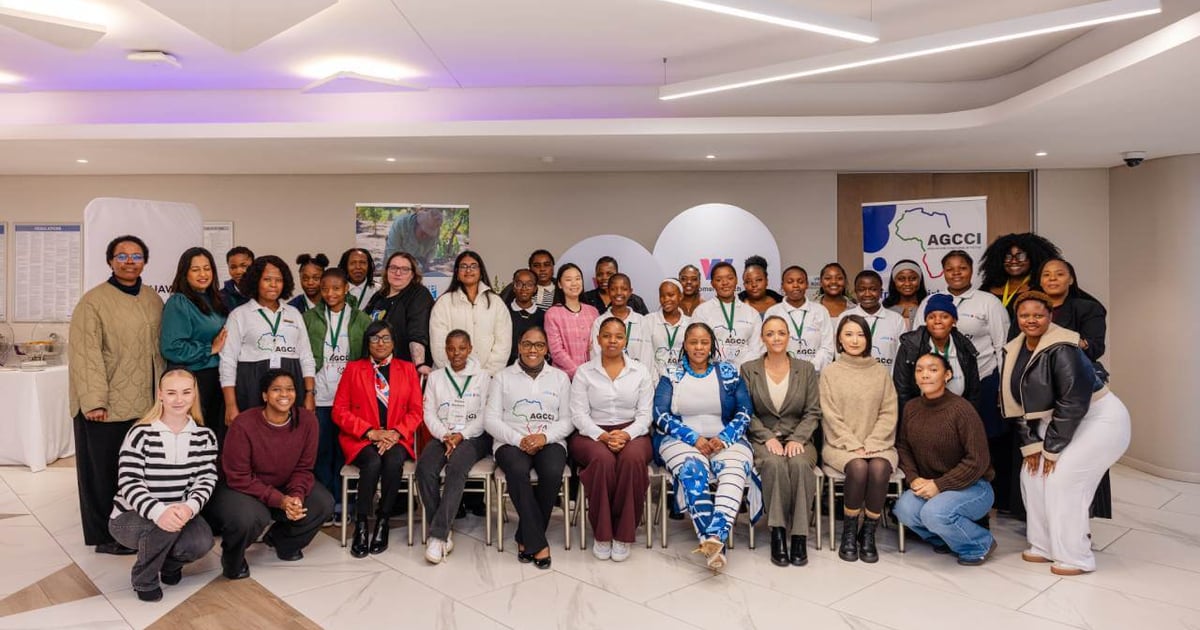
Chinese multinational Huawei’s South African division, in partnership with UN Women, hosted the annual Girls in ICT Day aimed at helping young women explore real-world pathways into tech careers.
Young women were recognized for their role in the digital economy as both future participants and emerging innovators shaping what lies ahead.
The event welcomed students from South African provinces Gauteng and Limpopo, who are part of UN Women’s African Girls Can Code Initiative (AGCCI), alongside members of Huawei’s graduate program.
Themed “CTRL + SHE: Where She Takes Control of the Future,” the program offered participants a firsthand look at careers in ICT, combining an innovation center tour with keynote talks and direct engagement with women working across the technology and education sectors.
The event highlighted the need for skills development for women in AI, coding and digital entrepreneurship.
Speaking at the event, Huawei South Africa’s senior PR manager for media and communications, Vanashree Govender, said the event was designed to create space for students and young graduates to engage with each other and with women already working in ICT.
“This day serves as an important reminder that the future of technology will be stronger and more relevant when more young women are part of shaping it,” Govender explained.
Huawei South Africa COO Christina Naidoo added that more than 350 graduates entered the industry through the graduate program since 2017, with women comprising half of that intake.
“Know that you belong here. You belong in the labs, the development teams, and the boardrooms where the big decisions are made,” Naidoo told attendees.
_(1).jpg?width=1280&auto=webp&quality=80&disable=upscale "Huawei South Africa COO Christina Naidoo in a grey jacket with a white top.")
Huawei South Africa COO Christina Naidoo. (Source: Huawei South Africa)
Naidoo said that through the company’s wider skills development work, as well as initiatives such as the Graduate Program, ICT Academy and Code for Mzansi, the company reached more than 15,000 students in 2025 alone.
AI’s impact on gender equality
The UN Women South Africa Country Office’s deputy representative, Dr. Hazel Gooding, told attendees that if left unchecked, AI will not automatically advance equality.
“It can just as easily entrench inequality, reproduce bias, exclude women from its benefits and amplify the very inequalities that we are trying to dismantle,” she explained.
She believes that women and girls must be present not only as users of AI, but in the rooms where it is designed, governed and deployed.
She cited the AGCCI as evidence of this work in practice, and how young women in the program are already building digital solutions to problems affecting their communities.
Gooding highlighted technologically facilitated gender-based violence (TFGBV) as a direct outcome of unregulated digital spaces, underscoring why responsible technology use must be central to how young women are prepared and empowered.
“Technologically facilitated gender-based violence is being used to attack women and girls online. This is a serious issue and one that we cannot ignore,” she said.