

survival skills for the digital age
Embarking on a career in journalism, I realized that this profession is not for everyone. Not everyone is ready to gather large amounts of information, analyze datasets and decipher what the people they interview mean when they say something.
But in an age where algorithms curate our reality and anyone can self publish, it is becoming hard to discern truth from falsehood. The current digital world has shattered the old gatekeepers of information.
Now that we have both limitless platforms for self-expression and limitless potential for manipulation, lack of access to reliable information goes beyond being a mere inconvenience. The spread of misinformation jeopardizes societal norms, leading people astray and eroding the foundation of informed democracy.
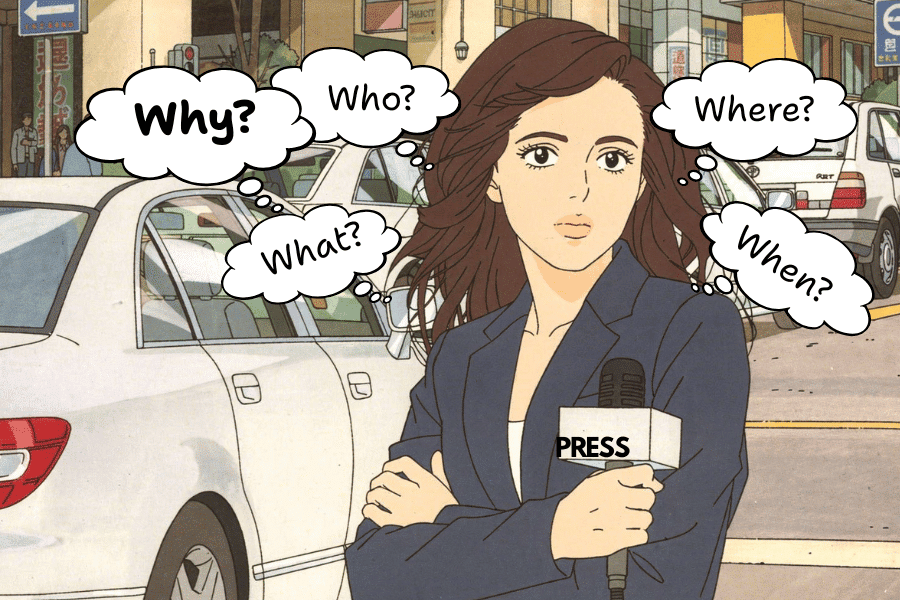
This is why the most vital skill isn’t just consuming news — it’s thinking like those who produce it. So, you need to think like a journalist. But what does that mean?
1. Be curious.
The most important — and from my perspective, the most impressive — skill journalists possess is curiosity. Being interested in everything might make you feel foolish, but it equips you with information, which is a powerful vessel for human knowledge. Trustworthy information is foundational for functioning societies and democracies.
Curiosity means being on a constant lookout for information and having a voracious appetite for knowledge. Journalists are compelled to report a variety of events and they often have to interview people from different backgrounds. They must be curious to be ready to encounter any situation possible and gather credible information.
2. Ask questions and seek truth.
In an age of information overload, falling victim to click-bait tabloids is a direct path to intellectual decay across society. This makes the ability to filter information an essential skill for everyone who does not want to get overwhelmed by excessive information. But how can you acquire this skill?
Curiosity is one way — and it speaks to another key aspect of journalism: fact finding, fact checking and finding out the truth. Journalists, for the most part, master the art of asking questions. They let people explore, discover and find the truth that often lies beneath the surface. Good journalism cuts through the noise because it presents facts by using probing questions.
If you want to be able to separate the wheat from the chaff, you must learn to ask the right questions in the first place. This teaches you to question everything, to dig deeper and to use and improve your critical thinking. What’s more, asking questions can lead to interesting stories and revelations. By seeking truth, you become more able to see hidden meanings and analyse issues from multiple perspectives.
As journalist and television host David Frost said, “Asking the right questions takes as much skill as giving the right answers.” This ability is highly valuable. So, whether you’re writing or consuming news, it’s time for you to cut through the noise and ask questions: “Why should I believe this information?” “Is this data credible enough?” Ask them, and seek answers.
3. Form an opinion, but challenge it regularly.
In today’s democratic societies, freedom is important. The freedom to have your own views, freedom of speech, the freedom to have your own opinions — all of these can contribute to societal growth.
However, having many people express views freely online and in the media can be a double-edged sword. If we don’t seek out different opinions, or we only consider certain perspectives, there is a risk of echoing other voices instead of raising your own. Many people find it easier — and safer — to follow the majority’s lead. But, being a reflection of others doesn’t help you form an independent, individual worldview.
As a journalist, you will encounter situations that will challenge your principles. That means, you should already be aware of them — explore them, challenge them, form them. Being a journalist without principles is a losing game; how are you going to shape social values if you haven’t shaped your own?
Think critically and look at everything from different angles. Choose to be a leader instead of being a follower. Trust yourself, and do not let the noise around you define your position.
4. Tell stories with care.
Thinking like a journalist will make you a professional storyteller. Think about it. What do journalists usually do? They visit hot spots; report news that governments do not want to be reported; create narratives; and write about stories of those who were initially overlooked or ignored.
Journalists shape public opinions and cultural norms. That’s why journalists must tell stories with care.
American journalist and television news anchor Dan Rather once said: “The moment you stop caring about the story, you shouldn’t be in a newsroom.” The story is the most valuable currency in every newsroom. Those working in news media try to get to the bottom of the narratives they write. The deeper they dig, the more compelling a story will be. A good journalist knows how to tell stories using clear, vivid language that strikes a chord with readers.
When reporting, you should be genuinely interested in other individuals and their experiences. Listen to them, be curious, ask questions and try to uncover the facts. This will help you in developing deeper analysis and broadening your worldview.
By showing interest, you will learn to interact with people better. Moreover, telling stories effectively will help you to connect with readers. It will also improve your public speaking skills and communication skills, which play a substantial role in succeeding in the modern world.
5. Expect the unexpected.
A journalistic mindset teaches you to handle unexpected situations effectively. If you have watched movies about journalism, you probably know that it’s not a hassle-free job. Journalists expect the unexpected.
They are compelled to report countless stories and stay up-to-date with events taking place across the globe. Many reporters do not stay in one place for long. News dictates their sleep, their meals — and sometimes their sanity.
For journalists covering current affairs, schedules are determined by ongoing events. If you work in media, you are never off-duty, because the news doesn’t wait for you to be ready. This is why journalists are used to living — not merely working — under constant pressure. Their daily routines are full of obstacles and challenges they must overcome quickly.
This ability to deal with setbacks is a key skill for anyone who wants to achieve high goals.
6. Apply journalistic thinking to your life.
While it’s crucial to keep up with current affairs, you don’t have to work under constant stress or track every news story to master problem-solving skills or learn to process situations the way journalists do.
Do not try to escape stress. When facing a tough situation, do not sit idly by — find a way out. Learn to adapt to new conditions and break barriers that keep you back.
Just as journalists analyze every issue and find solutions, you must face and conquer problems without fear or hesitation.
The world of journalism is changing. The way journalists work, write and are read by audiences has shifted. Right now, the shift in how we find and consume information gives us choices. You, yourself, can choose whether to make the most of the freedom you have.
Nurturing a journalistic mindset in an era of rapid change is one way to turn the tables and learn to navigate the world of information. Being a conscious news consumer will not only help you identify the truth, but it will open up new horizons for you to thrive.
Questions to consider:
1. In what way can the thought process a journalist goes through be useful for people who aren’t journalists?
2. What does it mean to expect the unexpected?
3. What particular things are you curious about?