

The Rise of the U.S. Creator Economy: From Side Hustles to Digital Empires
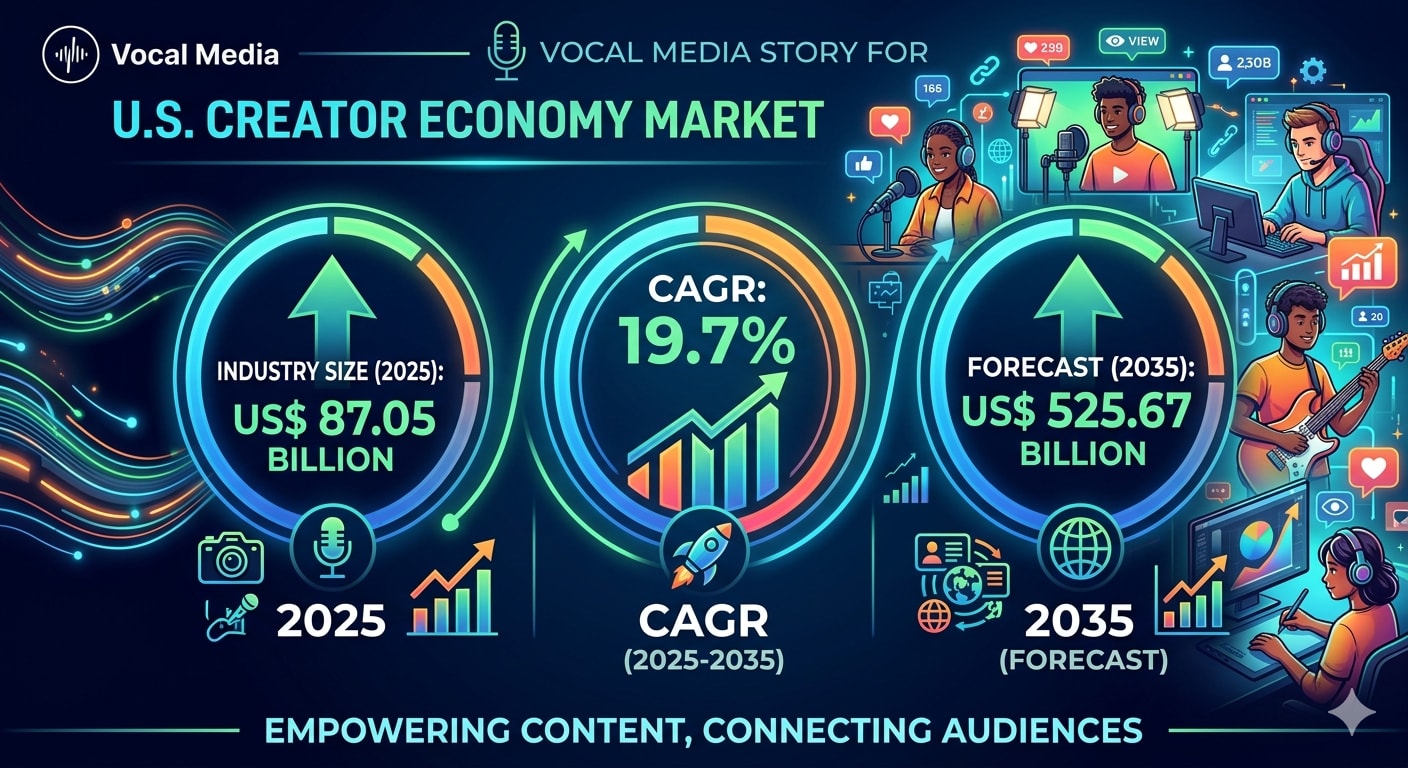
The Creator Economy Boom: How Digital Talent Is Building a $500 Billion Industry
From side hustles to scalable businesses, creators are reshaping media, marketing, and monetization.
The way people earn a living online has undergone a quiet but profound transformation. What began as hobbyist content creation has evolved into a powerful economic force, with millions of individuals turning audiences into income streams. Today, the U.S. creator economy is not just a trend—it’s a structural shift in how media is produced, distributed, and monetized. With rapid growth projected over the next decade, it’s becoming one of the most influential segments of the digital landscape.
At its core, this ecosystem includes anyone earning money through digital content—whether that’s videos, podcasts, newsletters, livestreams, or online courses. As platforms mature and tools become more sophisticated, creators are increasingly operating like full-fledged businesses rather than casual participants.
U.S. Creator Economy Market Highlights: Key Data at a Glance
- Market value: USD 104.2 billion in 2026, forecast to USD 525.67 billion by 2035 at 19.7% CAGR
- Dominant platform type: Social Video with 38.4% revenue share
- Dominant revenue model: Brand Partnerships & Sponsorships with 42.3% share
- Dominant creator tier: Mega and Macro creators (1M+ followers) with 59.6% combined revenue share
- Fastest-growing content monetization category: Finance, education, and AI-focused creator content
- Total U.S. content creators: 50+ million individuals, 4.2 million full-time professionals
- Leading social media platforms: YouTube, TikTok, Instagram, Twitch, Patreon, Substack, Spotify
- Brand deal market: USD 34.1 billion in influencer marketing spend in 2026
- Fastest-growing content monetization channel: Direct fan subscriptions and digital product sales
- AI tool adoption: 67% of full-time creators use AI tools for content monetization workflows in 2026
Reveal 2026 Market Dynamics & Long-Term Projections
A Market Expanding at Breakneck Speed
The numbers tell a compelling story. Valued at over $100 billion in 2026, the creator economy is expected to exceed $500 billion by 2035. This growth is driven by a combination of factors: increased digital consumption, shifting advertising budgets, and the rise of new monetization tools that make it easier than ever to earn directly from an audience.
More than 50 million people in the United States alone participate in content creation, though only a fraction—around 4 million—do so full-time. Still, the gap between part-time and professional creators is narrowing as monetization opportunities expand.
One of the most important drivers behind this growth is the shift in brand marketing strategies. Companies are increasingly allocating budgets toward creator partnerships because they deliver stronger engagement and measurable returns. Compared to traditional advertising formats, creator-led campaigns often generate significantly higher interaction and conversion rates.
Platforms and Formats Shaping the Landscape
Not all platforms are created equal. Social video remains the dominant format, accounting for the largest share of creator earnings. Long-form and short-form video together form a powerful dual engine, combining deep audience engagement with rapid content discovery.
Livestreaming, podcasting, and newsletters also play critical roles. Each format offers unique monetization advantages. For instance, podcasts often command higher advertising rates due to their intimate, trust-based format. Meanwhile, newsletters allow creators to build direct relationships with readers, reducing reliance on algorithms.
Gaming content continues to thrive as well, particularly through livestreaming platforms where real-time interaction drives donations, subscriptions, and sponsorships. Across all formats, the common thread is diversification—creators are rarely dependent on a single platform or content type.
How Creators Actually Make Money
Revenue in this space comes from a mix of sources, but brand partnerships lead the way. Sponsored content accounts for the largest share of creator income, reflecting the growing importance of influencer marketing in modern advertising strategies.
Beyond sponsorships, creators earn through platform payouts, fan subscriptions, affiliate marketing, digital products, and live events. Each income stream has its own advantages. Advertising revenue is widely accessible, while subscriptions offer recurring, predictable income. Digital products, such as courses or ebooks, provide some of the highest profit margins.
What’s changed in recent years is the level of sophistication. Successful creators now operate with a “monetization stack,” combining multiple revenue streams to reduce risk and increase stability. Instead of relying on a single source, they build layered income models that can withstand platform changes or shifts in audience behavior.
The Rise of the Creator as Entrepreneur
Perhaps the most significant evolution is how creators think about their work. What was once considered a side hustle is now approached as a business. Top earners manage teams, develop products, and negotiate large-scale brand deals.
Interestingly, income distribution remains uneven. A small percentage of creators capture the majority of earnings, while many struggle to generate meaningful income. However, opportunities are expanding for smaller creators as well. Micro-creators—those with modest but highly engaged audiences—are increasingly valuable to brands seeking authenticity and niche reach.
This shift reflects a broader change in how influence is defined. It’s no longer just about follower count; engagement and trust are becoming more important metrics. As a result, creators with smaller but dedicated audiences can often outperform larger accounts in terms of return on investment.
Technology and AI Are Changing the Game
Technology is playing a transformative role in accelerating growth. Artificial intelligence tools are helping creators produce content faster, edit more efficiently, and experiment with new formats. From automated video editing to voice generation and visual effects, these tools significantly reduce production time and cost.
The impact goes beyond efficiency. AI is also enabling creators to scale their output, publish more frequently, and maintain consistency—all of which are critical for success in algorithm-driven environments. As more creators adopt these tools, the competitive landscape is becoming more intense, with higher expectations for quality and creativity.
AI raises new questions around transparency and authenticity. As synthetic content becomes more common, audiences and regulators are paying closer attention to disclosure and ethical use.
Opportunities and Challenges Ahead
The future of this space is filled with opportunity, but it’s not without challenges. On the positive side, emerging areas such as live social commerce and educational content offer high-growth potential. Creators who can combine entertainment with transaction—selling products directly during live streams, for example—are unlocking entirely new revenue streams.
Business-focused content is another promising area. Creators who target professional audiences often command higher rates due to the commercial intent of their viewers. This shift toward specialized, high-value niches is likely to continue.
However, risks remain. Dependence on platform algorithms can make income unpredictable, and policy changes can impact earnings overnight. Regulatory scrutiny is also increasing, particularly around advertising disclosures, taxation, and the use of AI-generated content.
To navigate these challenges, diversification is key. Creators who build direct relationships with their audiences—through email lists, subscriptions, or owned platforms—are better positioned to maintain stability over time.
Conclusion: A New Era of Digital Work
The creator economy represents a fundamental shift in how value is created and captured in the digital age. It blurs the line between media producer and entrepreneur, offering individuals unprecedented control over their careers.
The most successful participants will be those who adapt—embracing new tools, diversifying income streams, and building authentic connections with their audiences. While not every creator will achieve massive financial success, the barriers to entry have never been lower, and the opportunities have never been greater.