

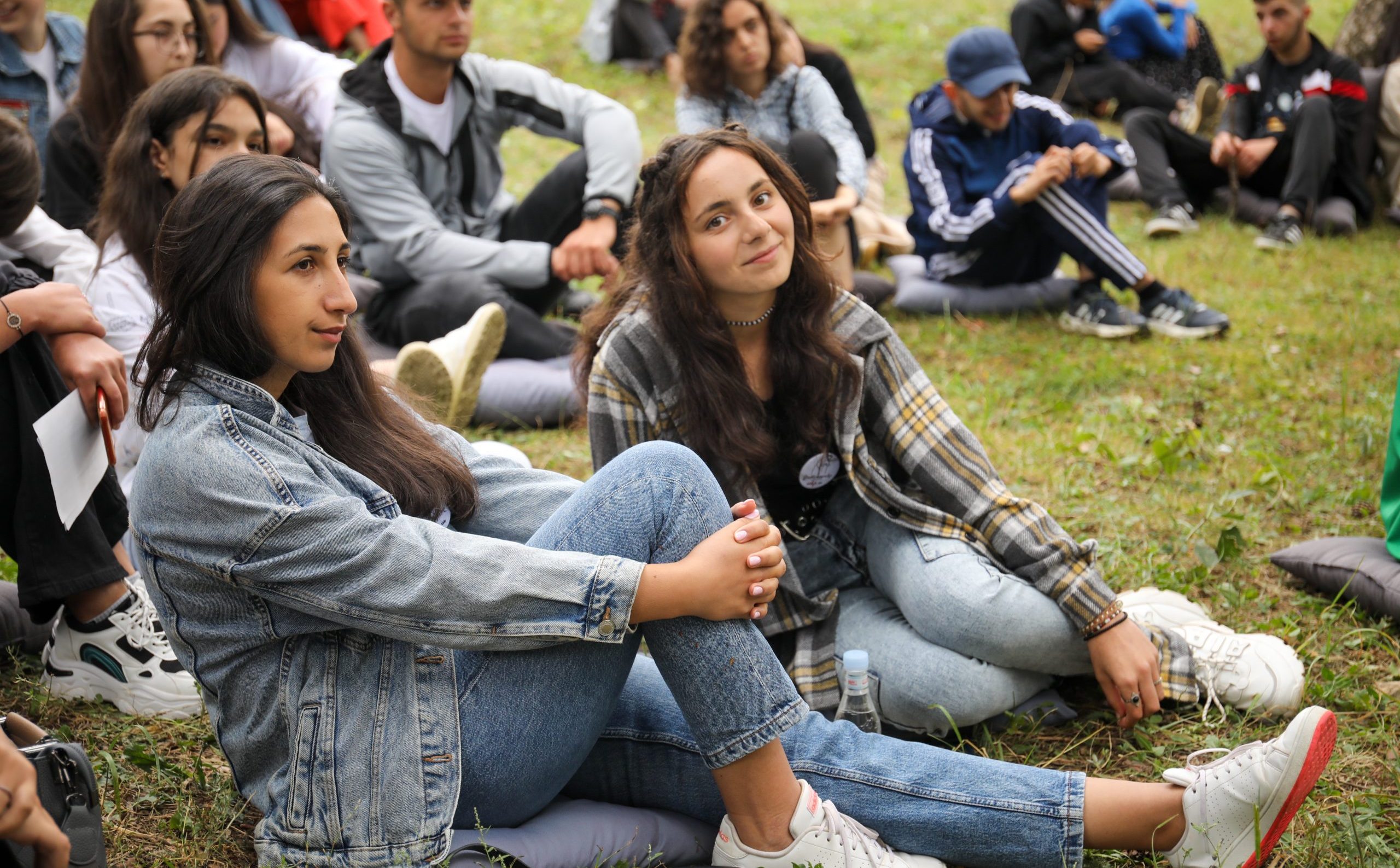
Turning EU4Youth experience into long-term impact: Lilit’s story of engagement and change
Non-formal education and youth initiatives have become the beginning of real change for many. Having completed five one-year cycles, the EU4Youth Alumni Network became one of the platforms where young people not only developed their skills, but also brought change to their communities, creating new opportunities for themselves and others. What those young people built, however, did not end with the programme.
Lilit Sofyan is among several graduates of the network who have developed their initiatives beyond the EU4Youth programme. Originally from the village of Hobardzi within the Gyulagarak community in the Lori Province of Armenia, she continues to work on a voluntary basis with young people from Hobardzi and neighboring settlements, fostering an environment where they can grow, explore their potential, and gain confidence in turning their ideas into reality.
In an interview with Mediamax, Lilit shared how she turned the skills she had gained through the EU4Youth Alumni Network into long-term impact and new opportunities.
How the EU4Youth Alumni Network became the catalyst for Lilit’s work
Lilit first learned about the EU4Youth Alumni Network in 2021 through friends who had previously participated in the programme.
“I began my engagement and social activities with the Young European Ambassadors initiative. Through that experience, I discovered what volunteering and youth participation truly mean. It inspired me to contribute something meaningful to my own community. I saw the EU4Youth Alumni Network as a valuable opportunity to share my knowledge and experience with young people in Hobardzi, while also developing both my own skills and theirs,” she said.

The programme lasted eight months, with Lilit launching its first phase in February 2021. “It was a particularly busy period for me, I was both working in Yerevan and studying, but I still managed to organise team-building sessions, as well as thematic meetings and discussions twice a month. As most participants were teenagers aged 13-17, discussions often focused on issues most relevant to them – career orientation. I tried to guide them in making the right choice in choosing a profession. At one point, we organised a seminar on the intersection of career choice and gender stereotypes, emphasising that young people should not be guided by societal stereotypes. If a girl wants to become a mechanic, for example, she should feel confident pursuing that path.”
Lilit also highlights the importance of building connections among young people – not only within their own community, but also across regions: “During the programme, we visited Gyumri, where we were hosted by the Gyumri Youth House as part of a study visit. We met with local young people, exchanged experiences and ideas, and shared insights about the traditions and cultural differences between the Lori and Shirak regions. To this day, the participants have maintained strong friendships with their peers in Gyumri. In addition, the young people from Hobardzi had the opportunity to visit TUMO, where they gained a clearer understanding of modern professions. Many discovered new interests and became more confident in choosing their future career paths.”
For Lilit, it is especially rewarding to see that the launch of EU4Youth had a tangible impact – encouraging young people in her community to become more proactive and helping to shape a more active and engaged youth environment.
“As part of the programme, we hosted more than 30 Armenian and Yezidi young people participating in the EU4Youth Alumni Network in Talin. The visit included an educational campaign to the historical and cultural sites of the Gyulagarak community, aimed at strengthening ties between different communities. These activities helped make the villages and people of Armenia more visible to one another, not only for the purpose of building friendships, but also to learn together and develop skills.”
Finding a job that matches commitment to youth
This is also how Lilit got to know her future employer, the KAZA Swiss Humanitarian Foundation where she currently works as the head of the ‘Inovarium’ youth programme for the communities of Gugark, Ptghavan, Alaverdi, and Agarak.
“When we were implementing the first round of our EU4Youth Alumni Network initiative, we hosted guests who shared their experiences with the youth in our community, offered advice, and spoke about volunteering. One of them, Mary Mamyan, introduced us to another opportunity – the ‘Inovarium’ youth programme of the KAZA Swiss Foundation. It promotes civic education through a gamified learning approach. For example, young people are encouraged to identify issues in their communities, analyse them, and work on solutions in collaboration with local authorities and other stakeholders. We formed a team with young people from our community, applied, and were selected. Later, our team expanded, and we gained our first experience of cooperation with local government bodies.”
As a result of the ‘Inovarium’ programme, the youth team also established the Kunj and Puchakh youth club in the village of Hobardzi, within the Gyulagarak community, as a community development initiative. Lilit currently leads the club, where many of the same young people she worked with during her EU4Youth Alumni initiative continue to volunteer.
SkillUP Lori and collaboration in the EU4Youth Alumni Network
“The development of a culture of cooperation was a key element of the EU4Youth Alumni Network. It was within this context that I began working closely with one of the programme’s alumni, Madlene Minasyan. Together, in 2023, we launched SkillUP Lori for young people from Gyulagarak and neighboring villages. The initiative aimed to develop soft skills, organisational and leadership capacities, and critical thinking among approximately 25 young participants. It also created space for self-expression and personal discovery, while addressing topics such as communication, financial literacy, personal development, community engagement, the influence of social media, healthy lifestyles, waste recycling, and educational camps and campaigns. Importantly, the programme also strengthened friendships and social ties among young people from different villages within the community,” said Lilit.
According to her, the camps organised by SkillUP Lori not only sustain community engagement, but also provide young people with practical leadership experience, particularly in the role of squad leaders. “It was very important for us to select squad leaders who had gone through their own personal growth process, developed leadership skills over the years, and were able to contribute meaningfully while managing a team. In addition to the camps organised as part of SkillUP Lori, the team independently organised a four-day camp last summer without institutional or external support. The young people I began working with five years ago are now actively involved in making all of this possible,” she said.
Among the camp leaders were Sona Mirozyan and Susanna Davoyan, both of whom had participated in earlier cycles of the EU4Youth Alumni Network.
“Youth activism and the desire to be useful to the community were shaped through the EU4Youth Alumni Network. Serving as a squad leader at the camp was an important experience for me, both in working with children and in developing organisational skills. The camp brought together not only children from our village, but also from neighbouring communities, which created an opportunity to meet new people,” said Sona.
Susanna Davoyan, now a university student, remembered joining community activities through EU4Youth at the age of 14. “At first, it wasn’t easy to adapt, but over time we understood how valuable the experience was. We developed different skills, received support in career orientation, and met peers from other communities. Later, through the camps and SkillUP Lori, we discovered volunteering and teamwork in leadership roles. It also became an important opportunity to strengthen both our organisational abilities and our skills in working with children,” she said.
Media studies project
With the cooperation of Lilit and Madlene, media literacy courses were also organised at the Kunj and Puchakh youth club for young people from different settlements of the Gyulagarak community, including Hobardzi, Gargar, Vardablur, and Kurtan.
“Conducting this course – the Fact Checking Club – was Madlene’s initiative, and I was glad to support it with organisational matters,” said Lilit, adding their club provided the venue for the implementation of the programme.
“Sixteen young people took part in the course, where they studied examples of media manipulation in the Armenian context and learned how to recognise and critically assess manipulative content in order to reduce its influence on public opinion. The sessions also focused on developing practical digital skills, including the use of advanced search tools, effective information retrieval, and identifying reliable sources,” said Lilit.
Long-term result of a short-term programme
The question of sustainability when it comes to institutional support to young people in Armenia remains prominent in youth work circles. Lilit noted that although the EU4Youth Alumni Network has now concluded its activities, its impact continues to be felt across the communities.
“EU4Youth showed how a short-term programme can create long-term results. Before that, I had no idea what working with young people meant, and I didn’t think I would develop in this direction. However, the experience changed my perspective – I realised that the more energy you invest, the more you receive back from young people. Later, this became the starting point of my professional path. The most important outcome of EU4Youth for me is the continued engagement of young people and their willingness to initiate new projects,” Lilit concluded, noting how the concentric circles of mutual support continue to expand.
Author: Arpi Jilavyan
Article published in Armenian, Russian and English by Mediamax.am