

USU Extension Presents Rural Workforce Research at Digital Access Research Forum
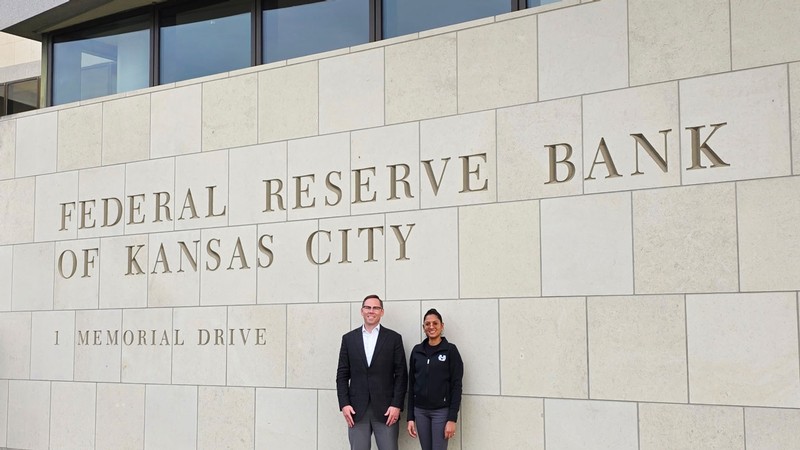
Utah State University Extension program planners and researchers presented new findings at the Federal Reserve Bank’s Digital Access Research Forum in Kansas City, Missouri, this month.
The team shared results from the abstract, “Extension Education for Economic Development: Evaluating Workforce Development Training for Rural Utah Residents,” authored by Paul A. Hill, USU Extension professor and program director; Amanda D. Ali, data scientist; and Dominic C. Bria, associate program director, all with USU Extension’s Rural Online Initiative, a statewide workforce development program funded by the Utah Legislature.
Hosted by the Federal Reserve Banks of Atlanta, Cleveland, Dallas, Kansas City, New York, and Philadelphia, the forum included academics, researchers, community development practitioners and policymakers to examine program evaluation, community benefits of digital access, and implications for the labor market.
Hill presented in the “Digital Access in Rural Areas” session, which highlighted barriers and successful approaches to connectivity, affordable devices, and digital skills for career advancement.
The USU Extension team reported evaluation results from the Certified Remote Work Professional course delivered through the Rural Online Initiative. Key results included:
- 2,550 participants completed coursework between October 2018 and December 2024, with statistically significant knowledge gains across nine modules.
- Among 798 active rural Utah job seekers, 597 graduates found work, a 75% job placement rate.
- Overall, a graduate who secured remote work reported a median salary increase of approximately 67% (which equated to $1,000), alongside a 64% reduction in commuting and an estimated reduction of 0.56 metric tons of carbon emissions.
- Anticipated contributions to county-level unemployment reductions were met in seven rural counties — Beaver, Carbon, Daggett, Emery, Garfield, Piute and San Juan.
“This work demonstrates how specialized, research-based training can open doors to quality remote jobs for Utah’s rural residents,” Hill said. “By pairing digital skills with career support, our program helps individuals connect to opportunities that fit their lives and strengthen rural economies.”
Ali noted the rigor of the evaluation approach.
“By designing rigorous and transparent evaluation protocols, the program captured changes in short, medium and long-term outcomes,” she said. “The impacts point to significant increases in remote work knowledge and digital competencies and job placements that contribute to reduced unemployment in rural Utah communities.”
Bria emphasized the program’s practical design.
“The CRWP course equips learners with the skills to work productively online from the rural areas where they live,” he said. “They learn effective communication, project management and collaboration skills, and how to connect with legitimate employers. That combination helps people move from training to a paycheck.”
Ken White, senior vice president of the USU Statewide Enterprise, said the program evaluation research reflects USU Extension’s commitment to bringing solutions from Utah communities to national conversations on workforce and digital access.
“It shows how Extension is leading the way in bridging digital gaps while providing economic opportunities for rural residents,” he said. “We are really pleased to see how this program is changing people’s lives and circumstances.”