

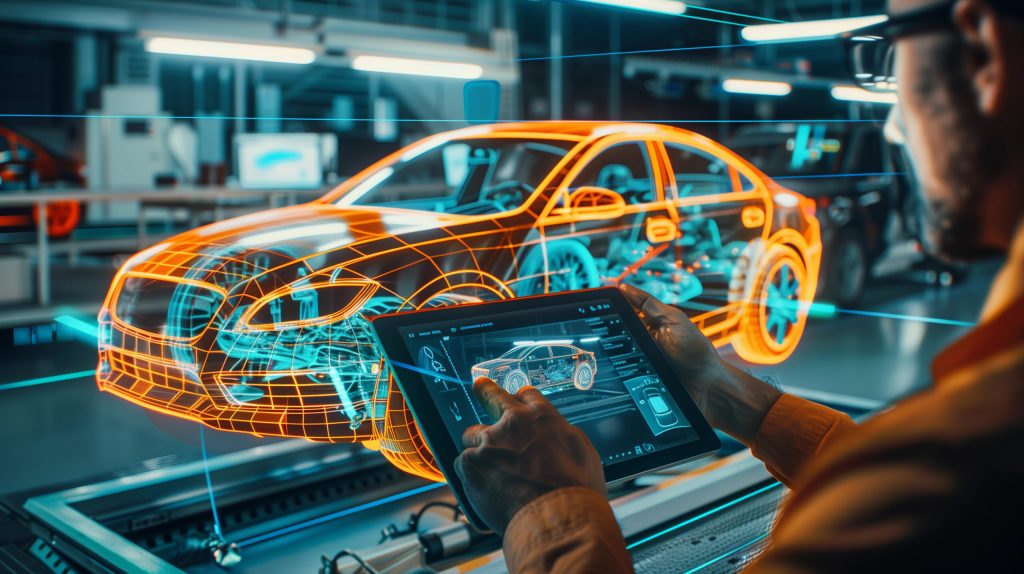
AI Skills Race Reaches the Auto Industry
Competition in the auto industry is no longer limited to batteries, design, or autonomous driving technology. It is rapidly shifting to a new race centered on AI skills and the ability to build the most advanced software systems.
According to a report published by TechCrunch, automakers are currently undergoing a broad reshaping of their technical needs, as reliance on AI grows within driving systems, digital cockpits, data management, and the software architecture of modern vehicles.
This shift has pushed automakers into direct competition with major AI and tech companies to attract engineers and researchers capable of developing smart models and complex software systems.
Talent Becomes the Competitive Arena
In past years, automakers relied heavily on mechanical engineering and traditional manufacturing as the industry’s backbone. Now, software and AI have become a core part of the vehicle’s value itself.
As a result, companies are increasingly seeking engineers with expertise in building smart models, developing automated driving systems, handling big data, and constructing the software architecture needed to run modern vehicles.
The report noted that companies like General Motors have begun intensifying AI-related hiring, with a clear focus on talent capable of developing systems from scratch, including training models and designing their operational architecture.
Cars Are Becoming Smart Platforms
The current shift reflects a deeper change in the nature of the vehicle itself. Modern cars are no longer just a means of transport relying on traditional mechanical components; they have become connected digital platforms that depend on software and AI to manage a large part of the driving experience.
This change has elevated the importance of smart assistance systems, voice control, autonomous driving, and continuous software updates — elements that require a technical infrastructure closer to that of tech companies than traditional manufacturers.
Consequently, automakers are adopting more software-driven operating models, building engineering teams similar to those found inside major AI companies.
Autonomous Driving Raises the Pressure
The autonomous driving race has played a major role in boosting demand for AI skills within the sector.
Modern driving systems rely on processing massive amounts of data from cameras, radars, and sensors, which requires AI models capable of analyzing the surrounding environment and making decisions in real time.
Developing these systems also requires advanced expertise in fields such as computer vision, deep learning, simulation, and data processing — specialties that are now in huge demand in the global tech market.
Tech Companies Enter the Industry
The change is not limited to traditional automakers; it also extends to tech companies that are expanding into the mobility and smart driving sector.
Companies like Rivian are developing smart in-vehicle assistants based on language models and agent systems, integrating the car more seamlessly with apps and digital services.
Other companies are moving toward building vehicles that increasingly rely on updatable and continuously developable software systems, changing the nature of the relationship between the user and the car itself.
Computing Becomes the Industry’s Core
With the expanding reliance on AI, computing and software architecture have become key competitive elements in the auto sector.
Modern vehicles require massive processing power to run smart driving systems, analyze data, and manage continuous connectivity to the cloud and various applications.
This has raised the importance of chip, computing, and cloud infrastructure companies within the auto industry, alongside rising investment in AI-related and automated mobility systems.
The Auto Industry Is Changing from Within
What is happening now reflects a historic shift in the global auto sector. An industry that relied for decades on manufacturing and mechanical engineering is moving rapidly toward a model driven by software, data, and AI.
With the intensifying competition for tech talent, the coming years are poised to redraw the map of companies capable of leading the new phase of the global mobility market.
In this phase, superiority will not be tied only to the speed of car production or manufacturing efficiency, but to the ability to own the software and smart systems that will define the shape of vehicles in the future.