

Inclusive AI for Municipal Development in Guatemala: An Opportunity to Transform the Local Level
Artificial intelligence, or AI, is no longer a futuristic concept reserved for large tech companies. Today, it is part of everyday life. It appears when people search for directions, send messages, organize transport routes or order food. For a country like Guatemala, however, the central question is not whether AI will influence daily life, but how to ensure that its impact is positive, inclusive and accessible to everyone.
AI is more than a technological tool. It represents a historic opportunity to modernise public services, strengthen trust between citizens and government and develop fairer and more efficient solutions. With this vision, Red Ciudadana, in collaboration with the United Nations Development Programme (UNDP), is advancing the development of Inclusive Municipal AI through the Joint Programme on Digital Transformation, funded by the Joint SDG Fund and financed by the European Union and 16 Member States. This initiative is built from the local level, grounded in territorial realities, guided by ethical principles and shaped through the participation of people who live and work in municipalities across Guatemala.
This blog seeks to open the conversation and explain why this approach is so important for the country’s present and future.
AI as an Ally in Addressing Municipal Challenges
Municipalities are the operational core of the State. They are the first point of contact for people seeking support, submitting applications and accessing essential services. From public lighting reports to water management, from construction permits to urban planning, municipal governments manage a large and constant volume of responsibilities.
In this context, AI is not a luxury. It is a way to strengthen local institutional capacity. It can help municipalities organize and prioritise citizen reports, enabling faster, more effective responses. It can guide residents through administrative procedures in a clear and accessible way, reducing confusion and saving time for both citizens and public officials. It can also help anticipate potential disruptions to public services, such as lighting or water supply, and analyse patterns of service use to improve planning and decision-making. These solutions are not theoretical. They are achievable in Guatemala when developed collaboratively and with a strong focus on local realities.
Municipal AI only creates real value when it is designed to respond to concrete community priorities, respects human rights and contributes to reducing inequalities rather than deepening them.
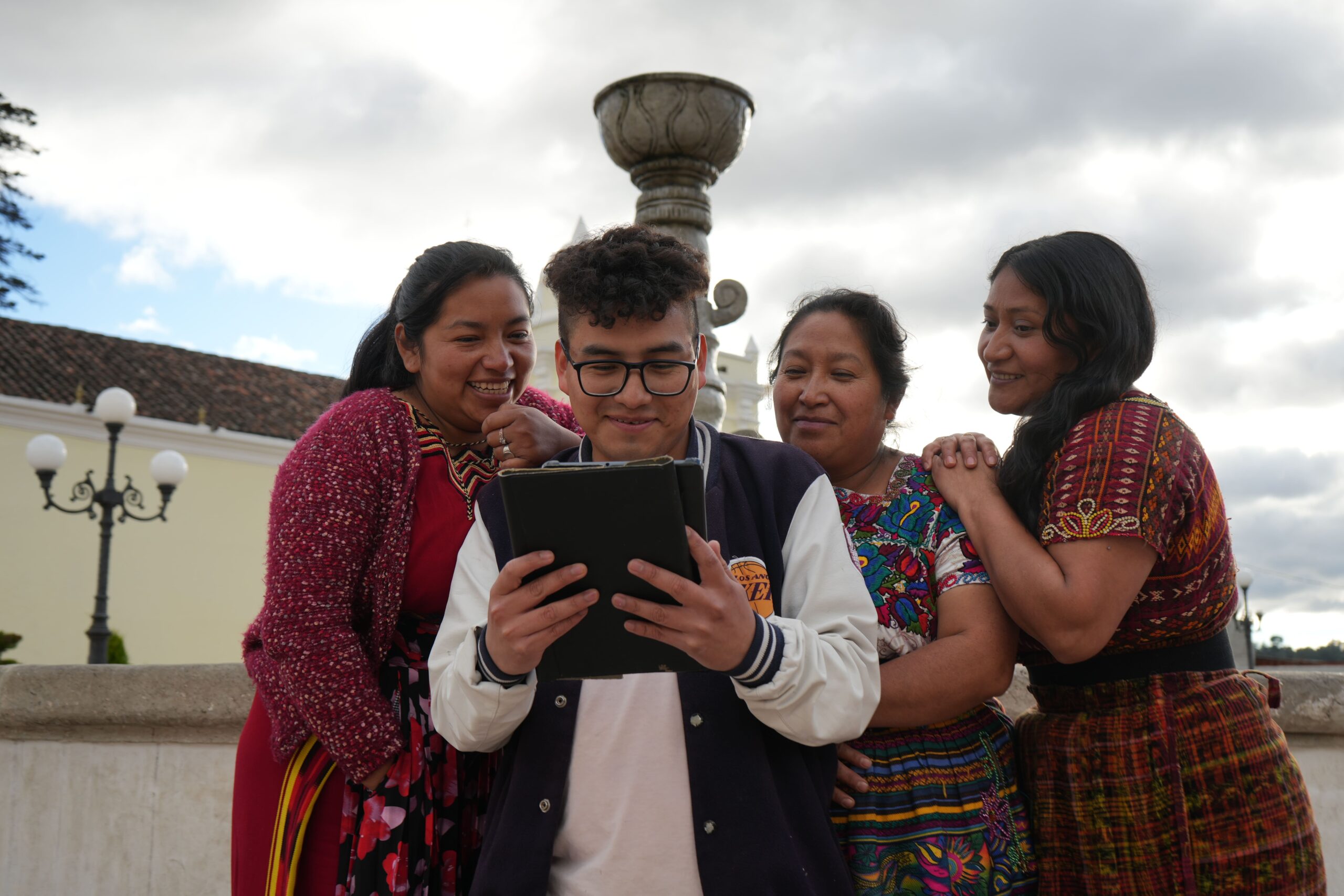
Caption: AI represents a historic opportunity to modernise public services, strengthen trust between citizens and government and develop fairer and more efficient solutions.
Photo: © UNDP Guatemala
What are we Doing Through the Inclusive AI Project?
Over recent years, UNDP and Red Ciudadana have worked to strengthen transparency, participation and public sector innovation in Guatemala. This experience has shown that municipalities are home to committed public officials, active community leaders and citizens who are willing to engage in building solutions.
The Inclusive AI project allows this work to move toward a smarter, more human and territorially grounded digital transformation. It recognises that technology only delivers results when it strengthens local capacities, reduces inequalities and places people at the centre of public innovation. Since August 2025, this collaboration has focused on planning and implementing the following areas of work.
1. Community Digital Literacy: “My First Digital Steps”
Between September and November 2025, a community-based digital literacy programme was conducted, with a particular focus on women, young people and older adults. The initiative strengthened basic digital skills, including mobile phone use, messaging applications, internet navigation, introductory concepts in artificial intelligence and digital security. A participatory, accessible methodology was used to reduce technological barriers and ensure learning was relevant to everyday life. This component laid the foundation for a broader and more sustainable community-driven digital transformation.
Caption: Advancing inclusive AI at the municipal level is not only a technological effort but a human and territorial process rooted in local realities.
Photo: © UNDP Guatemala
2. Specialised Training for Municipal Officials
In October 2025, specialised training sessions were delivered for municipal technical and administrative teams. These sessions supported participants in understanding what artificial intelligence is, how it works, how it can support concrete municipal processes and what ethical responsibilities are involved in its use within public institutions. The training aimed to build confidence, shared understanding and responsible decision-making around the adoption of AI at the local level.
3. Identification of Real Municipal Use Cases
Recognising that each municipality has different needs and capacities, a participatory process was conducted to identify public sector processes that could benefit from artificial intelligence. This work focused on understanding everyday operational challenges and on identifying where AI could add value in a practical, realistic way. Areas explored included citizen services, municipal service management, territorial planning, cadastral systems and other core functions of local administration.
4. Initial Prototypes of Municipal AI Solutions
Based on the identified needs and use cases, initial prototypes of AI-based solutions were developed to improve municipal responsiveness, automate repetitive tasks and strengthen transparency in public management. These prototypes were collaboratively designed with municipal teams to ensure they reflected real operational contexts. They have been internally validated and are now in the final stages of integration and implementation, representing an important first step toward more comprehensive, scalable local-level technological solutions.
Caption: Municipalities in Guatemala are home to committed public officials, active community leaders and citizens who are willing to engage in building solutions.
Photo: © UNDP Guatemala
5. Building a Local Innovation Ecosystem
The AI for Local Development Challenge aims to promote innovative artificial intelligence solutions that address public challenges in local communities. It seeks to mobilise civil society, academia, the private sector and local governments to co-create ethical, inclusive and people-centered AI tools. Through a structured process that includes technical support, specialised mentoring and opportunities to present proposals, the challenge will help build a local innovation ecosystem and scale sustainable solutions for municipal development.
Inclusive AI as a Human and Territorial Process
Advancing inclusive artificial intelligence at the municipal level is not only a technological effort but a human and territorial process rooted in local realities. It begins with listening to communities, strengthening local capacities and building trust between people and public institutions. When designed and implemented responsibly, AI can help municipalities respond more effectively to everyday needs while supporting equitable, transparent and people-centered local governance in Guatemala.
Note:
All joint programmes of the Joint SDG Fund are led by UN Resident Coordinators and implemented by the agencies, funds and programmes of the United Nations development system. With sincere appreciation for the contributions from the European Union and Governments of Belgium, Denmark, Germany, Ireland, Italy, Luxembourg, Monaco, the Netherlands, Norway, Poland, Portugal, the Republic of Korea, the Kingdom of Saudi Arabia, Spain, Sweden and Switzerland for a transformative movement towards achieving the SDGs by 2030.
This story was originally translated to English and published by the Joint SDG Fund. Please visit the UN team’s website for more information about the UN’s work in Guatemala.