

Lessons from a practice-level transformation

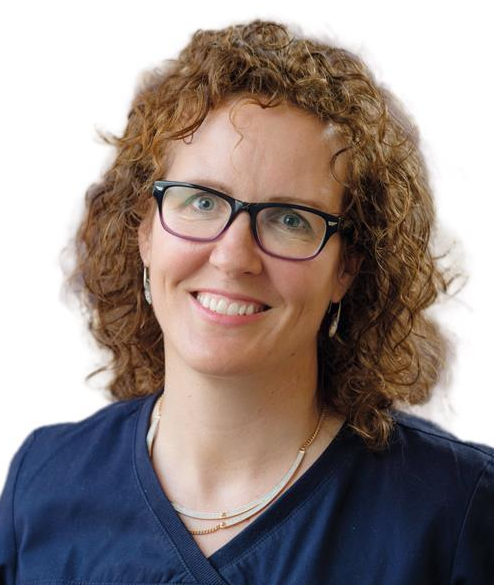
Dr Eimear O’ConnellCredit: Dr Eimear O’Connell
Eimear O’Connell decided to become a dentist when, as a child, she was shocked by the sight of her grandmother’s dentures. Preventing tooth loss became the underlying philosophy of her Edinburgh dental practice, Bite Dentistry, which she established in the early 1990s. She was also committed to mastering digital skills, which she realised were becoming essential. This culminated in her adopting the exocad platform that not only enhanced and refocused the care she could deliver but also helped her manage her work-life balance. Now she is one of exocad’s Heroes of Dentistry.
What is exocad?
exocad is a dental software provider originally intended for dental laboratories wanting to embrace computer-aided design (CAD) and computer-aided manufacturing (CAM). Its flagship product is DentalCAD — software that designs crowns, bridges, dentures and orthodontic appliances. It’s particularly useful for dentists like me who want to collaborate closely with our technicians. New features and workflows are regularly added to the platform, such as the currently piloted advanced restorative treatment (ART) software, which integrates treatment with aligners, exoplan for implant planning, and TruSmile Video — an AI-powered video tool to help with visualisation of the patient’s future smile.
Have you always been digitally literate?
I could tell from early in my career that computers were going to be a way of making dentistry more efficient. When I opened my practice, I installed practice management software. I was also an early adopter of CEREC (chairside economical restoration of esthetic ceramics), one of the first CAD/CAM technologies for dental practice. I use it to create 3D digital impressions, and to design and mill immediate dental crowns, veneers and inlays. More recently I was the national winner of an award designed to highlight effective use of a business-related software programme.
When did you first start using exocad?
I was introduced to the software about 12 years ago by my technician who was using DentalCAD to plan my more complex cases. Until then, I had been placing implants freehand, but I wanted increased accuracy and predictability of outcome, so I started using exoplan for multiple implant placements. exoplan merges cone beam computed tomography (CBCT) with intra-oral scans to help plan the procedure and enables the production of a 3D surgical guide for precise implant placement. Guided surgery makes the workflow more precise, efficient and streamlined.
What aspects of exocad appeal most to you?
The most powerful aspect is the integration of diverse applications, making everything more efficient, whether it’s communication and consent, the workflow or the placement of restorations. As it’s an open system, you can import whatever assets you have to support your treatment planning. The plan can be easily explained using TruSmile Video, which uses video to visualise how the patient will look at the end of treatment. Patients love it. Team-working, so important to staff retention, is also enhanced: my dental nurses can oversee the CBCT scanning, print study models and surgical guides, and mill crowns.
What convinced you to provide aligners?
I had never wanted to offer orthodontic treatment, but one case transformed my mindset. Patrick, a 27-year-old cameraman, was filming me at work. Someone mentioned he had been in a road accident, and he had lost his UR6. He had mild crowding; at first sight I thought that, in addition to the implant, he would need several veneers. But after 12 weeks of aligner treatment, he had composite bonding on the central incisors and veneers on the lateral incisors. It’s a joy to give a patient a smile that will last a lifetime because you have kept intervention to a minimum. Now Patrick has a smile that will last him into his 90s — and I use exocad ART via my lab all the time.
Has exocad changed the way you work?
The workflow between my practice and the laboratory is efficient and all our communications are stored. Restorations are more precisely placed than I ever thought possible, which means I can deliver the result that everyone — the patient, the technician and I — have visualised and agreed upon. I’m delighted to say I haven’t done a wax-up in years and I spend more time with patients. Prevention has always been important to me; now it’s never been easier to teach good oral hygiene.
What impact has exocad had on your life?
It’s no exaggeration to say that exocad has been life-changing, both professionally and personally. Five years ago, I was at the forefront of digital dentistry, and I had a successful practice. But I had been running the practice for more than 30 years and I wanted to cut down my hours. exocad helped me make the transition to part-time working. Everything I need for treatment-planning can be downloaded to exocad and I can work remotely, on the move, or at home.
What advice do you have for colleagues who have not yet embraced digital dentistry or exocad?
The initial training is important. Make sure your trainer understands how you want to use the platform. You should be ready to leave your comfort zone. As clinicians we need to be driven by outcomes; exocad has helped me achieve outcomes that surpass my expectations. I can work more efficiently and continue to work preventively. Be bold and brave, go learn.
Learn more about exocad and digital dentistry