

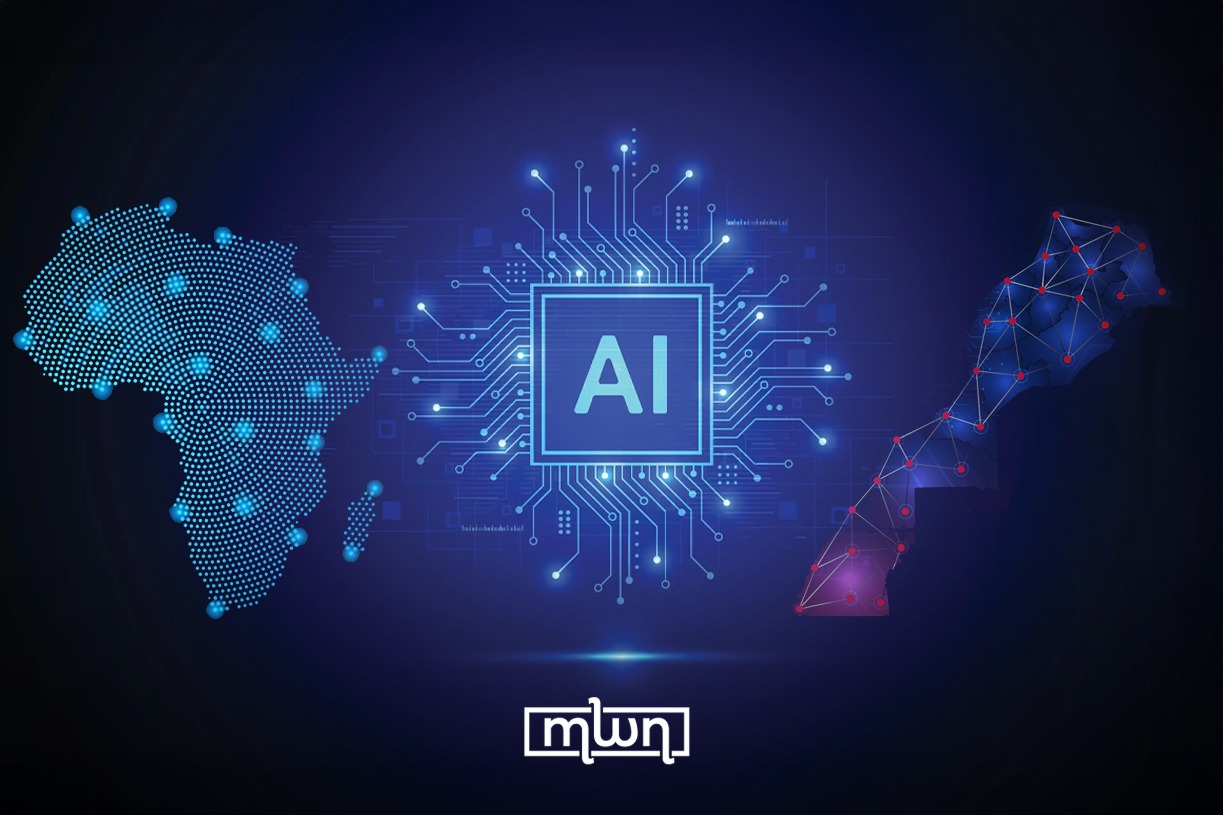
Morocco Continues to Guide Africa’s Digital, AI Transformation
Rabat — Morocco is rapidly establishing itself as Africa’s digital powerhouse, with countries across the continent increasingly looking to Rabat for guidance on artificial intelligence and digital transformation.
The latest example came this week when Gabon’s Minister of Digital Economy Mark-Alexandre Doumba traveled to Morocco to forge partnerships in AI development and digital skills training.
The November 3 working visit, which brought together Doumba and his Moroccan counterpart Amal El Fallah Seghrouchni, reflects a growing trend: African nations are viewing Morocco not just as a peer, but as a continental leader whose digital blueprint deserves emulation.
“Gabon wishes to draw inspiration from Morocco’s experience,” Doumba said during the discussions, where both parties agreed to launch concrete programs in AI training, data analytics, and distance learning through Moroccan digital platforms.
The collaboration reflects Libreville’s broader ambition to pivot away from extractive resource dependency toward a digital-driven economy — a transition Morocco has already begun to master.
A continental model for digital excellence
Morocco’s appeal as a digital partner stems from tangible achievements. The country ranked 90th globally and fourth in Africa on the UN 2024 E-Government Development Index, scoring 0.6841 out of 1 — above both regional and global averages.
This recognition validates Morocco’s systematic approach to digital transformation, which gained momentum with the adoption of the “Digital Morocco 2030” strategy in September 2023.
The strategy aims to consolidate existing gains while accelerating social and economic development through digitalization. But Morocco’s ambitions extend far beyond its borders.
In September, the country partnered with the United Nations Development Programme to launch the Digital Morocco for Sustainable Development (D4SD Hub), a platform designed to promote inclusive digital transformation across Arab and African states.
Seghrouchni has championed programs like “JobInTech,” which focuses on cultivating digital talent, alongside national initiatives introducing children to technology and artificial intelligence from an early age.
During her meeting with Doumba, she invited Gabon to participate in the upcoming GITEX Africa 2025 expo in Morocco, further positioning the country as a convening power for continental tech dialogue.
Building Africa’s digital future
Morocco’s vision encompasses creating a regional hub that supports startups, advances offshoring opportunities, and nurtures high-potential sectors, including AI, cybersecurity, and e-health.
The country has set an ambitious target of generating over 270,000 digital jobs by 2030, supported by annual training programs equipping 100,000 young people with essential digital skills.
This focus on human capital development resonates particularly with countries like Gabon, which joined Morocco’s growing list of digital partners in 2025 alongside Turkiye, Botswana, and Saudi Arabia. The UNDP’s recognition of Morocco as a digital hub at the intersection of Africa and the Arab world reflects the country’s strategic geographic and political position.
By connecting the Arab-African region to the global digital economy, Morocco isn’t merely advancing its own interests — it’s creating pathways for continental development. The D4SD initiative represents this philosophy in action, offering a framework for improving governance, enhancing public services, and driving economic development across participating nations.
Leading by example
What distinguishes Morocco’s approach is its willingness to share expertise rather than hoard it. The North African country’s openness to bilateral partnerships and knowledge transfer creates a multiplier effect, where Moroccan innovations and training methodologies can be adapted by neighboring countries facing similar developmental challenges.
As African nations increasingly recognize that digital transformation isn’t optional but essential for 21st-century competitiveness, Morocco’s role as both model and mentor becomes ever more critical.