

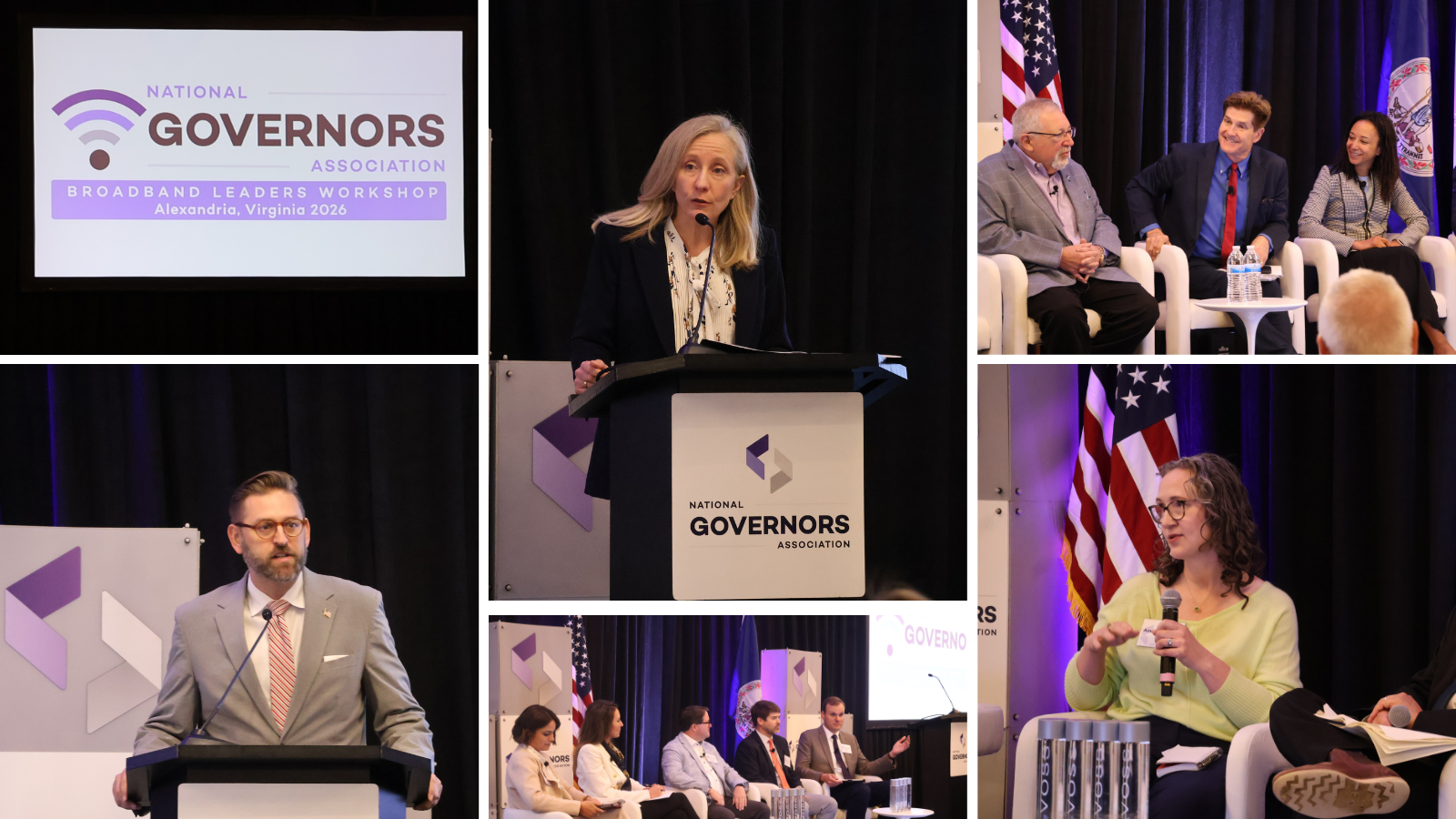
NGA Convenes Broadband Leaders to Promote Workforce and Community Development in States and Territories
Gov. Spanberger addresses national gathering of state broadband officials, federal partners and internet service providers
Alexandria, Va. – The National Governors Association (NGA) this week convened leadership across public and private sectors to share approaches to fast-tracking broadband connectivity to support workforce and community development in states and territories. Virginia Gov. Abigail Spanberger addressed state broadband leaders, federal officials, internet service providers and other tech leaders during the event in Alexandria, Va, where officials from 34 states and territories shared best practices in closing the digital divide and implementing programs such as the Broadband Equity, Access and Deployment (BEAD) program, a federal grant program that aims to connect every American to high-speed internet.
“Throughout my time in Congress, I constantly heard from families, from farmers, from small business owners about what connectivity, or the lack thereof, meant for them. Addressing the digital divide is about so much more than simply being connected. It’s about whether a family can afford internet connectivity at home. It is an issue of economic competitiveness. Broadband access impacts how people can hone their skills or find a job or an internship or apprenticeship program. I’m proud of the fact that over the past few years we have made tremendous progress. We are committed to continuing this work and expediting the remaining projects until every Virginian has access.”

Governor Abigail Spanberger
Virginia
Since 2017, nearly 300,000 homes and businesses across Virginia have gained internet access, Gov. Spanberger noted, and broadband projects funded through BEAD are set to break ground soon in remaining unserved areas.
“Your economic opportunities shouldn’t depend on your zip code, and governors are working hard to make sure everyone in their states and territories has access to high-speed internet. From broadband infrastructure investments to workforce training, governors are taking the lead in expanding access to the digital skills workers need to succeed.”

Brandon Tatum
CEO, National Governors Association
As BEAD shifts into the crucial delivery phase, it is critical that states and territories collaborate with federal agencies and tech partners to address permitting, delivery and program implementation issues. Over the 2-day event, which wrapped today, leaders of state broadband and governors’ offices strategized on topics like working with internet service providers (ISPs) and utilities to deploy broadband, streamlining state and local permitting, working with ISPs to implement and manage new reporting requirements, using data to close the digital divide in rural areas, and more.
Officials representing the Federal Communications Commission (FCC), U.S. Department of Agriculture (USDA) and the National Telecommunications and Information Administration (NTIA) provided updates on federal broadband programs, including BEAD, the Rural Digital Opportunity Fund (RDOF), the Middle Mile program, the Capital Projects Fund and ReConnect.
Internet service providers associations and other private sector organizations including Comcast, AT&T, NCTA, Point Broadband, USTelecom, Google Fiber, McKinsey, BCG and Tarana Wireless shared insights on broadband deployment, navigating state and local permitting challenges and preparing for non-deployment guidance.
NGA supports governors’ work to expand broadband access and close the digital divide through a number of programs and convenings. NGA also supports governors and states through the organization’s Workforce Innovation Network (NGA WIN), which provided six states with technical support and grant funding to develop plans to expand digital skills training. NGA’s report Digital Equity and the Future of Work highlights lessons learned.
NGA hosted previous broadband events in Ohio and Kansas to showcase how governors are collaborating with industry and education partners:
- Under Gov. Mike DeWine, the Ohio Broadband and 5G Sector Partnership brings together 26 partners across industry, education, and government to support training and career awareness in collaboration with the Ohio State University and the Wireless Infrastructure Association.
- Kansas Gov. Laura Kelly launched the Kansas Infrastructure Hub to align state agencies and local entities as they administer and apply for federal funding. Through the Digital Opportunities to Connect Kansans (DOCK) program, Kansans can access training to improve their digital skills.
For more information about NGA’s work to support broadband initiatives, view NGA’s broadband resources and infrastructure resources.