

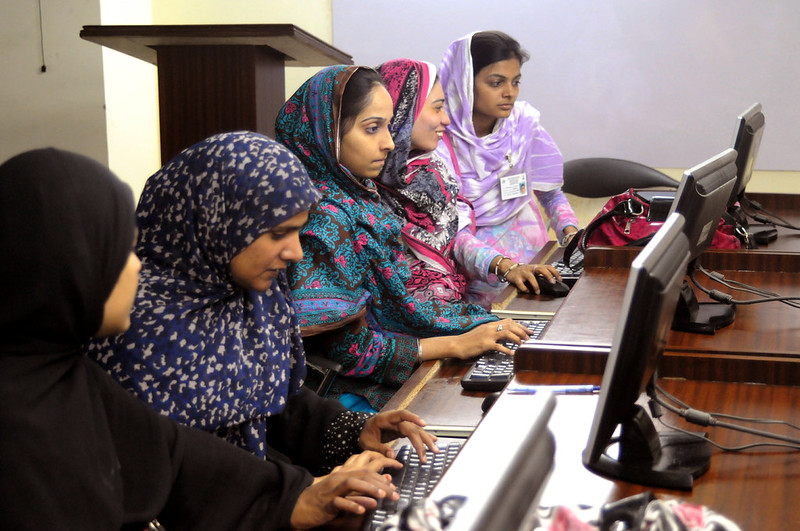
The Rise of Digital Literacy in Pakistan
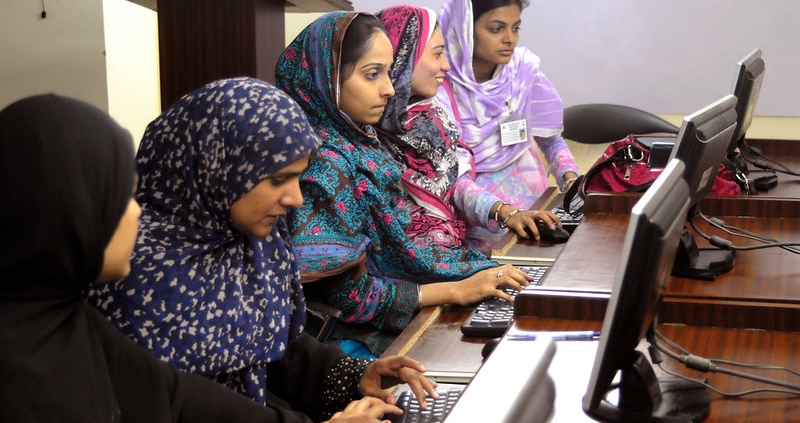 Education is a constitutional right of every citizen of Pakistan; however, women’s education faces numerous challenges. Digital literacy is emerging as adult education for women. The female literacy rate is about 52.8%, which is significantly lower than the male literacy rate. Social norms, lack of resources and poverty restrict access to quality education. In recent years, girls’ enrollment in primary schools increased to 64% with 21 million enrollments, while boys’ enrollment is about 25 million. However, dropouts occur at the secondary level due to safety concerns, lack of infrastructure and resources, social barriers and poverty.
Background
Rural areas of Khyber Pakhtunkhwa are areas with more structural barriers. Around 70% of girls drop out before 10th grade. Families prioritize sons’ education due to poverty. Society considers men the breadwinners, and families consider investment in women’s education as a waste of money. Shortage of female teachers in rural and remote areas further contributes to the low enrollment rate. Women’s enrollment rate in universities and degree-awarding institutions, technical and vocational training is also less than that of men.
For adult women, barriers are more strangling. Structural challenges restrict adult women from reentering “brick and mortar” school. Poverty, domestic responsibility, and cultural mobility restrictions make it impossible for women to physically attend school. However, the rise of digital literacy is serving as a solution to these long-standing challenges. Women use smartphones beyond their communication purpose; smartphones are becoming a means of adult education. Digital Literacy is essential for economic empowerment, bridging the gender gap in education.
Digital Literacy Initiatives
The government funds the digital literacy initiatives, such as Digiskills.pk, TCF, and HEC programs, specifically designed for adults to provide basic training on the basics of computer, AI, freelancing, E-commerce and foreign languages (English, Chinese, German) accessible for free. All these programs contributed to adult women’s education and awareness and also helped them become financially independent. The success of these programs inspired more detailed programs. The educational crisis and gender gap became the reason for starting gender-specific initiatives. One of the major shifts is the “E-Learn, She Earn” 2026 model.
The 2026 Paradigm: “E-Learn, She Earn”
“E-Learn, She Earn” 2026 model is the cornerstone for digital literacy efforts in Pakistan. The model does not require women to physically attend a vocational center, which makes it easy to access. Women can easily access learning materials and lessons via video modules on platforms like YouTube or dedicated LMS apps. Women can access lessons at any time, which makes it easy to manage learning between household chores. Laptops are not easily available in rural areas, and the curriculum is optimized for smartphones and low-bandwidth areas. Lessons and the offered training are not just theoretical learning, but it focuses on digital skills, including Social Media Marketing, Virtual Assistance and Data Entry to make women financially empowered and combat poverty.
Digital literacy in Pakistan has overcome triple barriers. The first barrier is mobility, where traditional solutions require travel, which safety concerns and cultural norms often discourage. Digital literacy crushes this barrier with access everywhere without the need to travel. Time is the second barrier, which also ends with access 24/7, which allows women to learn at their own convenience. Poverty is a major factor that restricts women’s education. Tuition fees and transportation costs are no longer a problem due to the rise of digital literacy in Pakistan. Even digital literacy is contributing to rapid monetization by making women learn skills and earn.
The Future is Decentralized
Emergence of digital literacy is the primary driver of adult education in Pakistan. It indicates a new beginning where the supremacy of one-size-fits-all school models comes to an end. The success of digital literacy initiatives shows how digital solutions can address educational challenges. “E-Learn, She Earn” further solidifies the foundation of digital literacy in Pakistan by removing the mobility, time and financial obstacles.
– Noor Ul Ain Ameer
Noor is based in Islamabad, Pakistan and focuses on Technology and Solutions for The Borgen Project.
Photo: Flickr