

Building sustainable and connected communities worldwide
In communities around the world, the opportunity to thrive increasingly depends on strong foundational infrastructure. Reliable connectivity, affordable devices, resilient energy systems, and sustainable water access are not separate challenges. They are interconnected systems that determine whether people can participate in the digital economy. A student cannot learn online without power for devices. A farmer cannot access digital markets without connectivity. Communities cannot sustain growth if energy and water systems cannot support expanding digital services.
As AI reshapes how people learn, work, and access services, demand on these systems will only grow. Meeting that demand requires more than expanding connectivity alone. It requires coordinated investments across the infrastructure that enables digital participation, linking connectivity with energy, devices, and water systems that communities depend on every day.
Across regions and sectors, at Microsoft, we’re working with local partners, nonprofits, connectivity providers, and energy access providers to support this integrated approach. By deploying these systems together and aligning them with local needs, these partnerships are helping communities build the durable infrastructure needed to unlock new opportunities in education, agriculture, entrepreneurship, and public services.
Strengthening agricultural livelihoods through digital access in Kenya
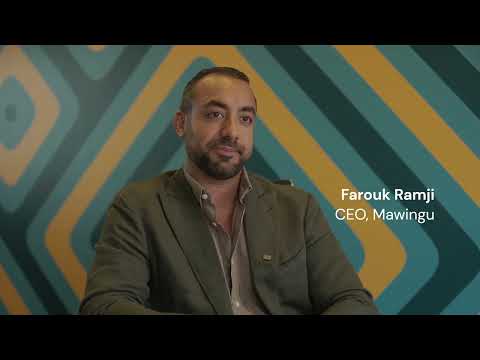
The opportunity: In rural Kenya, gaps in internet infrastructure have constrained economic opportunity and public participation. As digital systems become central to daily life, reliable connectivity is essential not only for education and public services, but for strengthening agricultural livelihoods and local enterprise through access to new buyers, real-time market information, and other data and digital tools.
The impact: Through partnerships with local providers like Mawingu, we are expanding last-mile connectivity across underserved communities, bringing reliable internet to those beyond the reach of traditional broadband networks. Using Starlink for connectivity, Mawingu will lead deployments across 450 community hubs nationwide, including schools, farmer cooperatives, aggregation centers, and digital resource facilities.
These hubs serve as digitally enabled access points that strengthen agricultural value chains, support entrepreneurship, and unlock access to AI-powered tools and services. By combining satellite-enabled connectivity with locally operated broadband infrastructure, we ensure that access translates into sustainable, community-level impact.
What begins as connectivity becomes something more enduring: the ability for rural communities to participate fully in education, enterprise, and the digital economy.
Growing digital opportunity in Mount Pleasant, Wisconsin
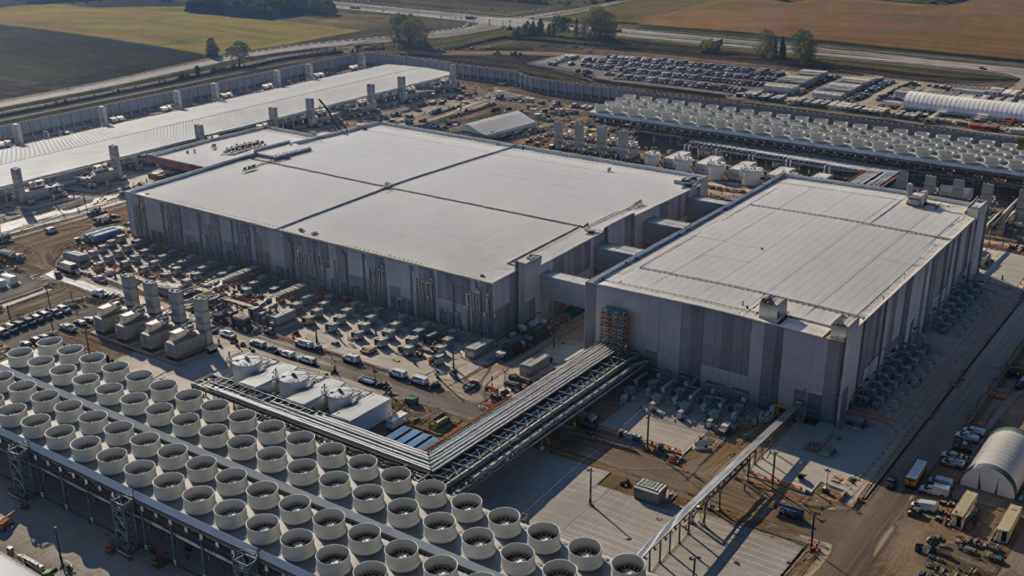
The opportunity: In Mount Pleasant, Wisconsin, Microsoft is building the world’s most powerful AI datacenter as part of a multi-billion-dollar investment reshaping the region’s economic landscape. With next-generation AI infrastructure taking root in Racine County, the focus is on ensuring that the growth reaches beyond the datacenter campus by strengthening broadband access, expanding workforce pathways, and supporting long-term economic development across the community.
The impact: In collaboration with local internet provider E‑vergent, we are expanding reliable and affordable high-speed internet access across surrounding communities. Through this partnership, our Fairwater AI datacenter investment is helping extend broadband access to rural residents while delivering next-generation internet service to more than 1,200 homes and businesses in Sturtevant, Wisconsin. These investments help ensure that residents, students, and small businesses can access the digital tools, education opportunities, and economic participation that high-speed connectivity enables.
Together, these efforts reflect Microsoft’s Datacenter Community Pledge. By pairing AI infrastructure with local connectivity and workforce investments, we work to ensure that next generation datacenter development strengthens the long-term economic vitality of the communities where it is built.
Scaling meaningful connectivity across 12 states in India

The opportunity: In rural India, many underserved communities remain beyond the reach of reliable broadband networks due to remote terrain and dispersed populations, limiting consistent access to education, digital services, and economic opportunity. Expanding high-speed internet across multiple states requires strengthening existing wireless infrastructure and extending fiber networks into newly served regions.
The impact: Microsoft and AirJaldi Networks have worked together for nearly a decade to expand broadband infrastructure across rural and underserved regions in 12 Indian states. The partnership focuses on strengthening local connectivity ecosystems by supporting the development of resilient broadband networks that can reach communities where traditional infrastructure has historically been limited.
Alongside expanding connectivity, the collaboration has also emphasized building the skills needed to ensure people can safely and productively participate in the digital economy. AirJaldi has developed community-based digital skilling programs that support women, youth, and students in developing practical digital literacy, responsible internet use, and foundational technology skills. These programs help communities build confidence using online tools for education, entrepreneurship, and access to services, ensuring that expanded connectivity translates into meaningful opportunity and long-term local impact.
Strengthening rural broadband across the central United States
The opportunity: Across rural communities in the central United States, high-speed broadband access is unlocking new possibilities for agriculture, education, telehealth, and local economic growth—but access alone is only part of the equation.
The impact: Microsoft is working with Nextlink Internet to expand connectivity and digital skills programs across rural communities in twelve states. At full buildout, the effort is expected to reach more than 1.9 million people in previously unserved areas using fixed wireless technology designed for rural deployment. By pairing infrastructure with community programs, the collaboration helps ensure new connectivity creates real opportunity for residents and local businesses.
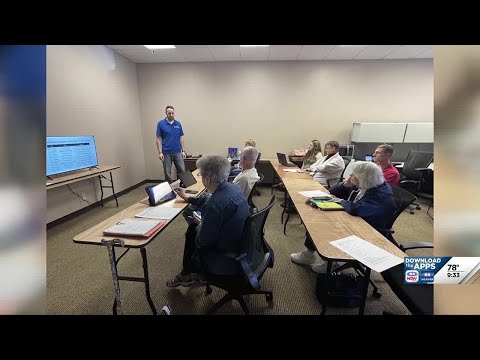
In Seward, Nebraska, this investment includes a Digital Empowerment Center developed by Nextlink and the Seward County Chamber of Commerce. The center offers free workshops on device navigation, internet safety, photo editing, and AI tools, along with tech support and workspace for remote workers and small businesses, with a strong focus on helping seniors build digital confidence.
A second center launched in February 2026 in Falls County, Texas through partnerships with Chilton Independent School District, the City of Golinda, Connected Nation, and Human-I-T. High school students serve as paid Digital Navigators, leading workshops for seniors while earning scholarships, and refurbished devices help participants get online and stay connected.
Expanding access to credit and smartphones across Africa
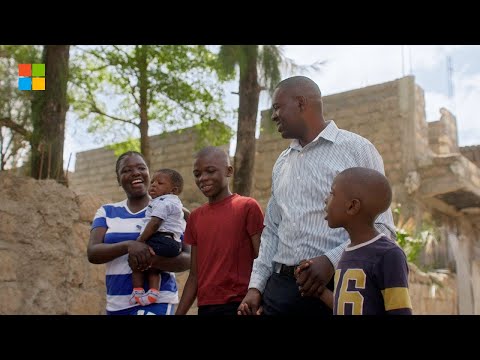
The opportunity: Across Africa, millions of small business owners and households have historically lacked access to traditional banking, credit, and digital tools needed to participate fully in the digital economy. Without affordable devices and trusted financial services, many entrepreneurs remain disconnected from online markets, education, and economic opportunity.
The impact: Microsoft has partnered with M-KOPA for nearly a decade as it evolved into a leading Pan-African fintech platform, now serving over 7 million customers across Kenya, Uganda, Ghana, Nigeria, and South Africa. M-KOPA focuses on unlocking financial potential through smartphone devices by combining affordable smartphones with embedded financial services, including credit, insurance, and digital payments. For microentrepreneurs like Jane in Kenya, access to a smartphone gained access to health insurance, emergency financing, and the tools to grow her business, strengthening long-term financial resilience for her family and community.
M-KOPA uses AI and machine learning to responsibly expand credit access by forecasting repayment patterns and managing risk at scale. The company is also investing in workforce development and local manufacturing, including a smartphone assembly facility in Kenya that supports job creation and strengthens regional supply chains.
Together, these efforts demonstrate how expanding access to smart devices can unlock economic participation, financial inclusion, and digital opportunity across the continent.
Transitioning to solar power in Inírida, Colombia

The opportunity: In Colombia’s Amazon region, the municipality of Inírida operates outside of the country’s main electricity grid and has historically relied on local diesel generation. This dependence on transported fuel has led to higher costs, greater emissions, and energy systems that are difficult to scale as population and demand grow, with diesel-generated electricity remaining highly carbon intensive, inherently unstable, and often available for only a few hours each day. Expanding access to reliable, renewable energy presents an opportunity to support a clean energy transition while strengthening long-term resilience in one of the country’s most remote regions.
The impact: Through a partnership with Anditel, Microsoft is supporting the Sol de Inírida solar projects. The first phase is now fully operational, delivering more than 7,500 solar panels with 2.49 megawatts of installed capacity and supplying 18 percent of the municipality’s energy consumption and benefiting over 3,000 families. The project avoids nearly 2,927 tons of CO₂ emissions annually and eliminates approximately 290,000 gallons of diesel use each year.
We are advancing a second phase that will expand total capacity to 9.2 megawatts and add a 20 MWh battery energy storage system, together covering roughly one-third of the municipality’s energy demand. Nano grids and micro grids further extend clean energy access to homes, schools, and health centers, pairing renewable power with telecommunications infrastructure to strengthen long-term resilience.
Strengthening climate-resilient water systems in Lagos, Nigeria
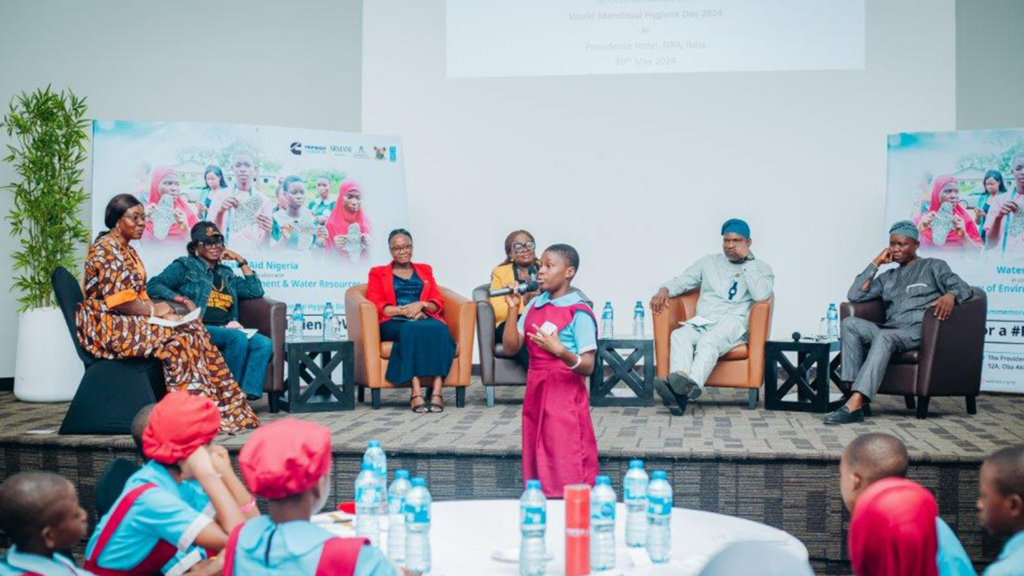
The opportunity: In Lagos, rapid urban growth and climate pressures have strained access to safe water and sanitation. National data shows that 45 percent of residents lack access to safely managed water, and 75 percent lack safely managed sanitation.
The impact: Through the Lagos Peri-urban Water and Sanitation Improvement Project, we are working with WaterAid Nigeria to deliver access to sustainable, climate-resilient water, sanitation, and hygiene services for more than 21,000 people over three years.
The initiative rehabilitates non-functional water systems, upgrades sanitation facilities to be gender-inclusive, and strengthens community preparedness for climate-related shocks. By pairing infrastructure improvements with hygiene education and local engagement, the project demonstrates how water resilience and public health move forward together.
Reducing water loss and strengthening water security in Dublin, Ireland
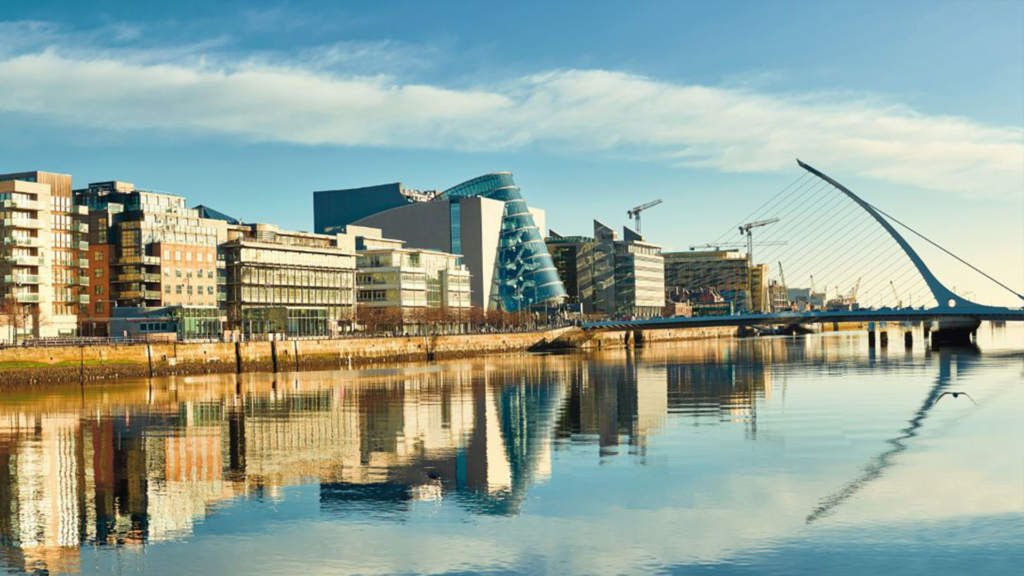
The opportunity: Water utilities around the world face growing pressure to maintain aging infrastructure while conserving limited water resources. In the Greater Dublin area, a significant share of treated water can be lost through leaks before reaching homes and businesses, placing additional strain on the River Liffey, which supplies most of the region’s drinking water. Detecting leaks in large underground pipelines is difficult using traditional methods, making advanced monitoring technologies critical for improving water resilience and reducing unnecessary withdrawals.
The impact: Through a collaboration between Aganova and Ireland’s national water utility, Uisce Éireann, we are deploying acoustic leak detection technology to identify hidden leaks in Dublin’s water infrastructure. Using Aganova’s Nautilus system, which travels inside large pipelines without interrupting service, the project is surveying about 40 kilometers of strategic pipelines in Dublin, Ireland.
Leak data allows Uisce Éireann to prioritize repairs, improving network efficiency while reducing the energy required for water treatment and distribution. Together, these efforts strengthen long-term water security and show how advanced monitoring technologies can help cities modernize critical infrastructure while conserving vital resources.
Reducing stormwater pollution in Cheyenne, Wyoming through urban filtration

The opportunity: Urban stormwater runoff is a growing source of water pollution in cities across the United States. In Cheyenne, Wyoming, runoff flowing into Crow Creek carries sediment, trash, nutrients, and other contaminants from streets and neighborhoods into the local watershed. Over time, these pollutants degrade water quality, harm aquatic ecosystems, and place additional strain on local water management systems. Addressing stormwater pollution at its source is an important step toward protecting waterways and strengthening watershed resilience.
The impact: Through a collaboration between Frog Creek Partners and the City of Cheyenne, we are installing stormwater filtration systems at key storm drains throughout the city to intercept pollutants before they reach Crow Creek. The project will deploy 127 Gutter Bin filtration units designed to capture trash, sediment, microplastics, nutrients, and heavy metals carried in urban runoff.
By preventing pollutants from entering the creek, these systems help improve water quality across the watershed while supporting healthier ecosystems and cleaner waterways for the surrounding community. Together, these efforts demonstrate how targeted infrastructure investments and local partnerships can help cities reduce stormwater pollution and strengthen long-term watershed health.
From access to lasting foundations
Across connectivity, AI-enabled financial inclusion, renewable energy, and water stewardship, one lesson is clear. Lasting digital opportunity depends on strong foundational infrastructure built and deployed together. Connectivity, energy, devices, and water systems must work in concert to support the communities and economies that rely on them.
As demand for connectivity and AI accelerates, these systems must scale responsibly. Aligning digital access with resilient energy and water infrastructure helps ensure that communities can expand connectivity while strengthening the foundations that support long-term economic growth and resilience.